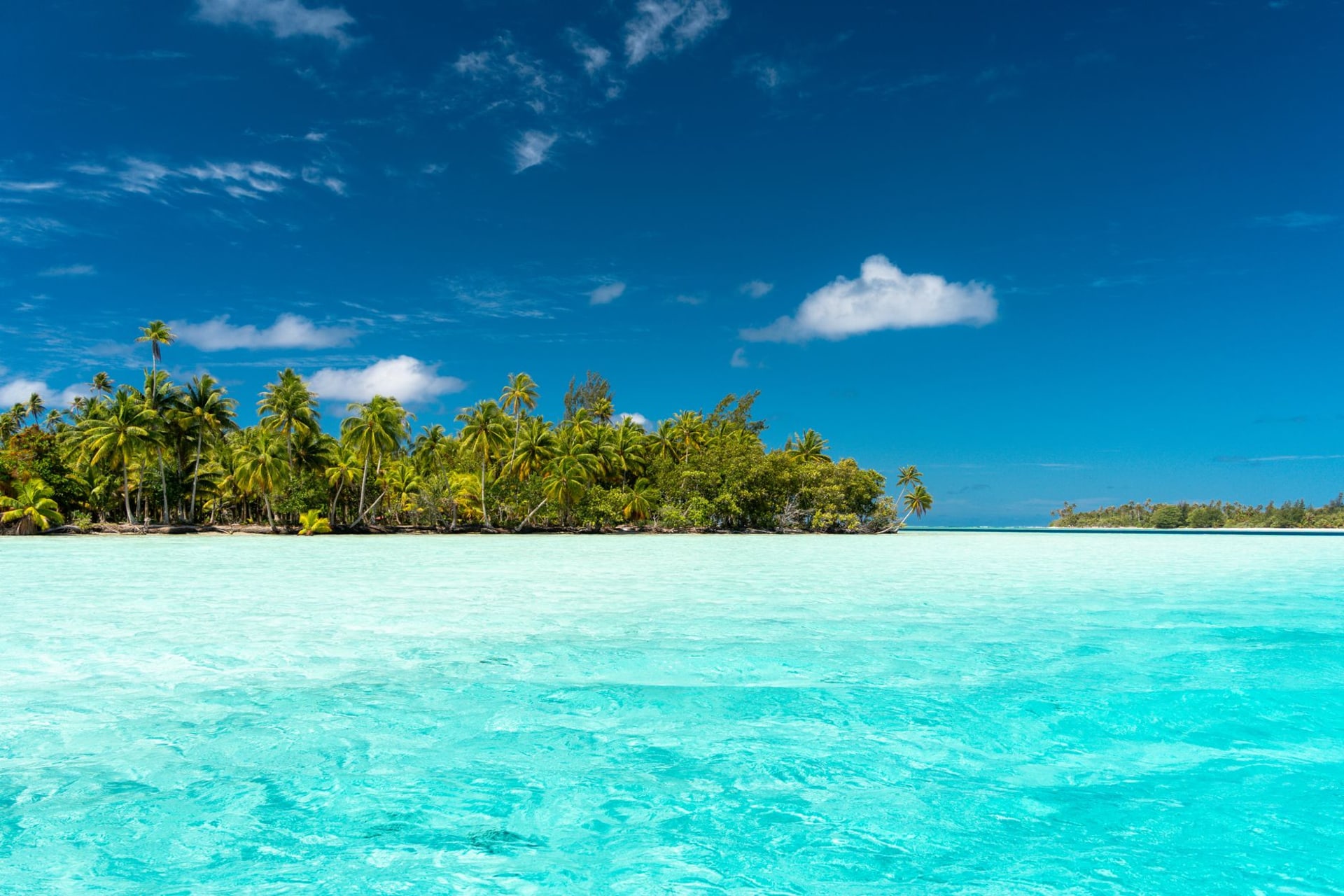
Raiatea
"Standing at Taputapuātea, I felt the specific unease of being somewhere that still insists on its own importance."
Every island in French Polynesia has a mythology, but Raiatea is the one that wrote the others. The ancient Polynesians called it Havai’i — the same name carried by the navigators who went north to settle what is now Hawai’i — and for centuries before European contact it was the spiritual and political center of the entire Society Islands group. The priests who conducted rituals at the great marae of Taputapuātea exercised influence that reached from New Zealand to Easter Island. That weight hasn’t entirely left.
I arrived from Huahine on an inter-island ferry, watching the channel between the two islands narrow and Raiatea’s mountains resolve out of the morning haze. The main town of Uturoa is the second-largest city in French Polynesia after Papeete, which is to say it has a few streets, a market, a supermarket that sells French cheese, and a port where the cargo ships come. It felt immediately more lived-in than the resort islands — a place where people have things to do that aren’t related to tourism.

The drive south to Marae Taputapuātea takes about forty minutes on the coast road, and the marae arrives without fanfare — a parking area, a path through the trees, and then suddenly a vast platform of black basalt stones extending to the edge of the lagoon, perhaps seventy meters long, flanked by upright ahu stones that were the thrones of gods. The site is UNESCO World Heritage listed, but the information panels are modest and the management is light. You walk onto the platform itself and stand among stones that haven’t moved in five hundred years, facing a pass in the reef where the ocean moves through, and the wind comes in off the water with the same unremarkable consistency it has always had.
A local guide named Teva met me at the site — not by arrangement, he simply appeared and offered to explain things, and I accepted. He was in his sixties, stocky, with the deliberate manner of someone who has told a story many times but hasn’t stopped caring about the telling. He explained that the pass in front of the marae, Te Ava Mo’a, was the sacred channel through which the great migration canoes departed — the voyaging canoes that carried Polynesian civilization across the Pacific. He said this without drama, the way you might describe a bus route. The matter-of-factness made it more affecting than any theatrical delivery could have.

The Faaroa River, in the island’s northern interior, is the only navigable river in all of French Polynesia — a distinction that sounds modest until you’re in a kayak moving through a canyon of wild taro and breadfruit and Polynesian chestnut trees, with kingfishers flashing electric blue across the water ahead of you and the sound of the ocean completely gone. I paddled for an hour into the interior and turned back when the river narrowed to a corridor of roots and the light went green. On the way out, a school of mullet moved through the channel ahead of the kayak like a silver shiver.
Raiatea is also where the most reliable black pearl culture operates in the western Society Islands, and where vanilla cultivation — the island once grew the finest vanilla in the archipelago — is being carefully revived by a few farmers who remember the old method. I bought a bunch of dried vanilla pods at a roadside stall near Tevaitoa, still warm from the curing shed. The smell in the car for the rest of the day was an argument for never leaving.
When to go: May through October is the dry season and most comfortable for boat exploration of the lagoon and the Faaroa River. The festival of Heiva brings traditional ceremonies to Raiatea’s marae sites in July, which is the most charged time to visit Taputapuātea — the stones seem to hold a different kind of attention when the chanting is happening around them.