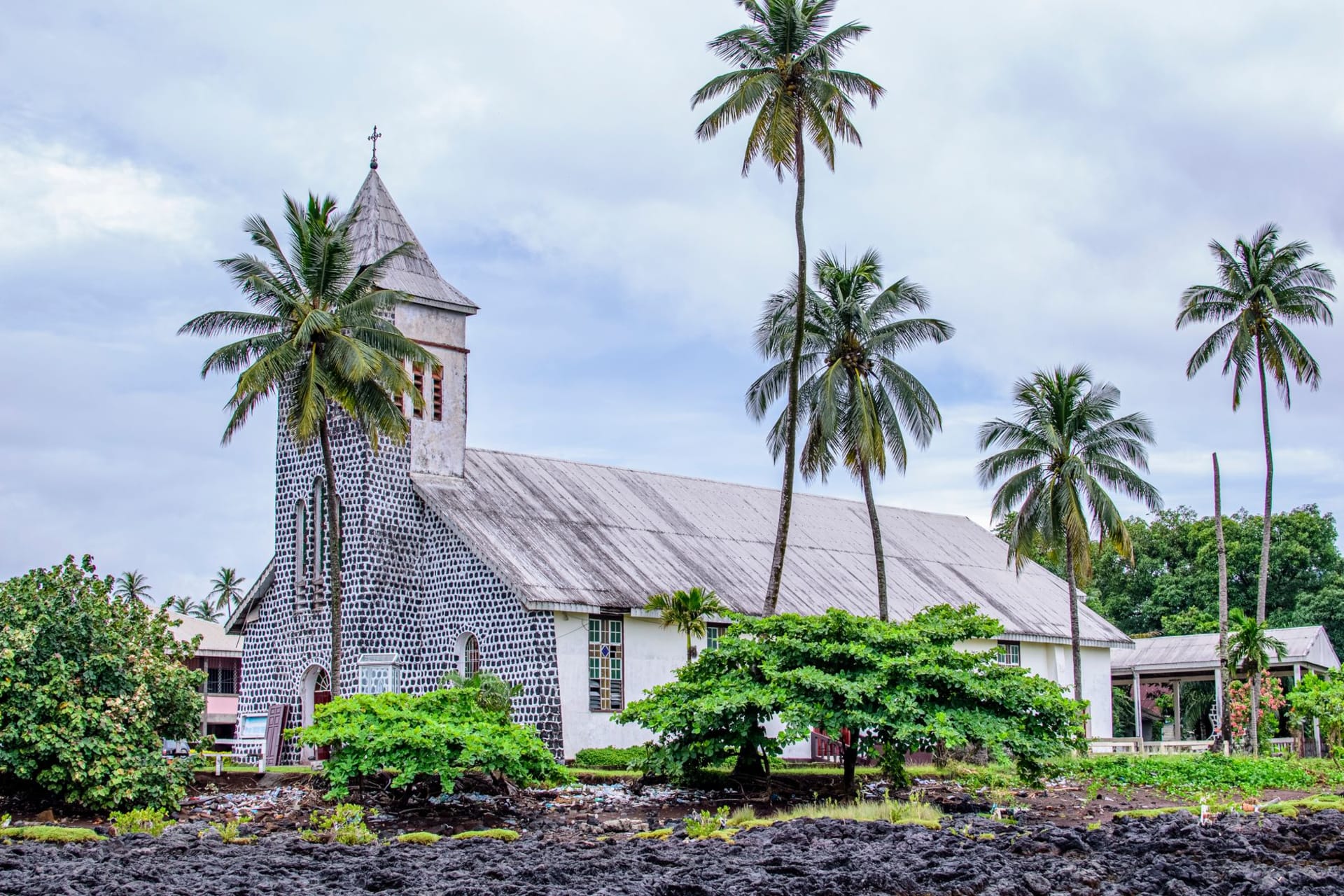
Saint-Laurent-du-Maroni
"I walked the cells at dusk and thought: France sent eighty thousand people here, and almost nobody came back."
I arrived by bus from Cayenne in the middle of the afternoon, when the heat was doing its worst to the world. Saint-Laurent sits at the edge of the Maroni river, which is wide here — a muddy brown corridor separating French Guiana from Suriname — and the town arranges itself along the bank with the slow confidence of a place that knows the river is the only reason it exists. Pirogues cut across the current between the French and Surinamese banks continuously, carrying passengers and goods with a casualness that makes the idea of a border feel theoretical. The immigration post is there, technically. The practice is something more fluid.
What Saint-Laurent has, and what no amount of prior reading fully prepares you for, is the Camp de la Transportation. This was the receiving and processing center for the French penal colony — the bagne — which operated from 1857 to 1953 and sent roughly eighty thousand prisoners to French Guiana over its lifetime. The camp is now a UNESCO-listed site and can be visited on guided tours, but I went at the hour before closing when the guides had mostly packed up and I could walk the old cell blocks alone. The walls are original — thick, slightly damp even in the dry season, painted in layers of institutional yellow that have gone the color of old teeth. The light comes through barred windows at angles that seem designed to remind you of what was not outside.

What moved me most was the scale of ordinary administration: the punishment log books, the reception records, the categories of prisoner carefully noted in neat French bureaucratic script. Murderers and minor thieves received the same boat, the same cells, the same subtropical attrition. Many who completed their sentences were subject to doublage — forced to remain in French Guiana for a period equal to their sentence after release, which effectively meant permanent exile for anyone sent here for more than eight years. The paperwork for this was meticulous.
The town itself has a vitality that sits oddly against this history. The market on Saturday mornings draws traders from both sides of the Maroni — Surinamese women with Dutch currency, Maroon vendors with carved goods and fabrics in the vivid Aluku color palette that looks like nothing else in South America, Haitian and Brazilian voices mixing with the broad vowels of Guianese Creole. I found a stall selling cold coconut water and spent an hour just listening to the language tumbling around me. Saint-Laurent has always been a crossing point, a threshold, and it carries that quality in its atmosphere — the sense that you are not quite in any one place.
The river itself is the reason to stay an extra night. At dusk the water goes the color of dark copper, and the pirogues moving across it catch the last light in a way that is easy to watch for a long time. From Saint-Laurent you can go upriver into the Maroon territory — the Aluku and Saramaka villages where the descendants of escaped enslaved people built communities that have held for three centuries. But even without going further, the town is enough: a place that carries its weight with a certain matter-of-fact heaviness, where history sits in the walls and the market smells of chili and river mud and coconut.
When to go: The long dry season from July to November offers the best river conditions for onward travel upriver. February and March work well for visiting the town itself. The Camp de la Transportation can be visited year-round but call ahead to confirm guided tour schedules.