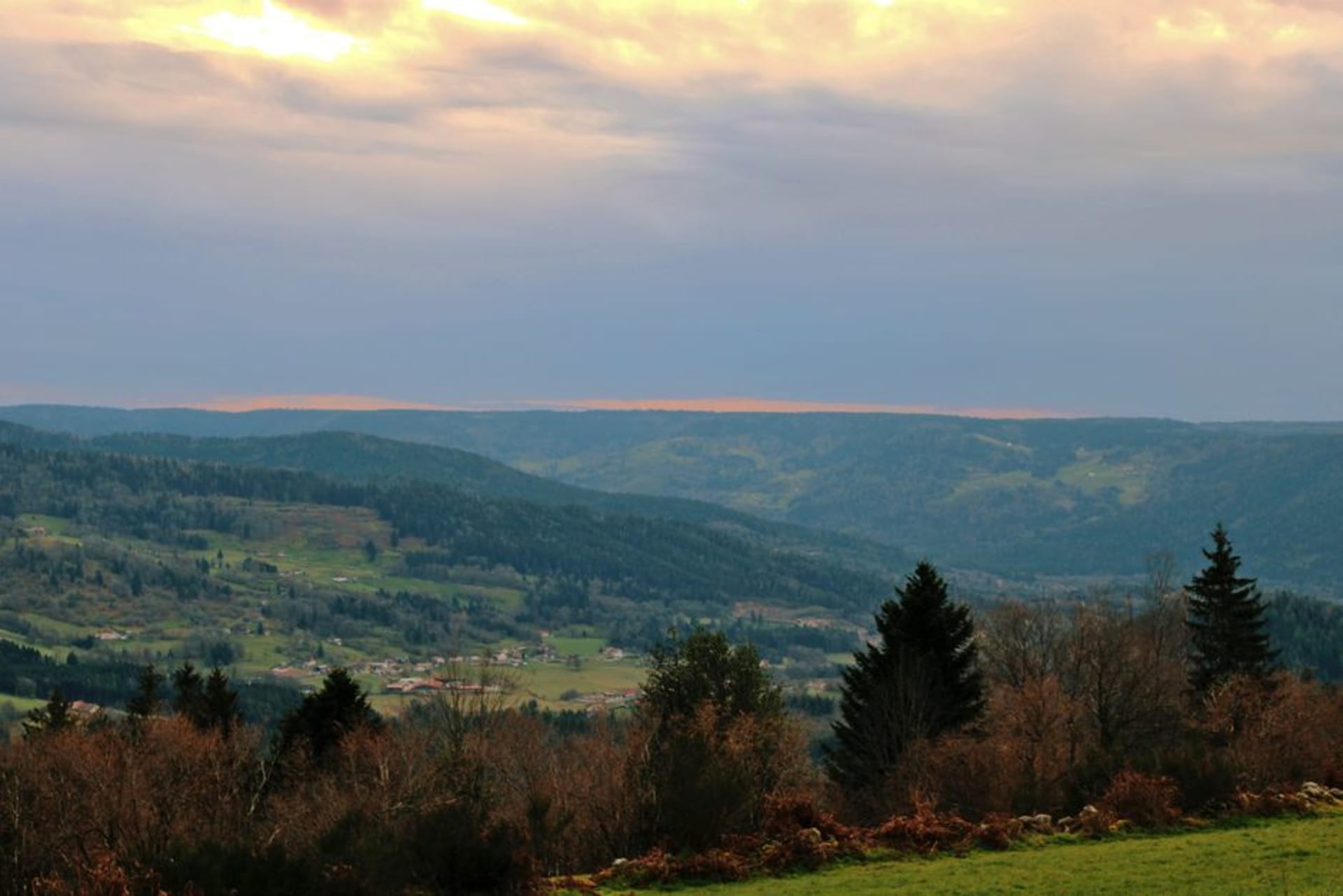
Sault
"I've never smelled a town before I could see it, but Sault in July does that to you from three kilometres out."
A windswept plateau town where the lavender fields run right up to the edge of Mont Ventoux, and the nougat shops smell like honey from the street before you've even found the door.
We came up to Sault the back way, on the little road that climbs out of the Nesque gorges, and I had to pull over twice just to let Lia get out and stand in it — not next to the lavender, in it, the car door open and the whole plateau humming with bees loud enough to hear over the engine. Sault sits at nearly eight hundred metres, a modest huddle of ochre roofs on a rock spur, and it’s easy to miss the town entirely because everyone’s eyes are on the fields. That’s fine. The fields are the point in July. But the town, once you park and walk up into it, has its own quiet reward: narrow lanes, a Wednesday market that takes over half the place, and the permanent smell of roasting almonds drifting out of the nougat ateliers.
The plateau in bloom, and the mountain that owns it
Mont Ventoux stands over Sault like a bald grey sentinel, its scree summit visible from nearly every lavender row on the plateau, and the contrast is what makes the light here so strange — violet fields under a white mountain under a sky that’s usually just relentlessly blue. We drove the loop past Aurel and the Notre-Dame-de-Consolation chapel at dusk, when the harvesters had knocked off for the day and the light went gold, and I understood why photographers camp out here for a single week every summer. Lia wanted to try the actual harvest, so the next morning we tagged along with a smallholder near the D950 who let us cut a few rows by hand with a sickle, which sounds romantic until your forearms remember it two days later.
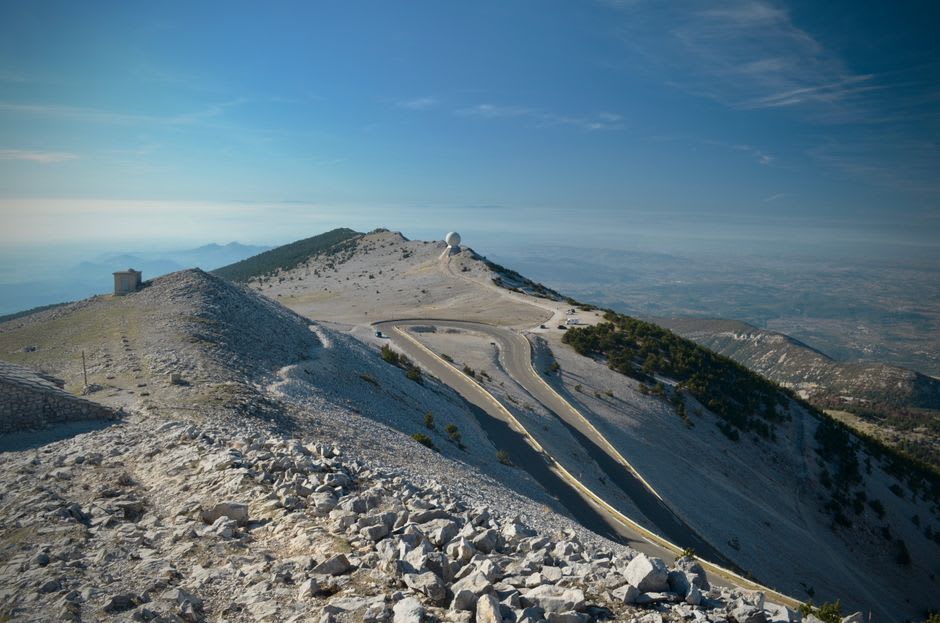
For cyclists, Sault is also the gentlest of the three roads up Ventoux — twenty-six kilometres that start easy through the fields before the forest swallows you and the gradient turns serious. We didn’t ride it ourselves, but we spent a memorable hour at the café by the Avenue de la Promenade watching riders arrive back at the bottom in every possible emotional state, from triumphant to visibly questioning their life choices, all of them ordering the same recovery beer.
Nougat, honey, and the market that smells like both
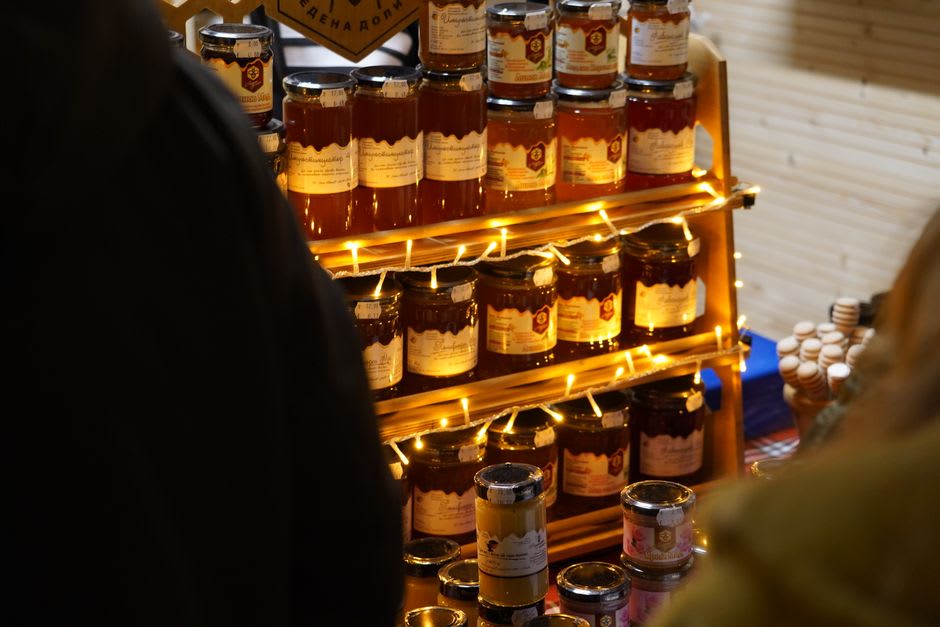
Sault has been making nougat since long before lavender tourism existed, and the two family ateliers on the main street — Boyer and André Boyer, confusingly similar names, no relation as far as I could tell — still cook it in copper pots you can watch through the window. We bought a slab of the black nougat, the dense one made with dark honey and unpeeled almonds, and ate most of it before we’d left the shop. On Wednesday mornings the whole of Sault becomes market, and the lavender-honey stalls outnumber almost everything else; we came home with a jar so strong it tasted faintly of the fields we’d just walked through.
When to go: Mid-July is peak bloom and peak crowds, all at once — book weeks ahead if you want a room in town. Late July into early August brings the harvest itself, dustier and less photogenic but somehow more honest. By September the fields are cut to grey-green stubble and the mistral has the run of the plateau, which empties the roads but strips the charm along with the color.
Keep exploring
More of Provence