
Aigues-Mortes
"Saint Louis built an entire port town from a swamp because Provence's coast wasn't his to use, and it's still standing, walls and all."
A perfectly rectangular walled town that Saint Louis built from nothing to launch a crusade, standing now in the middle of Camargue salt flats it once looked out over as open sea.
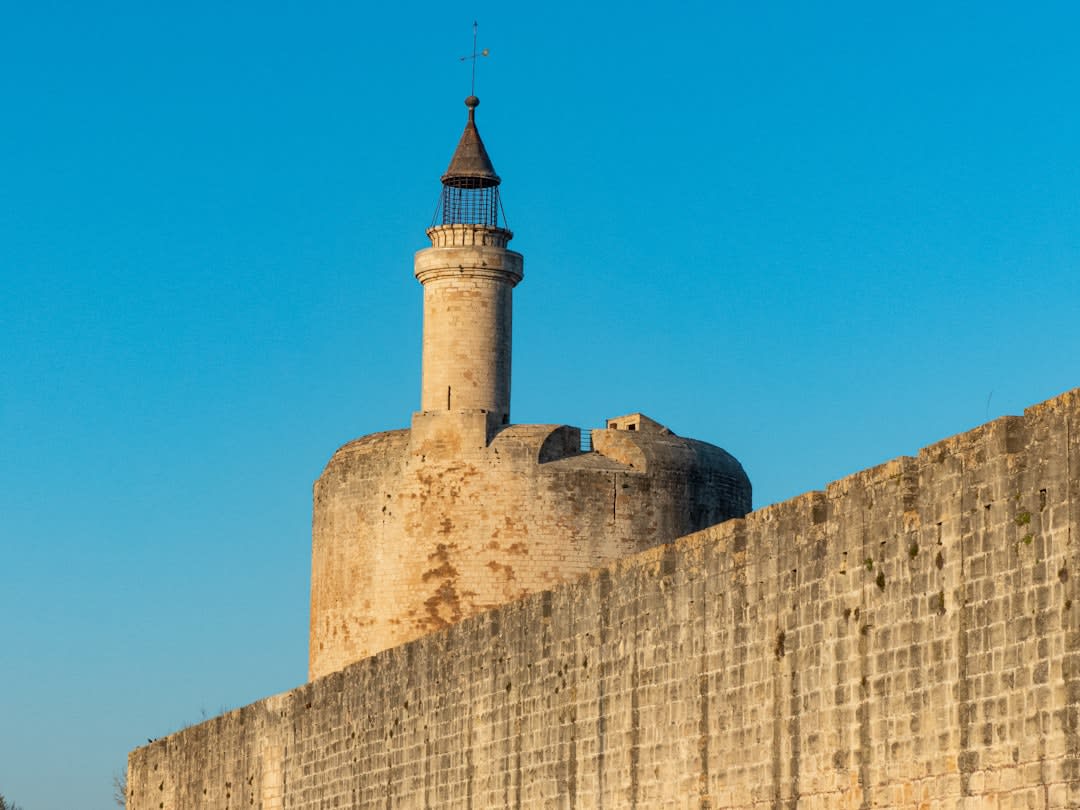
Aigues-Mortes means “dead waters” in Occitan, which is either a poetic name for a marsh town or a slightly ominous one, and either way it undersells how strange the place actually is. In the 13th century, King Louis IX — Saint Louis — needed a Mediterranean port to launch his crusades, but the actual coastline of Provence belonged to other lords and the county of Toulouse, so he built one from scratch on a stretch of marshy Camargue flatland that was technically his. What resulted is a town laid out in a near-perfect grid inside a complete circuit of medieval walls, something almost nowhere else in France can claim intact, because Aigues-Mortes was never significant enough afterward for anyone to bother tearing the ramparts down.
Walls you can walk the entire way around
We climbed onto the ramparts near the Tour de Constance, a squat round tower that later served as a prison for Protestant women during the persecutions following the revocation of the Edict of Nantes, and walked the full loop — nearly a kilometer and a half of continuous 13th-century wall, towers, and gates, looking down on one side at the tidy grid of the town and on the other at flat Camargue marshland running out toward salt pans that shimmer pink in the right light. It’s disorienting in a good way to stand on a genuine crusader fortification and see, instead of a sea full of ships, egrets picking through shallow brine pools. The coast has silted and shifted so much since the 13th century that Aigues-Mortes, once a working port Saint Louis sailed from twice, now sits several kilometers inland.
Salt, flamingos, and the flattest horizon in Provence
Just outside the walls, the Salins du Midi still harvest sea salt using methods not far removed from medieval technique, and the vast pink-tinged basins have become an unlikely home for flamingos that wander in from the Camargue proper. We rented bikes and rode the flat tracks between the salt pans at sunset, which turned out to be the better version of the trip than the walled town alone — pale pink water, actual pink flamingos, and Aigues-Mortes’s towers sitting flat and grey on the horizon behind us like something out of a different century entirely.
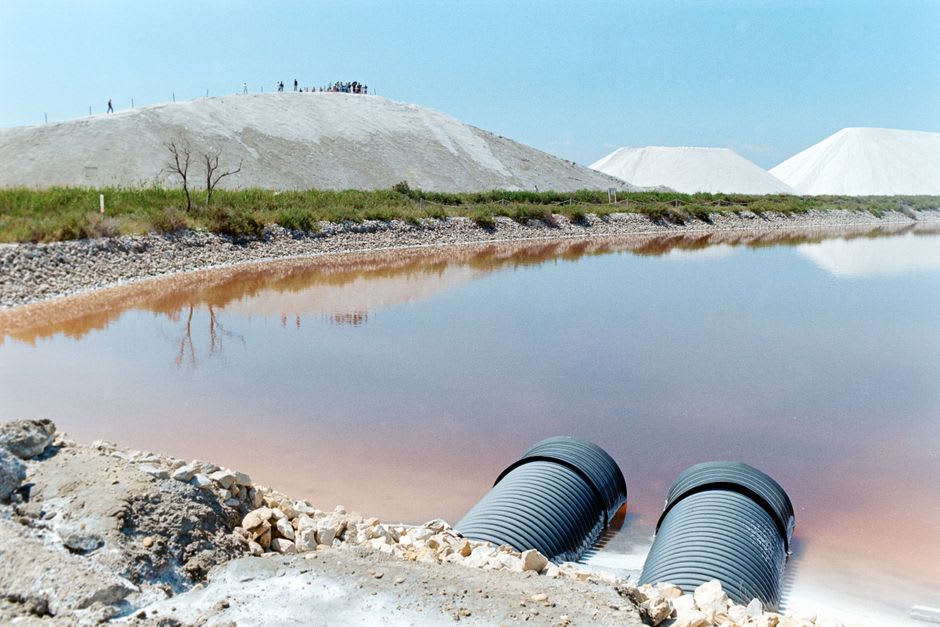
When to go: Spring or early autumn for mild temperatures on the exposed ramparts walk; the salt pans take on their deepest pink in late summer, when the brine is most concentrated.
Keep exploring
More of Provence