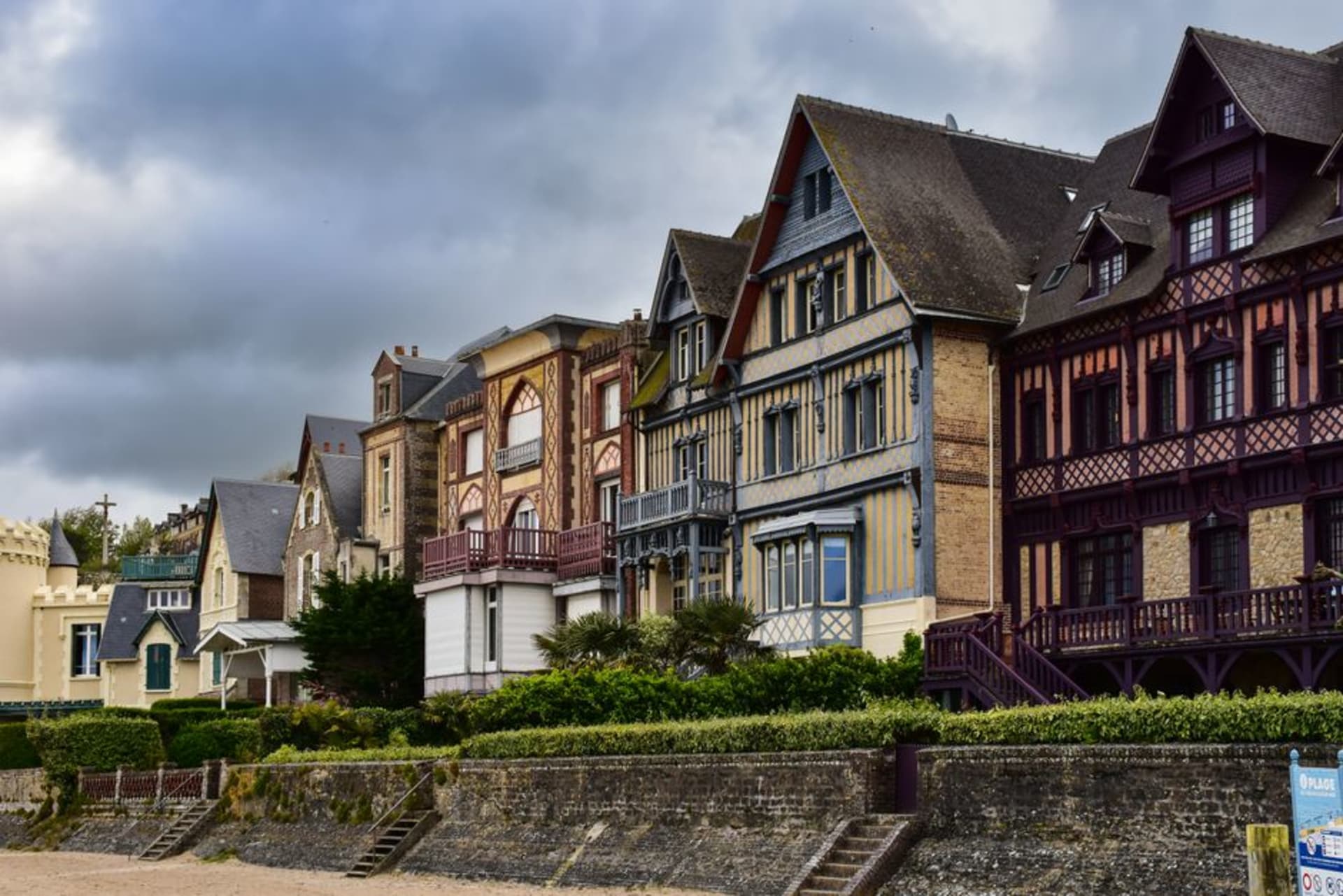
Trouville-sur-Mer
"Deauville is where you go to be seen. Trouville is where you go to actually eat."
Deauville's older, scruffier twin across the river, where the fish market is louder than the boutiques and I actually felt comfortable in my beach clothes.
We stayed in Deauville for two nights on a friend’s recommendation, and by the second morning I’d had enough of feeling underdressed walking past the casino and the boutiques on Rue Eugène Colas. So we crossed the little bridge over the Touques river to Trouville, and within about ten minutes I understood why locals told us, more than once, that Trouville was the one they actually preferred.
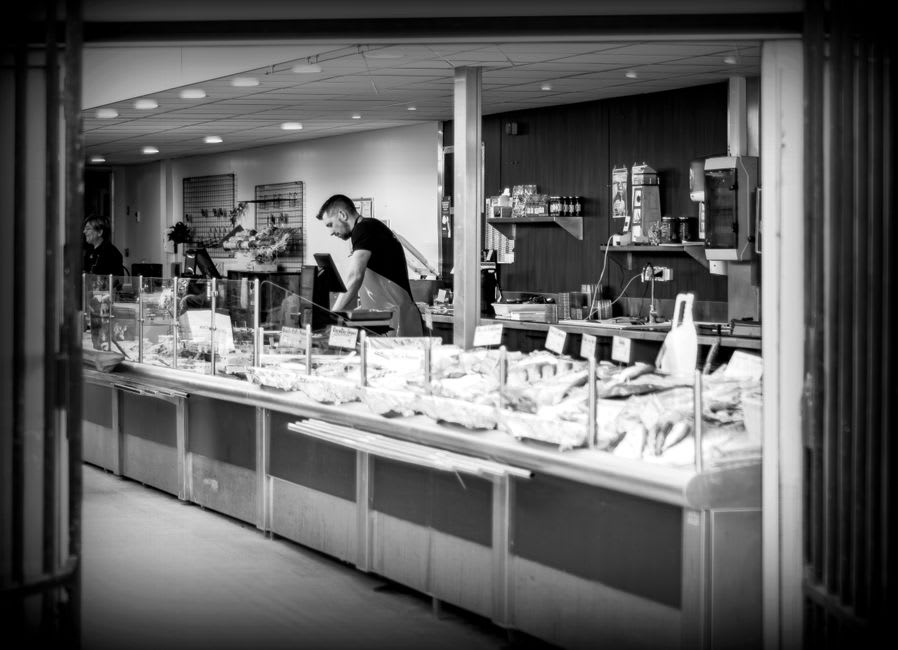
A working fish market that never stopped for tourism
Trouville has had a fish market on its quay, the Marché aux Poissons, since long before Deauville existed as a resort at all — Trouville was a fishing village first, and unlike its neighbour across the river it never fully gave that identity up. Stalls line the waterfront selling the morning’s catch straight off the boats moored a few meters away: scallops, langoustines, sole, whatever came in that morning, sold by fishmongers shouting prices over each other in a way that felt refreshingly unstaged after Deauville’s polish. We bought a bag of just-shucked oysters and ate them standing at the quay wall, which is not something anyone would have suggested doing on the other side of the river.
The boardwalk that inspired Monet and Boudin before Deauville existed
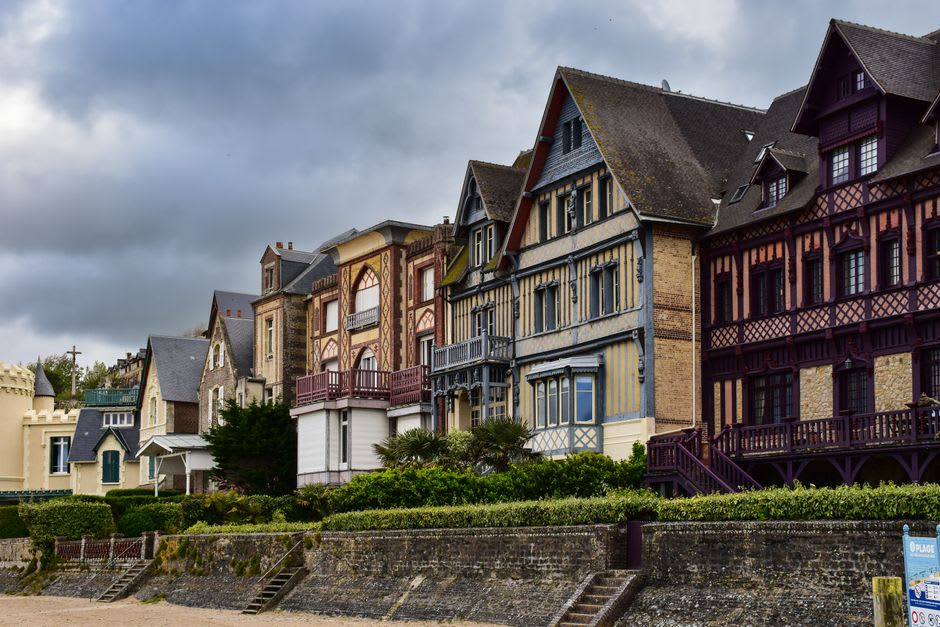
Trouville’s own seafront, Les Planches, is a wooden boardwalk running along a wide sand beach backed by 19th-century villas in bright, slightly faded paint, and it was here — not in Deauville, which was largely built later as a deliberate rival resort in the 1860s — that painters like Eugène Boudin and later Claude Monet first came to paint fashionable Parisians relaxing by the sea. The Musée Villa Montebello, in one of the old seafront villas, holds a small collection tracing that history, and the beach itself, backed by cliffs at its western end, felt properly lived-in rather than performed for cameras. We walked the length of the boardwalk at low tide as families dug for cockles in the wet sand, which is exactly the kind of unglamorous, real coastal scene Deauville has mostly polished away.
When to go: Go early on a weekend morning for the fish market at its liveliest, and stay through low tide for the beach and boardwalk at their best.
Keep exploring
More of Normandy