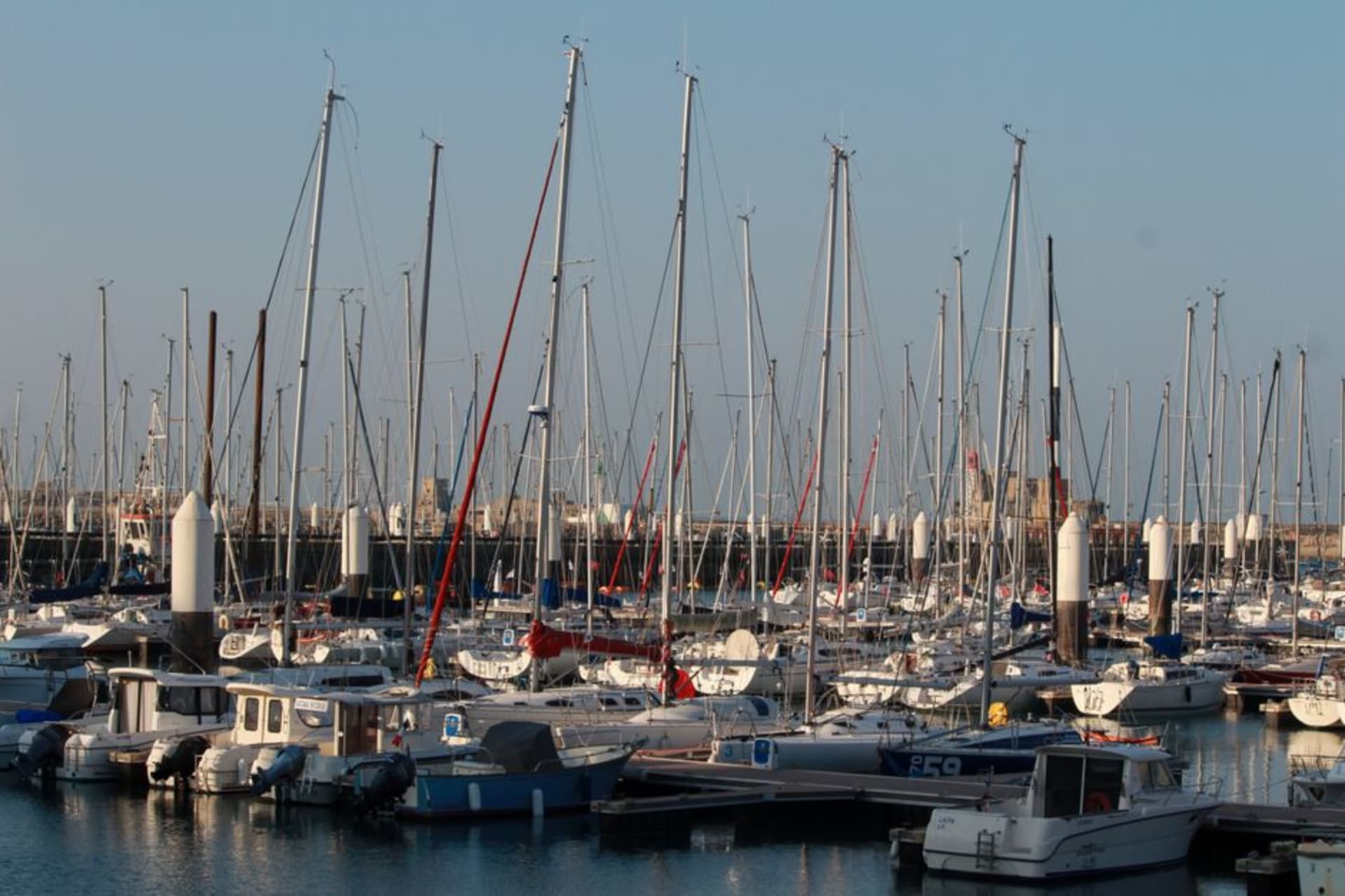
Le Havre
"I went to Le Havre expecting a port town to pass through. I left thinking about concrete the way other people think about cathedrals."
The city Monet painted at sunrise and the Allies flattened in 1944, rebuilt in raw concrete by Auguste Perret into something Lia and I found ourselves oddly moved by, against every expectation.
I’ll admit I nearly skipped Le Havre. On paper it’s a working port city, not the half-timbered Normandy of postcards, and everyone in Rouen had shrugged when I mentioned it, as if I’d announced a stopover in an industrial zone. Lia talked me into staying a night anyway, mostly because she wanted to see the place where Monet had stood with his easel one morning in 1872 and painted a hazy orange sun over the harbour, a canvas so unfinished-looking that a critic mocking it accidentally named an entire movement: Impressionism started here, in this specific stretch of water, whether the city advertises that fact loudly enough or not.
Ninety percent destroyed, and rebuilt on purpose
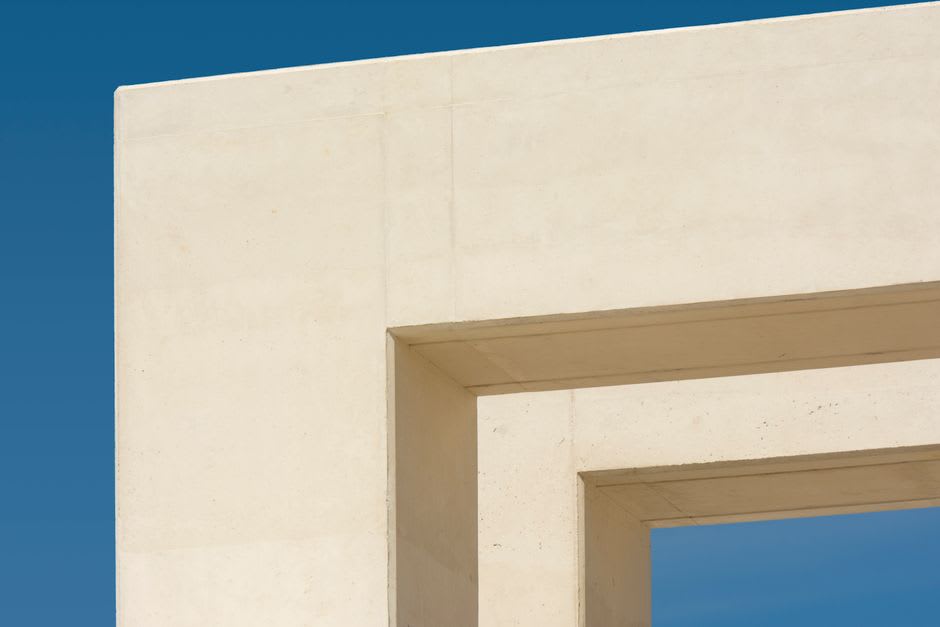
What actually stopped me in my tracks wasn’t the harbour, it was the city center itself. Allied bombing in September 1944 destroyed roughly 85% of Le Havre trying to dislodge the German garrison, and rather than patch it back into a pastiche of the old town, the French government handed the reconstruction to the architect Auguste Perret, a pioneer of reinforced concrete construction. What he and his team built between 1945 and 1964 is a whole city center poured in concrete on a strict modular grid, wide avenues, uniform façades, a soaring belltower at the Église Saint-Joseph that functions less like a church and more like a lighthouse for the rebuilt town. It’s stark and grey and, I’ll be honest, photographs badly in flat light. But walking it at golden hour, watching the low sun catch the textured concrete panels, I finally understood why UNESCO listed the whole center as a World Heritage Site in 2005, an almost unheard-of honor for post-war architecture. Lia, who studied a bit of urban planning before she gave it up for photography, kept stopping to photograph door handles and window grilles like she’d found a lost mid-century catalogue made real at city scale.
Standing where Monet stood
We took the ferry-crossing views along the Quai Southampton at dusk specifically to chase that Monet light, and it’s genuinely still there — the same low industrial haze, the same orange smear over grey water, cranes standing in for the masts he painted. There’s a small plaque near the old avant-port marking roughly where his studio window looked out, and I stood there feeling slightly ridiculous, trying to see 1872 through 2026’s shipping containers. It didn’t fully work, but the light did its job anyway. We ended the evening at MuMa, the modern art museum right on the seafront, which holds the second-largest Impressionist collection in France after the Musée d’Orsay — a strange, quiet fact for a city most people only think of as a ferry terminal to Portsmouth.
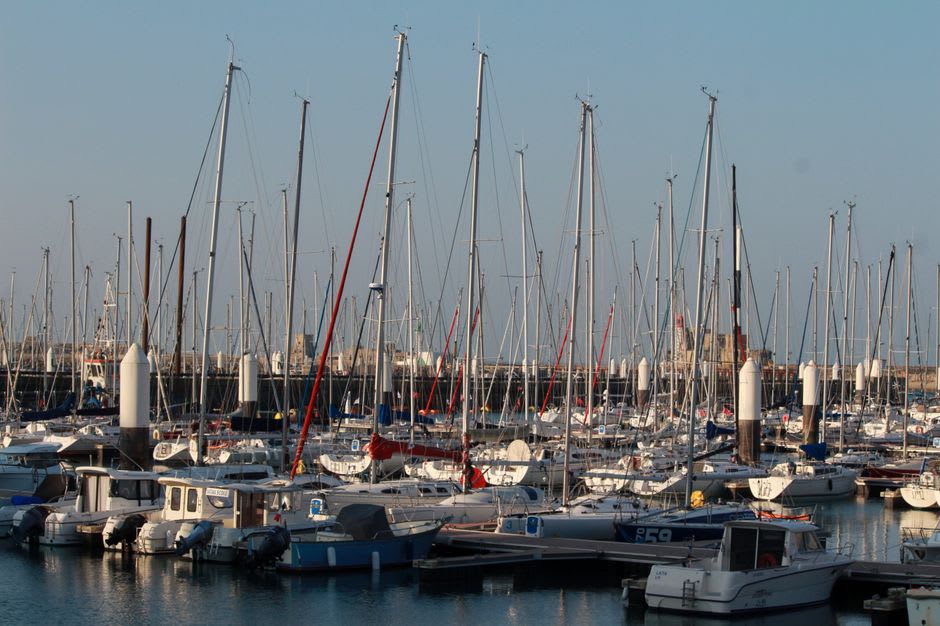
When to go: Late afternoon into sunset is when Le Havre earns its keep, when the low light softens the concrete and recreates the exact haze Monet painted; avoid flat overcast midday if you want the city to make its case.
Keep exploring
More of Normandy