
Thonon-les-Bains
"I've taken a lot of funiculars up mountains. This was the first one built just to reach a lake."
The Lake Geneva spa town where a funicular still hauls Belle Époque hotel guests down to the harbour, and a château vineyard makes wine from grapes the Dukes of Savoy once claimed as their own.
Every spa town I’ve written about in the Alps has its own idea of what “taking the cure” should look like, and Thonon-les-Bains has one I hadn’t seen before: an entire town built on a bluff above Lake Geneva, connected to its own harbour far below by a funicular that exists purely so that 19th-century hotel guests didn’t have to walk down and, worse, back up. Lia and I rode it on our first afternoon, mostly as a novelty, and ended up using it constantly for the rest of the stay — it is still cheap, still frequent, and still the most sensible way to move between the old town and the water.
A town built on a bluff, for a reason
Thonon sits nearly 60 metres above the level of Lake Geneva, on a terrace that gave it a defensible position through centuries as capital of the Chablais region under the Dukes of Savoy, and later made it a fashionable thermal resort once mineral springs were discovered here in the 19th century. The funicular, opened in 1888, was built to connect the elevated spa town to the harbour and its steamer traffic across the lake to Switzerland, and it still runs the same short, steep route today. From the harbour, the view back up at the old town’s ramparts, and across the water to the Swiss shore and the mountains behind Lausanne, is the best free thing in Thonon.
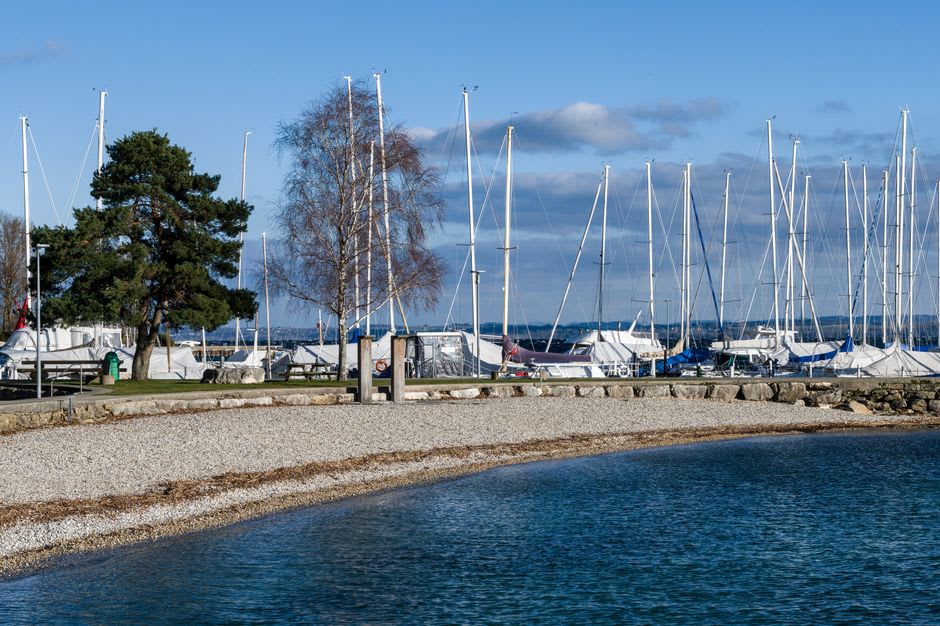
We spent a morning at the harbour watching the CGN steamers — the same historic paddle-wheel boats that have crossed this lake since the 19th century — load passengers for Lausanne and Geneva, and I understood, watching them, that Thonon was never really a mountain town pretending to be a lake town. It’s the reverse: a lake town that happens to sit at the foot of the Alps.
Wine from a duke’s private vineyard
A short walk from the harbour brought us to the Château de Ripaille, a former residence of the Dukes of Savoy and briefly, in the 15th century, the retreat of Duke Amadeus VIII after he abdicated to become an antipope — one of history’s stranger career changes. The château’s surrounding estate still produces wine under its own AOC, Vin de Savoie Ripaille, from vineyards that have been cultivated on the same grounds since the dukes’ time, and we did a tasting in a cool stone cellar that smelled of old wood and cut grass. The Chasselas grape grown here produces a light, mineral white that tastes, more than anything, like it belongs specifically to this lake and no other — crisp enough to want with the féra, the Lake Geneva whitefish that shows up on every Thonon menu.
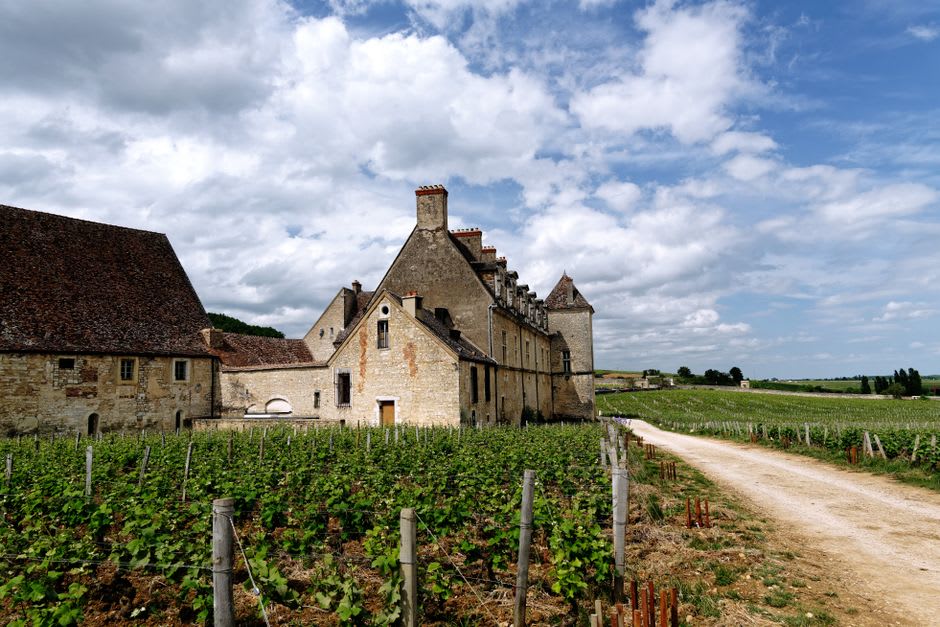
When to go: Late spring through early autumn for the harbour, the lake steamers, and the vineyard, all of which are at their best with long daylight and warm water for swimming off the town’s public beaches. The thermal baths and the funicular run year-round, making Thonon a viable off-season stop even when the lake itself turns grey and uninviting.
Keep exploring
More of French Alps