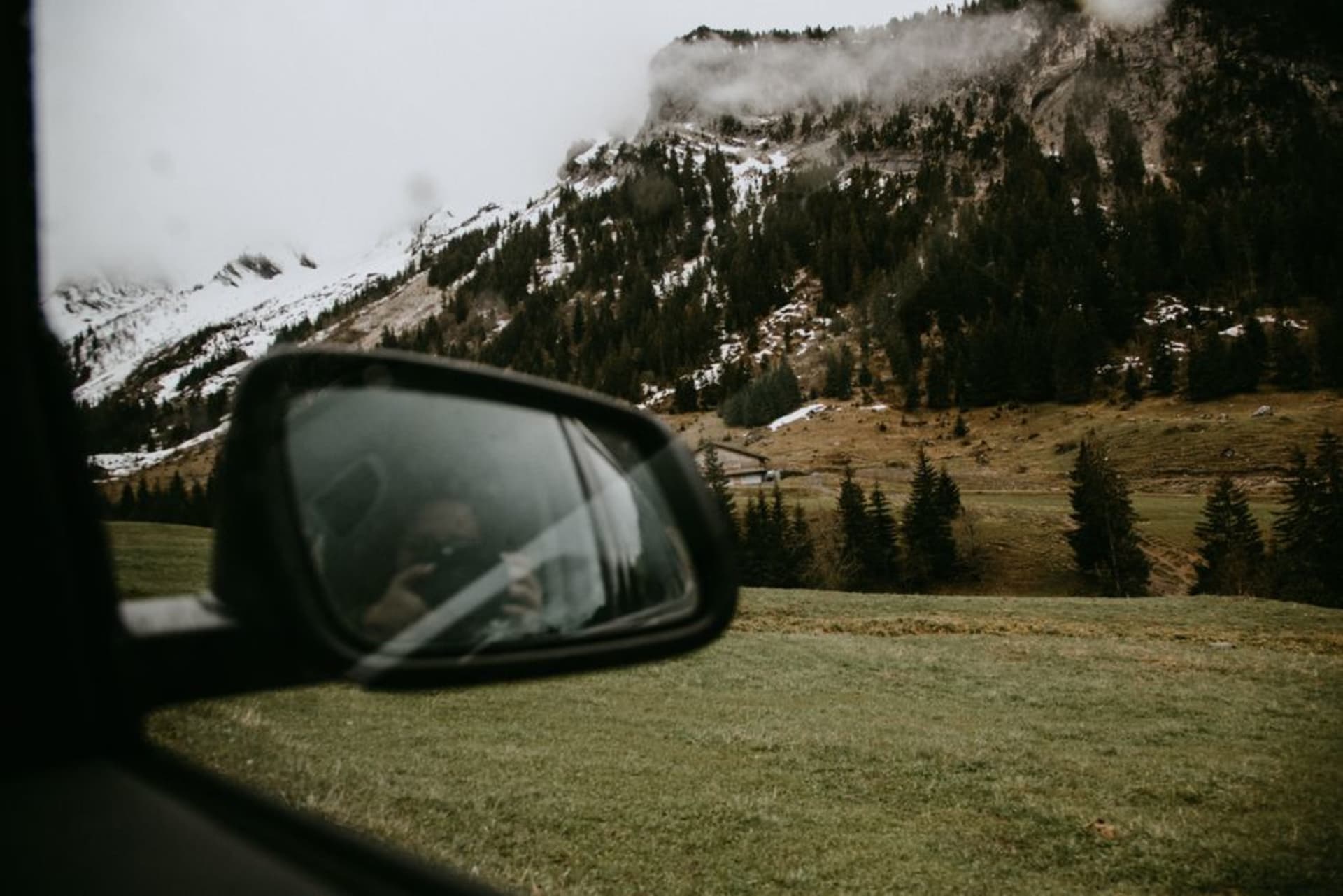
Sixt-Fer-à-Cheval
"I've seen a lot of French mountains claim to be the most dramatic. This one didn't need to claim anything."
A glacial amphitheatre of cliffs and waterfalls that makes the rest of the Giffre valley feel like a warm-up act, and where the queen of Alpine waterfalls actually earns the title.
Sixt-Fer-à-Cheval is a small village in the Giffre valley, upstream from Samoëns, that most people driving through Haute-Savoie have never heard of and that most people who have hiked there talk about for years afterward. The village itself is modest — a cluster of stone-and-wood houses, an old Augustinian abbey founded in the 12th century that gave the settlement its start — but its name is really shorthand for what lies a few kilometres beyond it: the Cirque du Fer-à-Cheval, a natural amphitheatre of cliffs shaped, as the name says, like a horseshoe.
Standing inside a horseshoe of rock
Nothing quite prepares you for the scale of the cirque even after seeing photos of it. Limestone walls rise nearly 700 metres in an unbroken curve around a flat glacial valley floor, and depending on the season and recent rainfall, anywhere from a handful to dozens of waterfalls pour off the rim simultaneously, some falling so far they turn to mist before reaching the ground. Lia counted eleven distinct falls the afternoon we walked in, in early June with the snowmelt still heavy, and gave up counting after that because new ones kept appearing from folds in the rock we hadn’t noticed. The trail in from the car park is flat and easy, more a stroll through alpine meadow than a hike, which makes the sudden, total enclosure by cliff on three sides feel almost theatrical — like walking into a natural stadium.
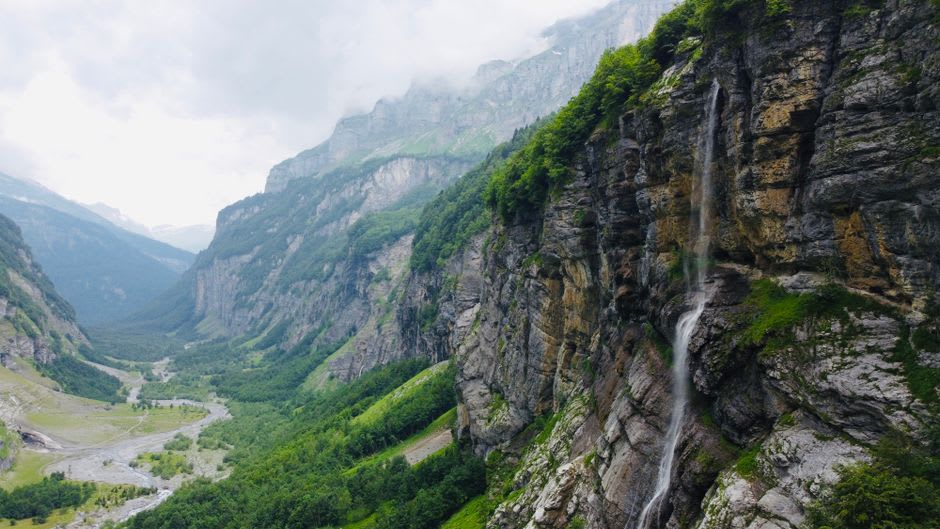
The queen of the waterfalls
A short drive and a steeper trail away is the Cascade du Rouget, known locally as “la reine des cascades des Alpes” — the queen of the Alpine waterfalls — a two-tiered fall dropping some 120 metres through the forest above Sixt. It’s a genuinely different experience from the cirque: closer, louder, the spray reaching the viewing platform on a windy day, the water audible from a hundred metres before you see it. We hiked up in the late afternoon when the light cut through the tree canopy at an angle that lit the spray into something close to a permanent low rainbow, and stood there long enough that Lia’s jacket ended up soaked through from the mist alone.
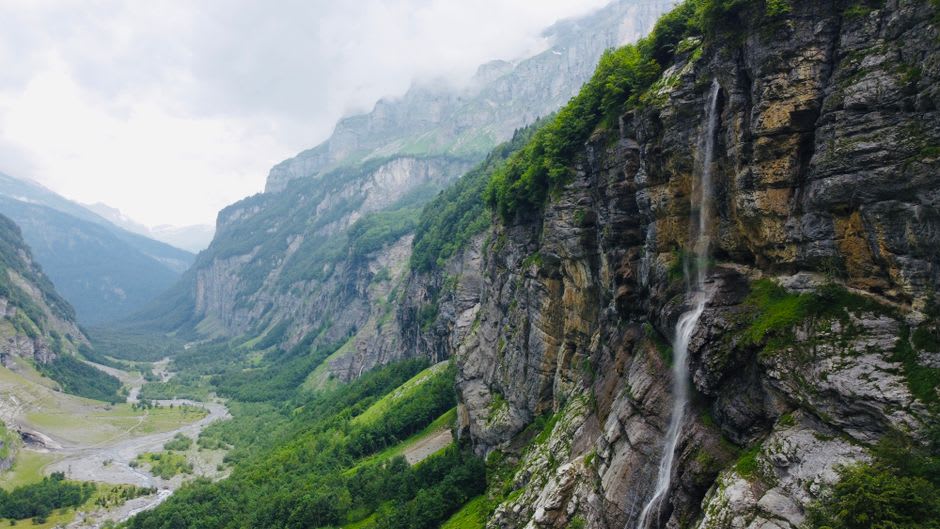
The village itself makes a good quiet base for longer hikes deeper into the reserve — this whole area is protected as a nature reserve, one of the largest in Haute-Savoie, and serious walkers use Sixt as a jumping-off point toward multi-day routes into the Désert de Platé and beyond.
When to go: June brings the heaviest snowmelt and the most dramatic number of waterfalls active on the cirque walls, though trails can still be muddy. September and early October offer clearer paths and fewer people, with somewhat less water but still-spectacular falls, and the best chance of a quiet visit.
Keep exploring
More of French Alps