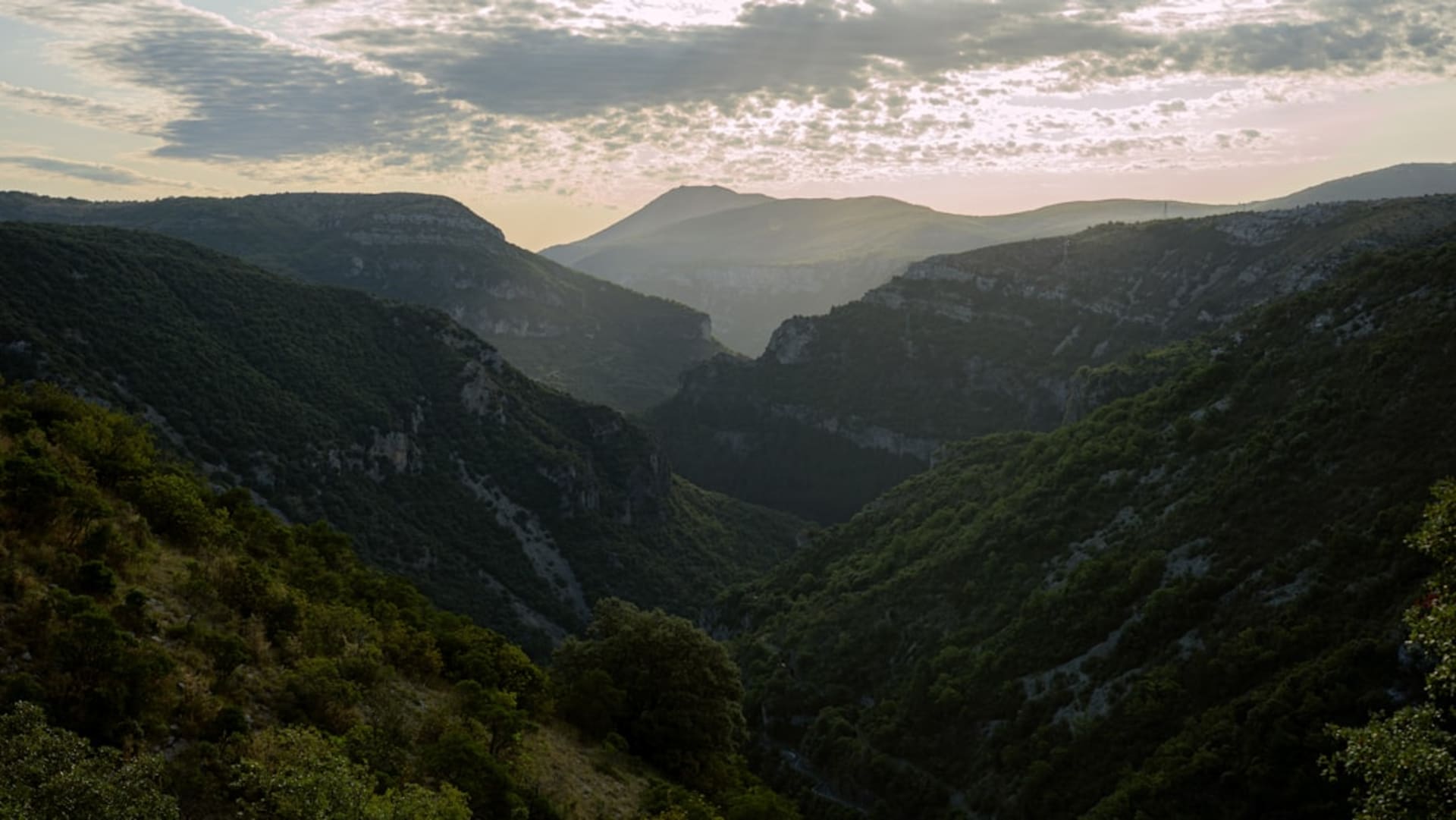
Samoëns
"I'd never met a village that called itself a city until I understood what its stonemasons had actually built."
A village of master stonecutters who once built half of Europe's grandest buildings, and who brought their earnings home to plant an alpine botanical garden instead of a golf course.
Samoëns bills itself, on an old carved sign near the church, as a “cité” — a city — which struck me as an odd claim for a place with a few thousand residents tucked into the Giffre valley. Lia laughed at the sign and asked a shopkeeper about it, and got a proud, well-rehearsed answer: the title was granted by the Duke of Savoy in the 16th century in recognition of the village’s guild of stonecutters, who by then were already famous enough to be summoned to build things far beyond their own valley.
The masons who built Europe and came home
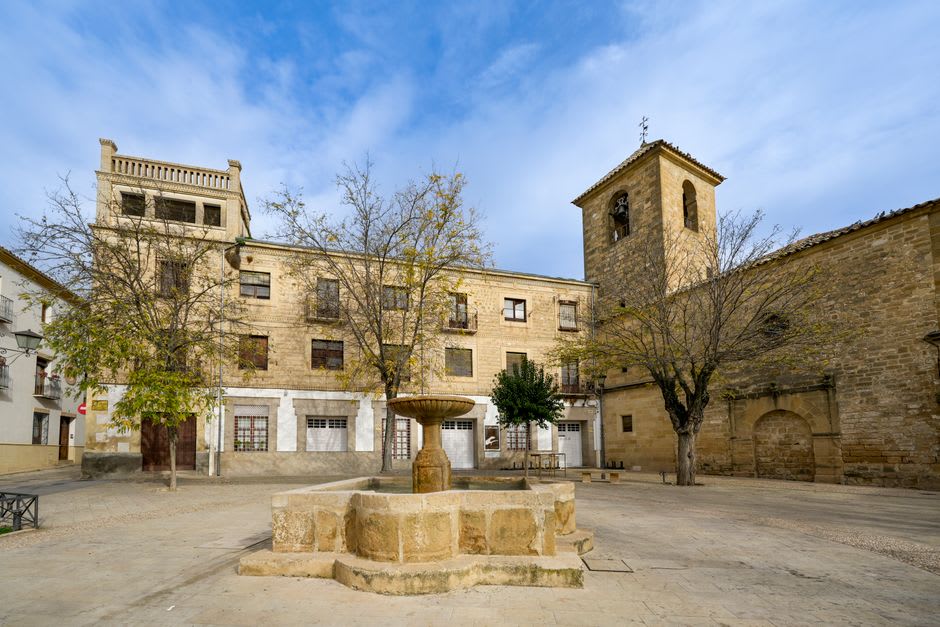
For centuries, Samoëns produced stonemasons of such skill that they were contracted out across France and Switzerland — the guild’s members worked on Fontainebleau, Versailles, and Geneva’s grand buildings, carrying their expertise in the local grey-green stone (a marble known as “marbre du pays”) to jobs far from home before returning each winter with their earnings. Walking the old town, you can see their handiwork close to home too: the sturdy stone-and-timber houses, the fountain in the main square, the church facade, all cut with a precision that a working farming village had no obvious reason to demand of itself, except that its own craftsmen were simply that good.
A garden built by homesick masons
The stonecutters’ most striking legacy, though, isn’t architectural at all. In 1906, one of Samoëns’ own — Marie-Louise Cognacq-Jaÿ, born in the village, who went on to co-found the Samaritaine department store in Paris — funded the creation of the Jardin Botanique Alpin de la Jaÿsinia, a terraced alpine garden built into the steep hillside right at the edge of the village, laid out to recreate the different alpine environments of the Alps, Pyrenees, and Caucasus in miniature. It was a gift back to a village that had spent generations sending its most skilled people away to work, and walking through it — narrow stone paths climbing past waterfalls, thousands of alpine plant species labelled in Latin and French, all free to enter — felt like the quiet second half of the stonecutters’ story.
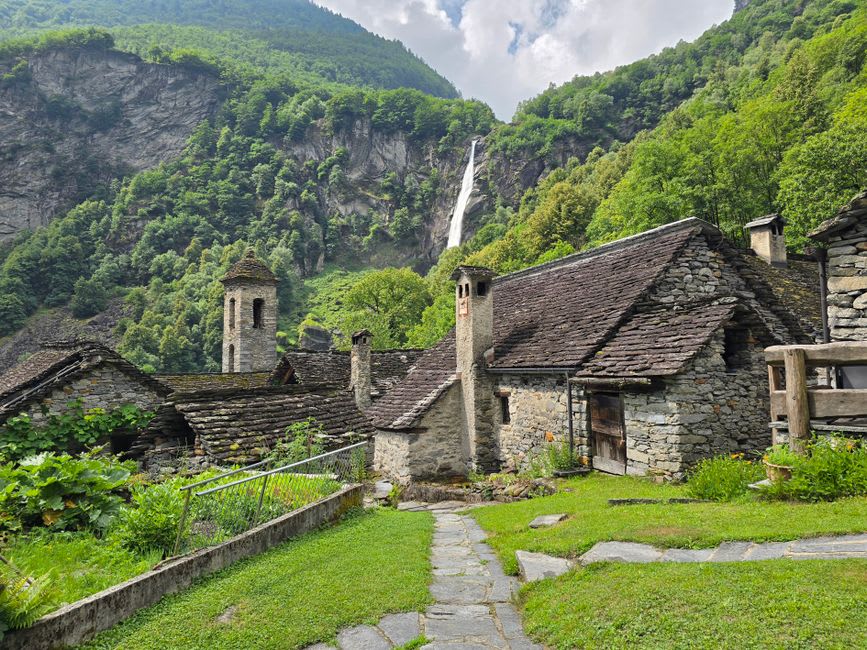
We spent a slow afternoon there in early September, mostly alone except for a few local retirees doing laps for exercise, and I found myself reading plant labels with more attention than I usually manage in an actual museum. The garden climbs a genuine slope, so it doubles as a short hike with a view back over the village rooftops to the limestone wall of the Criou massif behind them.
When to go: Late spring through September for the botanical garden, which is closed through winter, and for hiking the Giffre valley trails that fan out from the village. Samoëns also connects into the Grand Massif ski area in winter, giving it a quieter, more architecturally interesting base than some of its larger, purpose-built neighbours.
Keep exploring
More of French Alps