
Beaufort
"I'd eaten Beaufort my whole life without picturing the valley. Now I can't eat it without picturing the valley."
The valley that gave its name to one of the great French cheeses, where the cooperative still ages wheels the size of car tyres in a cellar built into the mountain.
I grew up eating Beaufort the way most French people do — as a name on a cheese board, occasionally as the sharpish, nutty wheel in a fondue savoyarde, without ever picturing an actual place attached to it. That changed after driving up into the Beaufortain, the narrow, steep-sided valley southeast of Albertville that gives the cheese its name and, more or less, its entire reason for existing. This is high alpine pasture country, tucked between the Tarentaise and Chamonix valleys, with a handful of villages strung along the Doron river below peaks that push past 2500 metres on both sides.
A cheese built by geography
Beaufort is sometimes called the “prince des gruyères,” and the title isn’t just marketing — the valley’s isolation and its high summer pastures, the alpages where cattle graze on a specific mix of alpine grasses and flowers, are what give the cheese its particular density and that faint fruity sharpness at the back of the palate. We visited one of the valley’s dairy cooperatives, a coopérative laitière where several small farms pool their milk daily, and watched through a viewing window as workers in white coats turned enormous copper vats of curd by hand, the same basic technique used here for centuries, before pressing the curds into wheels that can weigh over forty kilograms each.
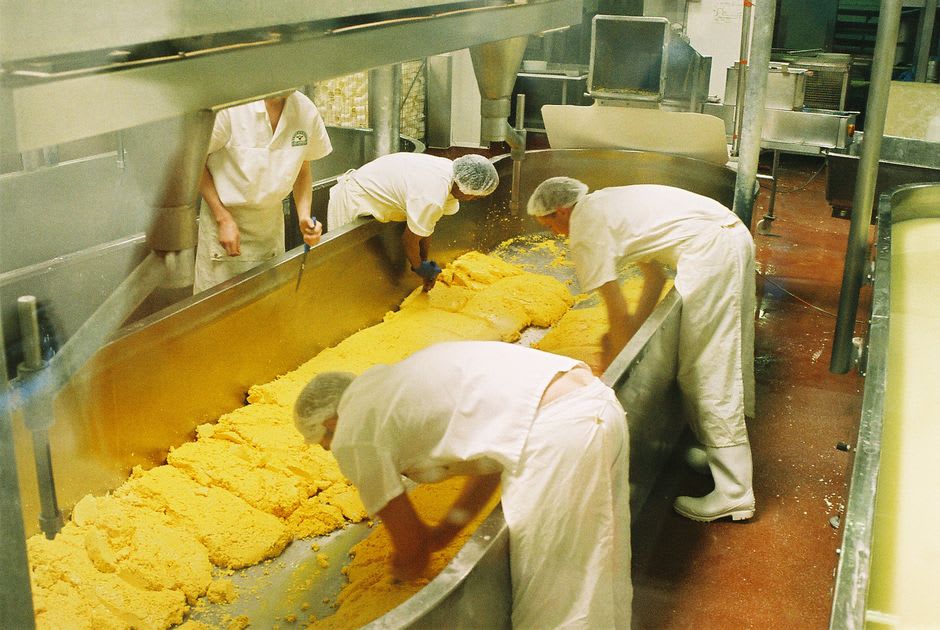
The cellar in the mountain
What struck me more than the production floor was the aging cellar — a long, cool, humid cave cut partly into the hillside, racks of wheels stretching back further than the light reached, each one turned and brushed with brine by hand on a rotation that can run eight months or longer for the reserve grades. The smell alone, that specific mix of damp stone and ripening milk fat, is something I now associate permanently with the valley rather than with a supermarket shelf. Lia bought a wedge of the “chalet d’alpage” grade, made only from summer milk from cattle grazing the highest pastures, and we ate most of it that same evening on a picnic table above the village with the mountains going pink at dusk.
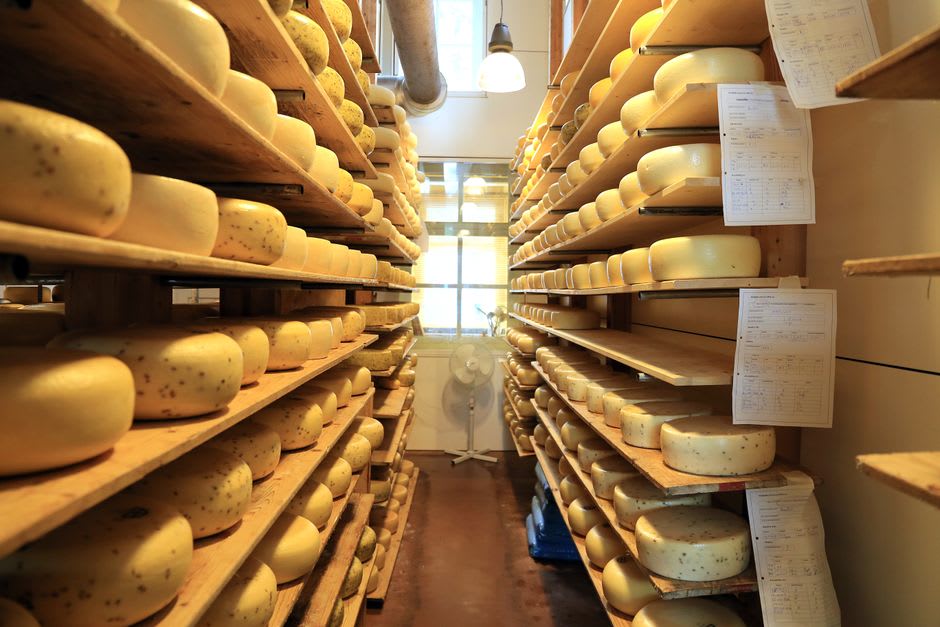
The village of Beaufort itself is small and unpretentious, more a working agricultural centre than a resort, though the drive up toward the Cormet de Roselend pass and the turquoise Lac de Roselend just beyond it is worth the trip on its own, past some of the same high alpages that fill the milk churns below.
When to go: June through September, when the cattle are up on the high alpages and the cooperatives are running full production — this is also when the Cormet de Roselend road is reliably open. Winter closes the high pass and quiets the valley considerably, though the cheese, unlike the road, keeps aging regardless.
Keep exploring
More of French Alps