Aix-les-Bains
"I came knowing one line of Lamartine by heart and left understanding why he never got over it."
A Belle Époque spa town on Lac du Bourget where Lamartine mourned a lost love in verse every French schoolchild still memorises, and where the thermal baths still smell faintly of sulphur and old money.
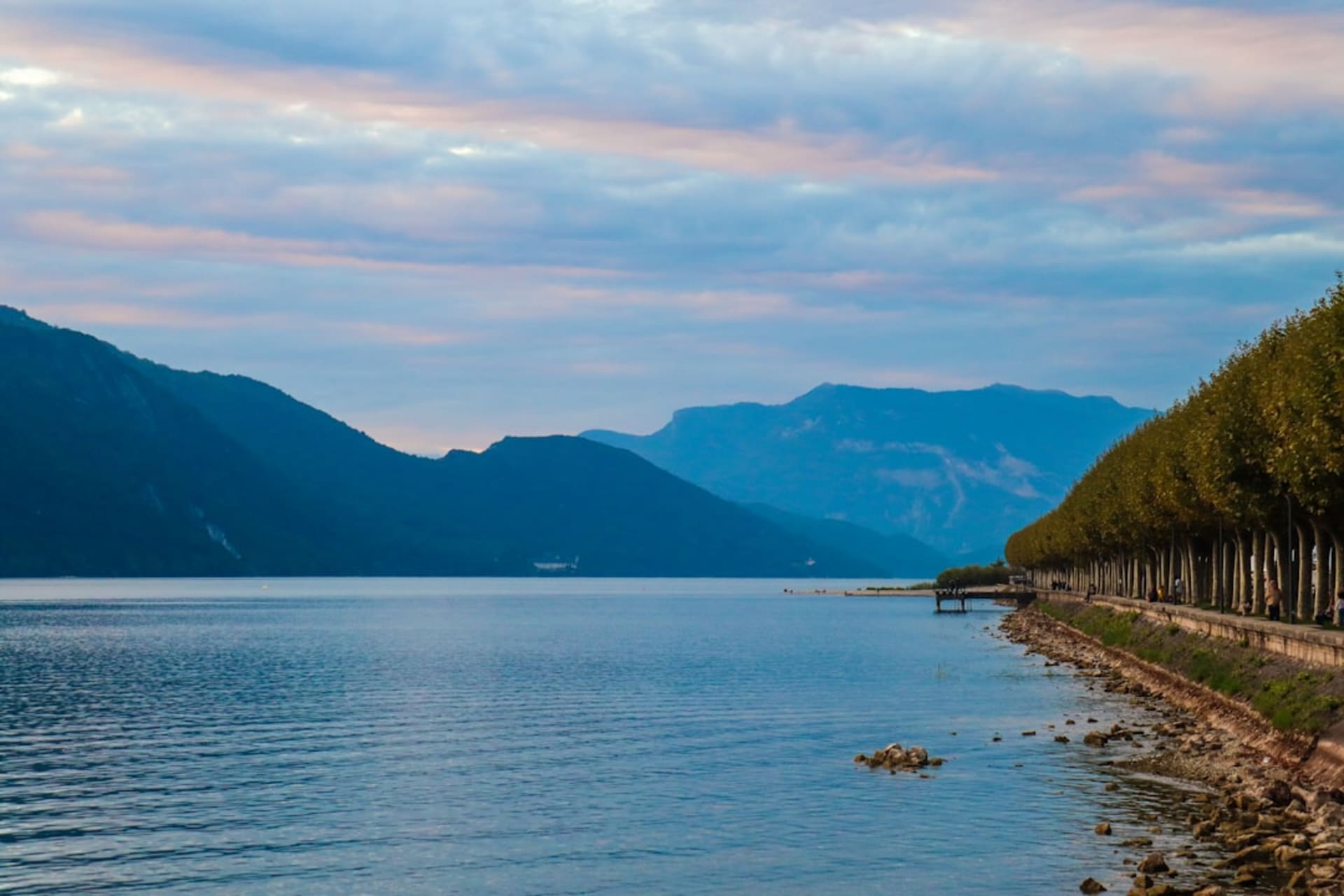
There is a poem called “Le Lac” that every French kid recites at some point in collège, usually badly, usually under duress. I recited mine badly too, in 2003, without the faintest idea that the lake in question — Lac du Bourget, the largest natural lake entirely within France — was a real place with a real shoreline you could drive to. Lia and I ended up there almost by accident, cutting across from Chambéry on a lazy Tuesday, and I spent the whole afternoon with Lamartine’s lines running on a loop in my head, finally attached to actual water.
The poem, the lake, the poet’s ghost
Alphonse de Lamartine came to Aix-les-Bains in 1816 to take the thermal waters for his health, met a woman named Julie Charles, and fell for her in the particular, doomed way that Romantic poets fell for things. She died the following year, before they could meet again at the lake as planned, and “Le Lac” is him standing on the same shore a year later, alone, begging time to stop. It is melodramatic and gorgeous and, standing at the Port de Chevelu where he is said to have written it, genuinely moving even now — the water is a flat pewter grey most mornings, ringed by the Bauges and Chartreuse massifs, and it holds still in a way that makes the whole poem feel less like hyperbole.
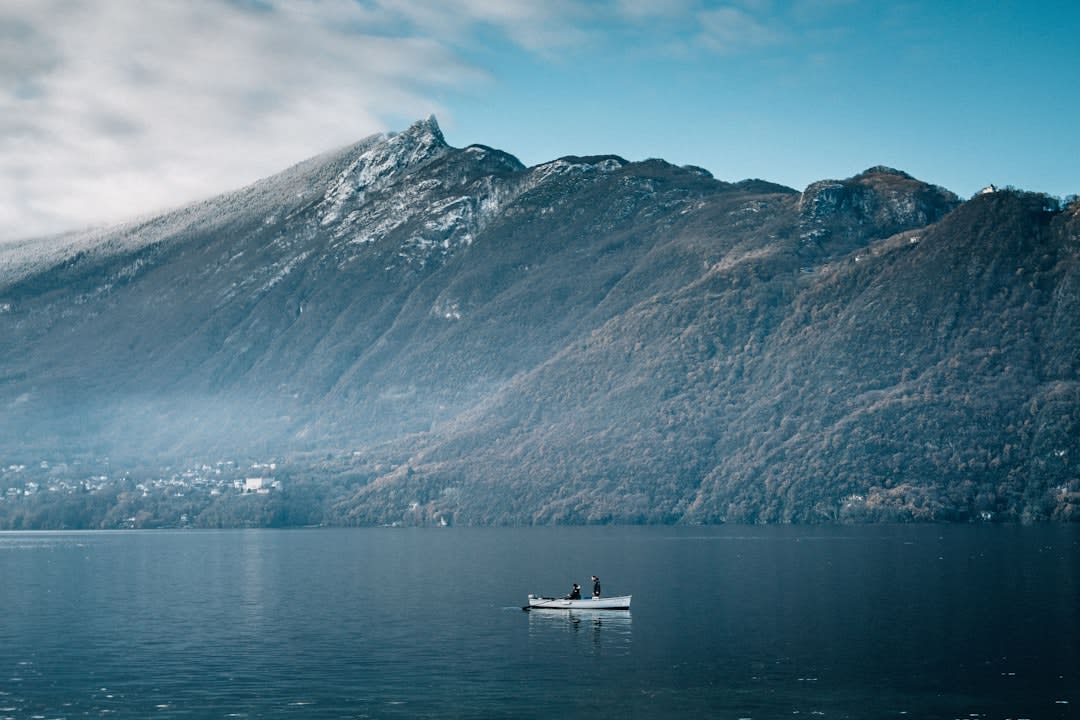
We rented paddleboards near the marina and went out early enough that the lake had that poem-appropriate stillness, before the day-trippers and the water-skiers showed up. Lia, who has less patience for dead Romantic poets than I do, admitted afterward that she got it — there’s something about this particular lake, hemmed in by mountains on three sides, that makes it feel like a room rather than a landscape.
Sulphur, marble, and the smell of the nineteenth century
The other reason Aix-les-Bains exists at all is the hot sulphur springs the Romans found and built baths over two thousand years ago, and which Napoleon III’s era rebuilt into the Thermes Nationaux — a marble-and-stucco palace of a spa that still operates, still smells unmistakably of rotten eggs the moment you step past reception, and still draws a clientele of mostly French retirees on medically prescribed cures. We didn’t do the full cure, but we booked an afternoon of the more tourist-friendly baths at Thermes Chevalley next door, and floated in warm mineral water while looking out at the lake through a wall of glass. It is not glamorous in the influencer sense. It is glamorous in the sense that Belle Époque Europe understood the word — heavy curtains, brass fittings, a slight whiff of decline.
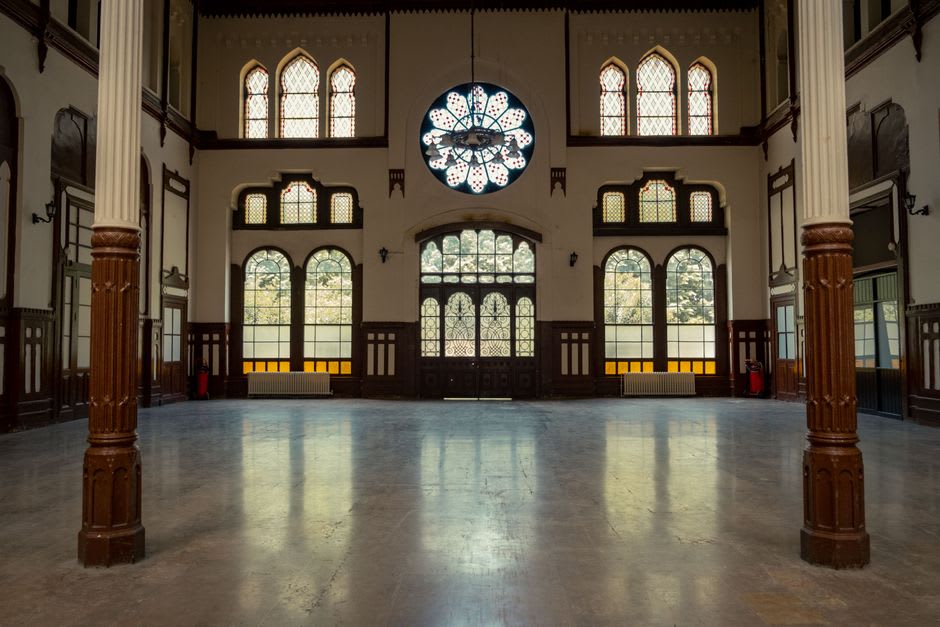
Walking back into town in the evening, past the casino and the belle-époque hotel facades that once hosted Queen Victoria and half of European aristocracy on their annual cure, it’s easy to see why this small lakeside town punched so far above its size for a century. It has since settled into something quieter and more local — a place Chambéry and Annecy weekenders come to swim, not a grand European destination — but the bones of that era are everywhere, if slightly sun-bleached now.
When to go: May through September for swimming and paddleboarding on the lake, with June and September avoiding the thickest crowds. The thermal baths run year-round and are honestly at their best in the cooler months, when stepping from the cold air into sulphurous 33-degree water feels like the whole point of the trip.
Keep exploring
More of French Alps