
Turenne
"Standing on Turenne's castle hill, I finally understood why a single family thought they didn't need the king's permission for anything."
A hilltop village that used to rule a chunk of France big enough to have its own laws, and whose castle ruins still look down over three provinces at once.

Turenne is small enough to walk end to end in twenty minutes, and yet for centuries it was the seat of a viscounty powerful enough to operate almost as an independent state within France, minting its own coin, levying its own taxes, and answering to the French crown only nominally until the viscounty was finally sold back to Louis XIV in 1738. We drove up from Collonges-la-Rouge, its red-stone neighbour just down the hill, expecting a quick photo stop and stayed for most of an afternoon climbing between the two towers at the top.
A view that explains the power
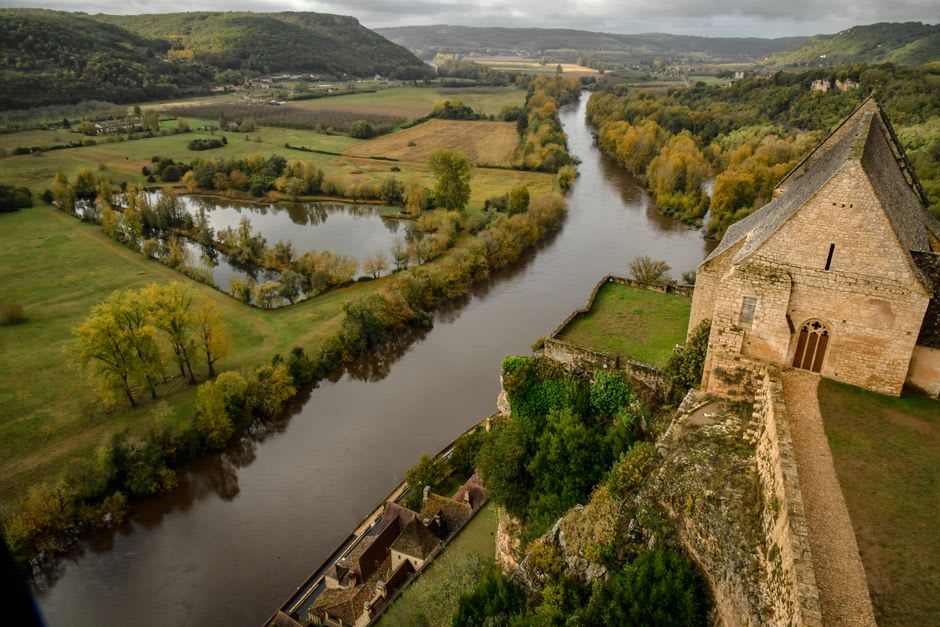
The village spirals up a limestone outcrop toward the ruins of the Château de Turenne, and what’s left — mainly the Tour de César and the Tour du Trésor — is enough to reconstruct why the viscounts held so much independent authority for so long: from the top, the panorama stretches out over the Corrèze, the Dordogne valley, and on a clear day supposedly into the Lot and Quercy beyond, three historic provinces visible from one defensive perch. It’s not hard, standing up there, to understand a family deciding they answered to nobody. The climb through the village passes Renaissance houses built by officials of the viscounty’s court, their carved doorways and mullioned windows a clear sign of money that had nothing to do with the French royal treasury.
A collegiate church built to outlast the viscounty
At the base of the castle hill sits the Collégiale Notre-Dame, a 17th-century collegiate church commissioned by one of the last viscounts, its scale slightly out of proportion with the tiny village around it — a deliberate statement of status by a family whose actual political independence was already fading by the time it was built. Inside, it’s simpler than its imposing exterior suggests, but the walk between the church below and the towers above, past gardens and old stone walls thick with wisteria in season, is what makes Turenne worth the detour rather than the ruins alone. We ended the visit the way most people seem to, sitting outside the one café on the small square, working out from the view alone how a viscounty this size held out against a kingdom for four hundred years.
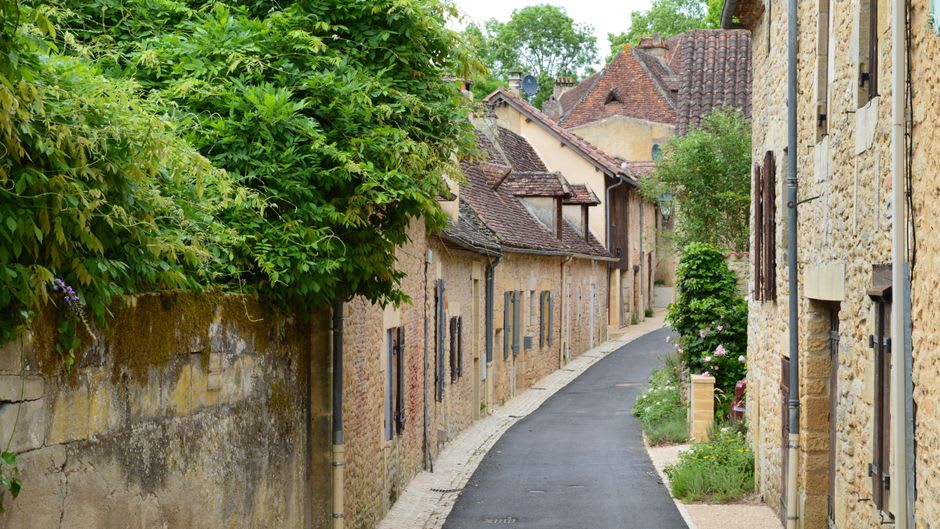
When to go: Late spring, when wisteria and roses are in bloom along the village lanes and the visibility from the castle towers is at its clearest; it pairs naturally with Collonges-la-Rouge, a five-minute drive away, for one combined half-day.
Keep exploring
More of Dordogne & Bordelais
Keep exploring
More from Dordogne & Bordelais
 france
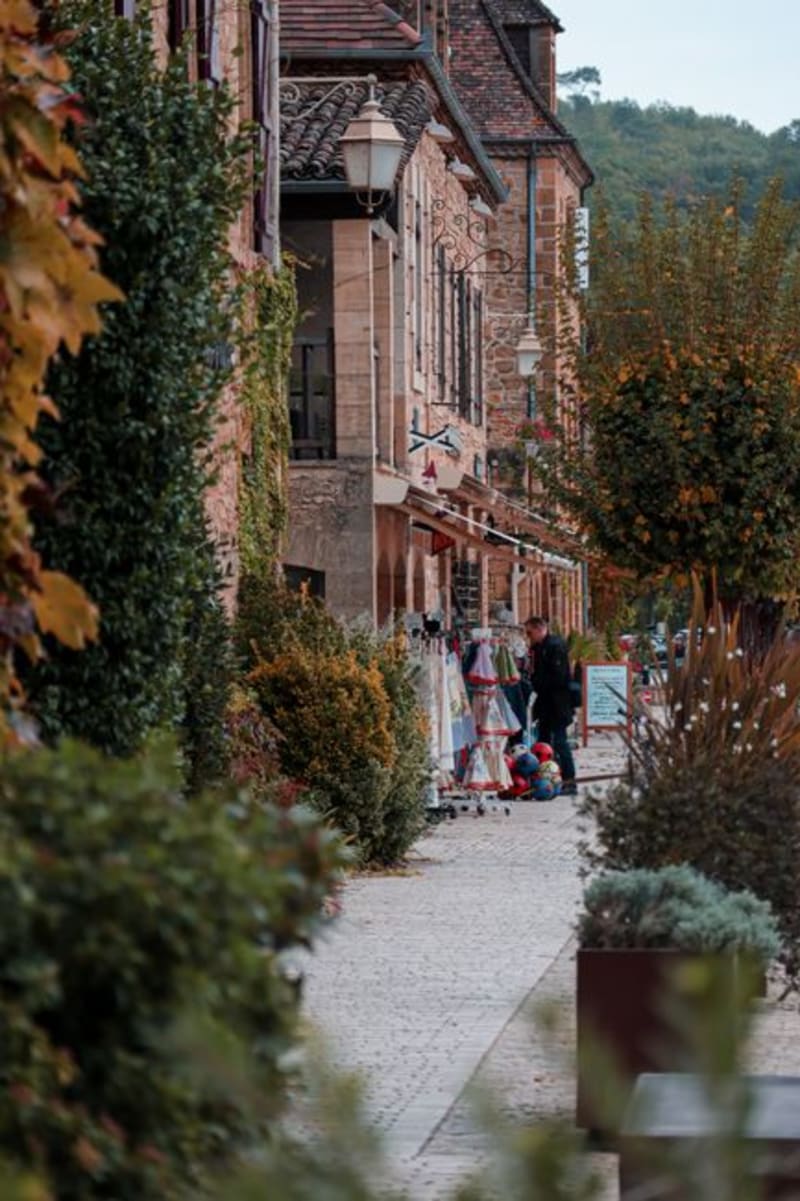
 Collonges-la-Rouge
A village built entirely from deep red sandstone, so uniformly the colour of dried blood that Lia asked, half-joking, whether the whole place had been dyed on purpose.
Explore france
 Martel
A town so proud of its skyline that it named itself after seven towers, and where we ended up chasing truffles and a century-old steam train instead of counting rooftops.
Explore france
 Souillac
A quiet river town whose abbey church hides a carved portal so strange and violent-looking that I stood in front of it longer than I did in front of most cathedrals.
Explore france
 Rocamadour
A pilgrimage village stacked vertically into a cliff face above a gorge, its sanctuary chapels built into the rock itself, still visited by pilgrims climbing the same stone steps on their knees that they have for eight centuries.
Explore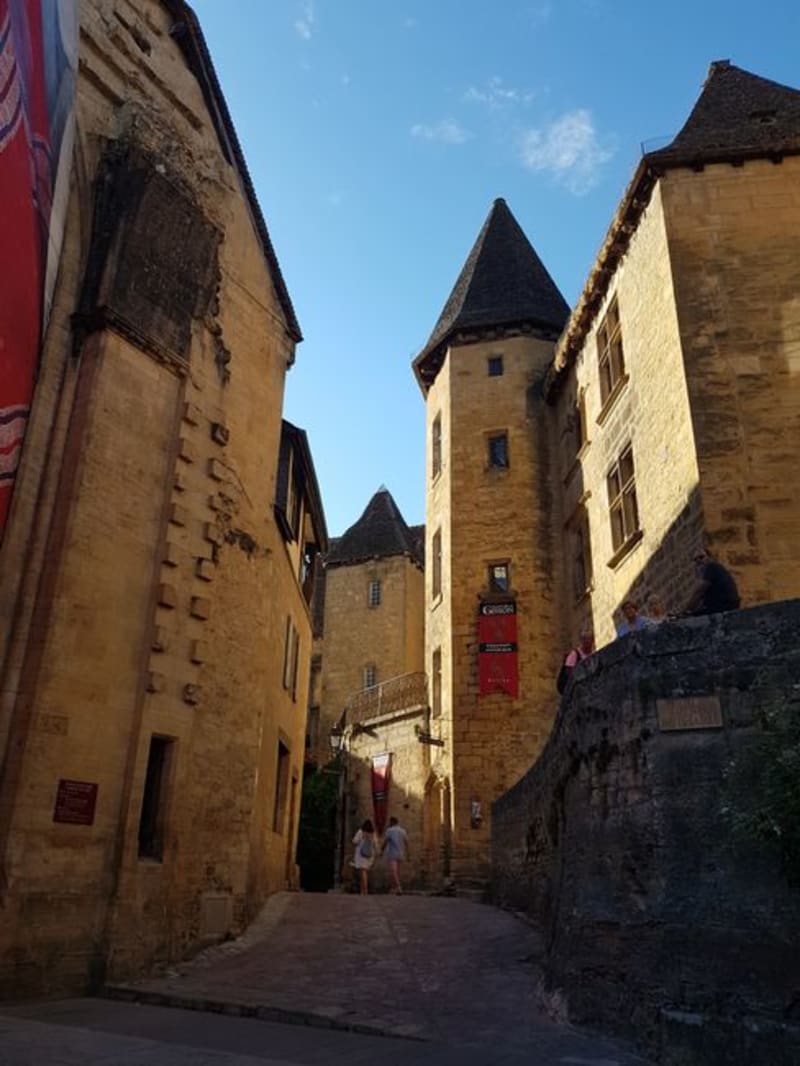 france
 Sarlat-la-Canéda
The golden-stone heart of the Périgord Noir, a medieval town so perfectly preserved that half of France's costume dramas seem to have filmed here, with a Saturday market that swallows the entire old center.
Explore france
 Domme
A hilltop bastide town with the best panoramic view of the Dordogne Valley in the region, built on a defensive grid plan by a thirteenth-century king and honeycombed with caves used by prisoners and resistance fighters alike.
Explore