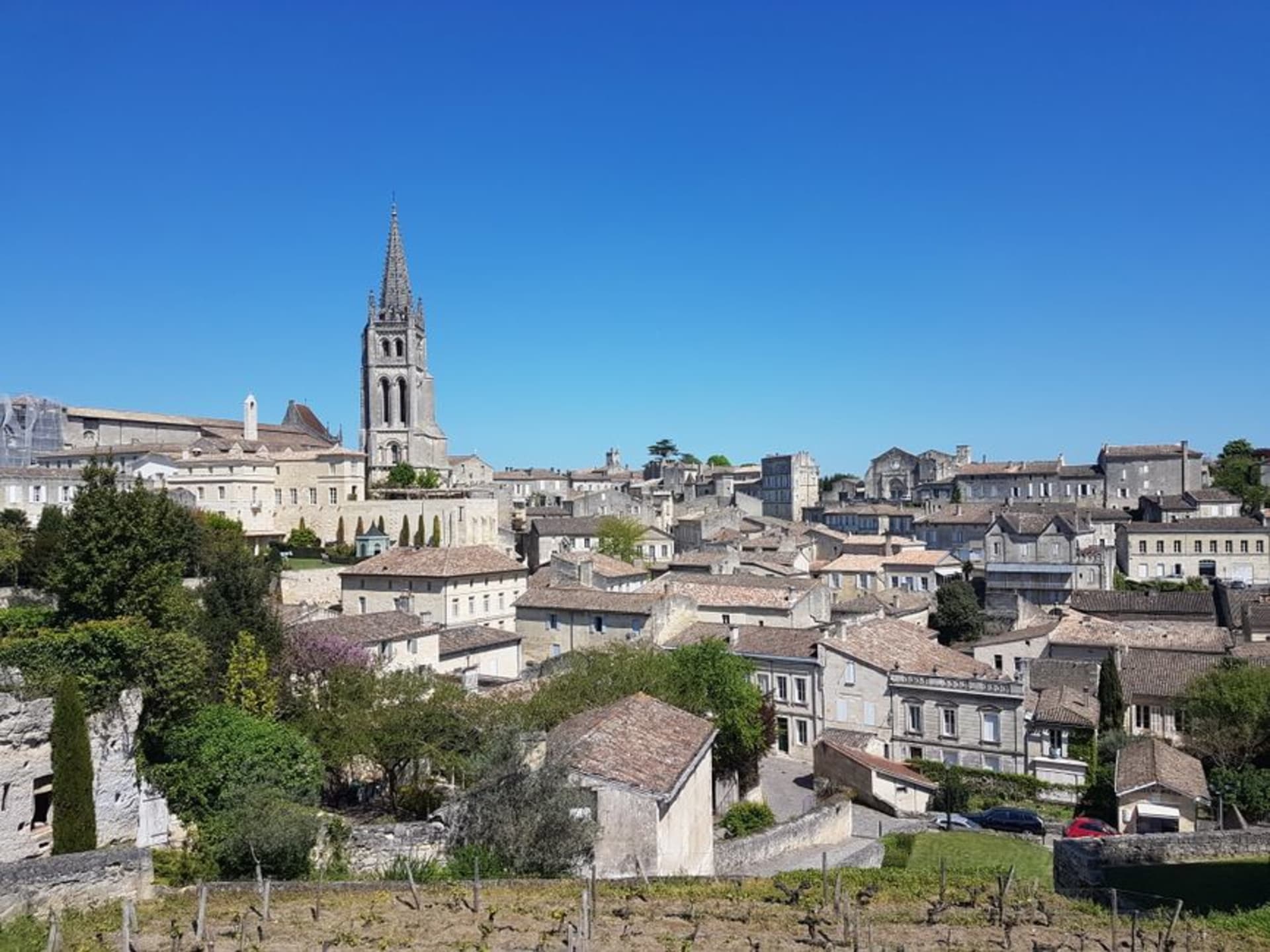
Saint-Émilion
"I've been to a lot of wine towns. I've never been to one that hollowed out a hillside to build its own church."
A whole village turned into a UNESCO site because of grapes, with a church carved downward into the rock instead of built upward out of it, which is the kind of detail that makes you stop pretending you understand medieval engineering.
Saint-Émilion sits about forty minutes northeast of Bordeaux, and it is one of the few places in France where the entire jurisdiction — village, vineyards, the lot — is a UNESCO World Heritage site, listed not for one château or one monument but for the whole cultural landscape of vines that has been worked here since the Romans. Lia and I came for a long weekend that we’d budgeted as “one day of wine, one day of town,” and left agreeing that the split should have gone the other way, because the town turned out to be the stranger, more memorable half of the trip.
The church that goes down instead of up
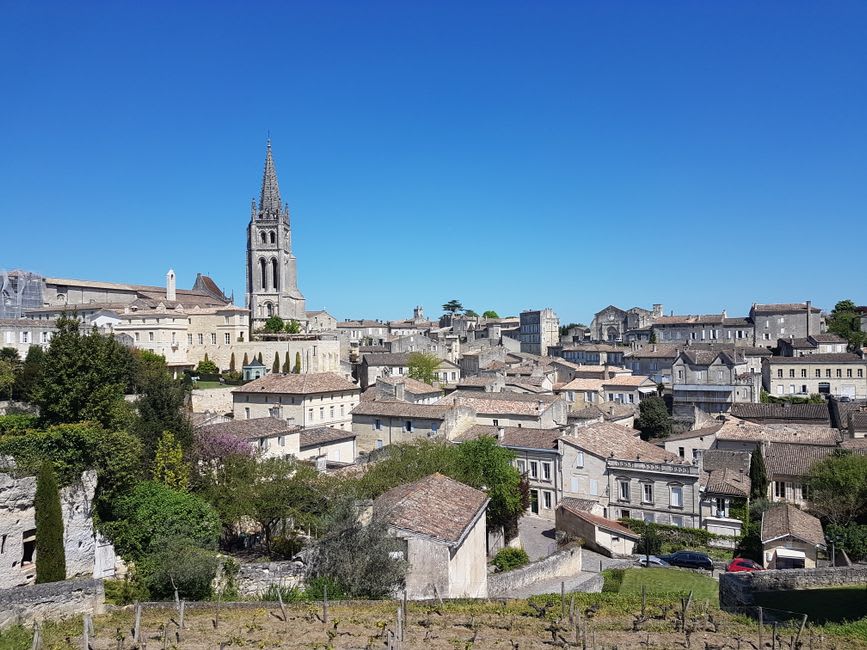
Most churches announce themselves with height — spires, vaults, the whole vertical drama of stone reaching upward. The Église Monolithe in Saint-Émilion does the opposite. Monks carved it directly into the limestone bedrock between the 9th and 12th centuries, working downward and inward rather than stacking stone on top of the ground, which makes it the largest monolithic church in Europe, a cavernous single-block interior you enter through a modest doorway on the main square and only understand once you’re standing inside it, dwarfed by a ceiling that was never built, only removed. We joined a guided tour, which is the only way in, and our guide pointed out chisel marks still visible on the walls — a thousand years old and legible as handwriting. Above it, accessible separately, is the bell tower, and the climb up its narrow spiral staircase rewards you with the best rooftop view in town, red-tiled roofs and vine rows stretching out toward the Dordogne valley in the distance.
Grand cru by the glass, cannelés by the dozen
Saint-Émilion’s wine identity is built on Merlot rather than Bordeaux’s more famous Cabernet-dominant Left Bank blends, and the softer, rounder character shows in nearly every glass poured on the square. We did a tasting at a small négociant just off Place du Marché, where the owner talked us through the difference between a Grand Cru Classé and a straightforward Saint-Émilion appellation with more patience than our budget probably deserved, and we left with two bottles we were too nervous to open before getting home. Between tastings, we kept circling back to the local pastry that has nothing to do with wine at all: cannelés, small caramelised custard cakes with a origin story tied to Bordeaux’s convents, sold warm in paper bags from a bakery on the walk down to the cloister ruins. We ate them sitting on a low stone wall above the vineyards, which is not a bad way to spend an afternoon.
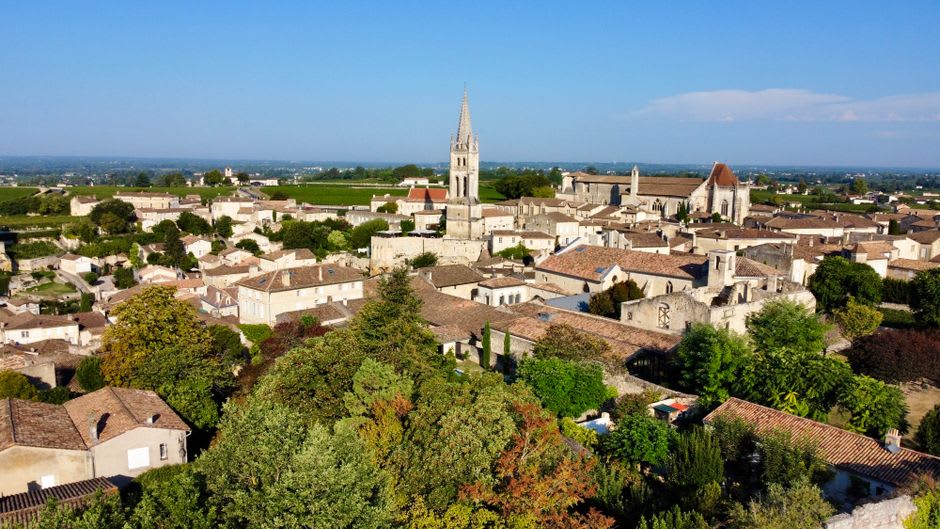
When to go: Late September, during the harvest, when the vineyards are at their most active and the town smells faintly of fermenting grapes; book the Monolithic Church tour ahead in summer, as slots fill fast and it’s the only way inside.
Keep exploring
More of Dordogne & Bordelais