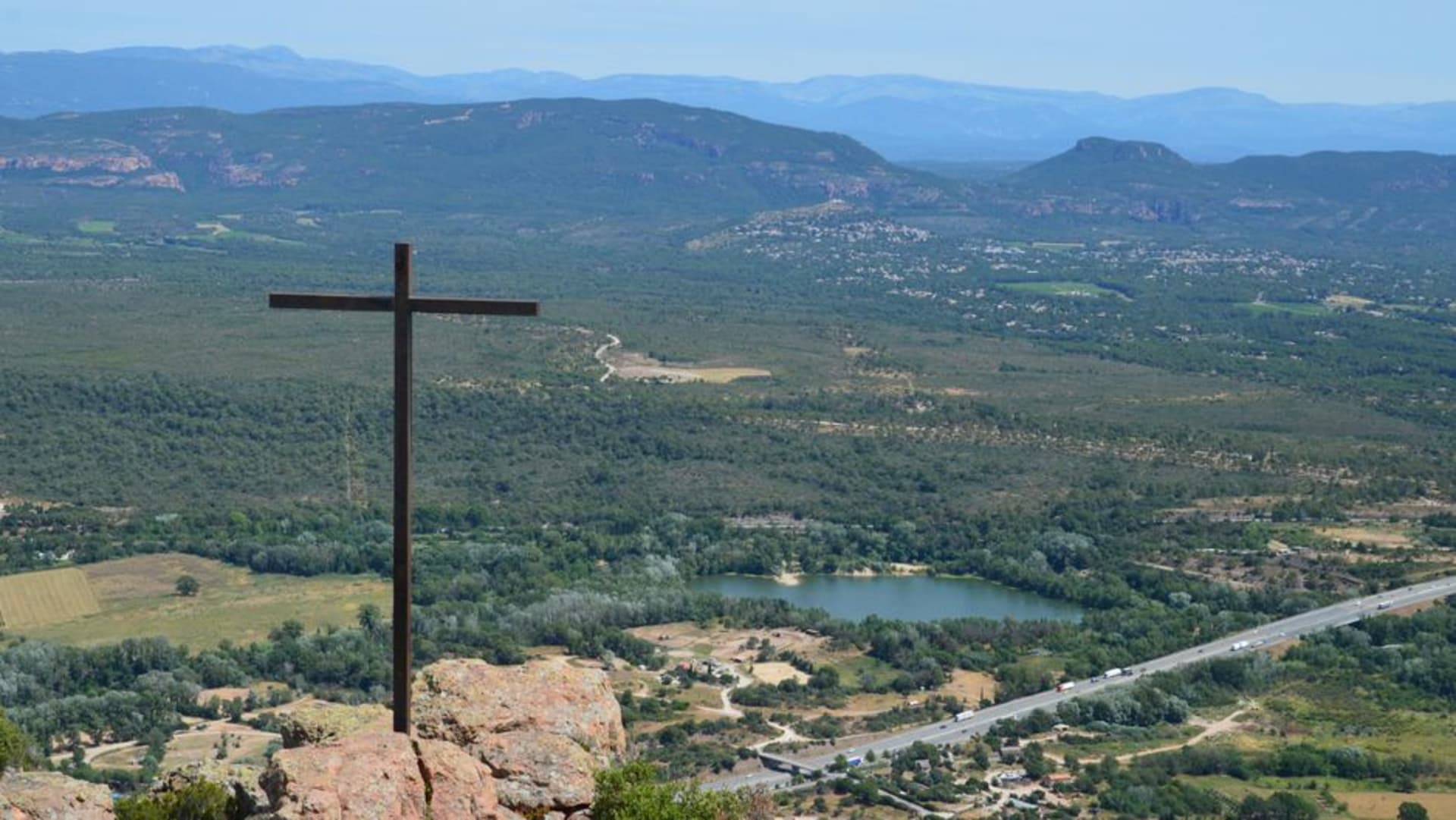
Roquebrune-Cap-Martin
"Corbusier could have built anywhere on this coast. He built himself a hut the size of a parking space, and I understood why the moment I stood inside it."
A thousand-year-old château standing guard over a village where Le Corbusier built himself the smallest, plainest cabin on the whole Riviera and where an olive tree older than the château itself still stands nearby.
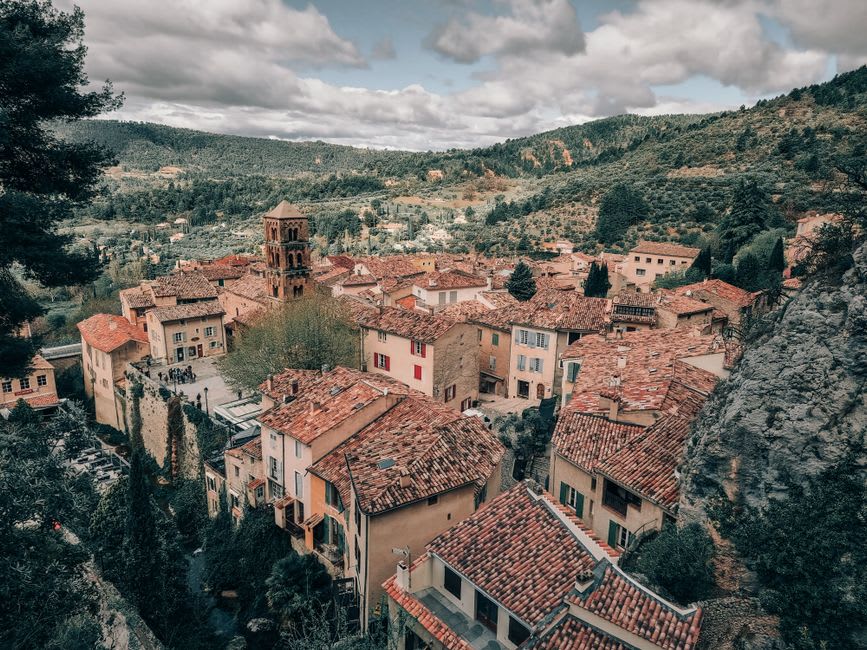
Roquebrune-Cap-Martin is really two places sharing one name — the medieval village of Roquebrune, stacked up a rocky spur above the coast, and Cap Martin, the wooded, villa-lined peninsula below it that juts out toward Monaco — and the contrast between them is most of what makes the town interesting. We split a day between the two without meaning to, starting up in the old village’s stone lanes and ending down at the cape’s rocky shoreline path in the early evening, and it felt less like one town than a short but genuine tour through a full range of what this coast has offered people over a thousand years.
The oldest château on the Riviera
Roquebrune’s château, built around the year 970 by the Count of Ventimiglia to guard against Saracen raids, is generally reckoned the oldest surviving feudal château in France, and unlike a lot of “medieval” Riviera sites it hasn’t been smoothed over into something purely decorative — the keep’s thick walls, narrow stone stairs, and a genuinely grim little dungeon are all still there to walk through. The village wrapped around its base keeps the same tight, defensible logic, vaulted passages and houses built directly into the rock, with the annual Procession des Limaces in August — a candlelit walk using snail-shell lamps, a tradition going back to a medieval plague vow — still marking the town’s oldest surviving custom.
A cabin, a grave, and a very old olive tree
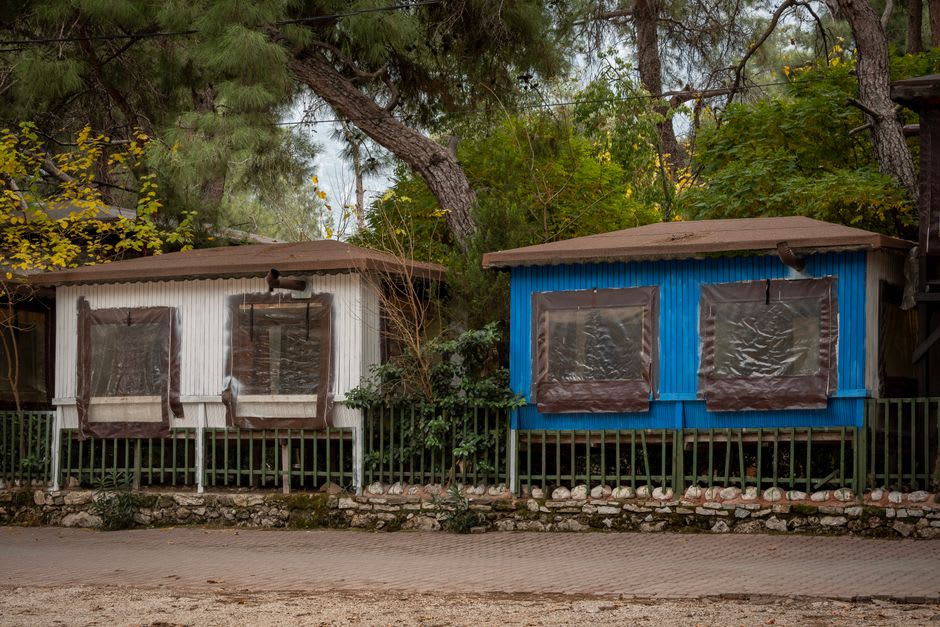
Down on Cap Martin, the story turns modern and, in its way, just as stark. Le Corbusier built his Cabanon in 1952 as a summer retreat: a single room barely more than three and a half meters square, plywood-lined, built by hand in a matter of days, tucked into the trees just above the water next to a beach bar he liked. It’s a strange, almost monastic counterpoint to the villas around it, and touring the interior — a fold-down bed, a tiny sink, a single window angled precisely toward the sea — makes the case that the architect who reshaped modern housing believed a person needed astonishingly little space to live well. Corbusier drowned swimming off this same stretch of coast in 1965 and is buried in the Roquebrune cemetery above, in a grave he designed himself. Not far from the Cabanon stands one of Europe’s oldest olive trees, its trunk gnarled into something closer to sculpture than plant, estimated at over a thousand years old — roughly the same age as the château up the hill, and somehow the more affecting monument of the two.
When to go: Spring and autumn suit both halves of the visit — cool enough for the château’s stairs, warm enough for the Cap Martin coastal path. The Cabanon can only be seen on a guided tour with limited daily slots, so book ahead if that’s your main reason for coming.
Keep exploring
More of Côte d'Azur