Levie
"I came to Levie for old stones and left thinking about a woman who died six thousand years before me and somehow felt more real than half the history I learned in school."
The unglamorous little town that turns out to be the door into Corsica's actual prehistory, with a museum case containing a 6,000-year-old skeleton that rearranged how I think about the island.
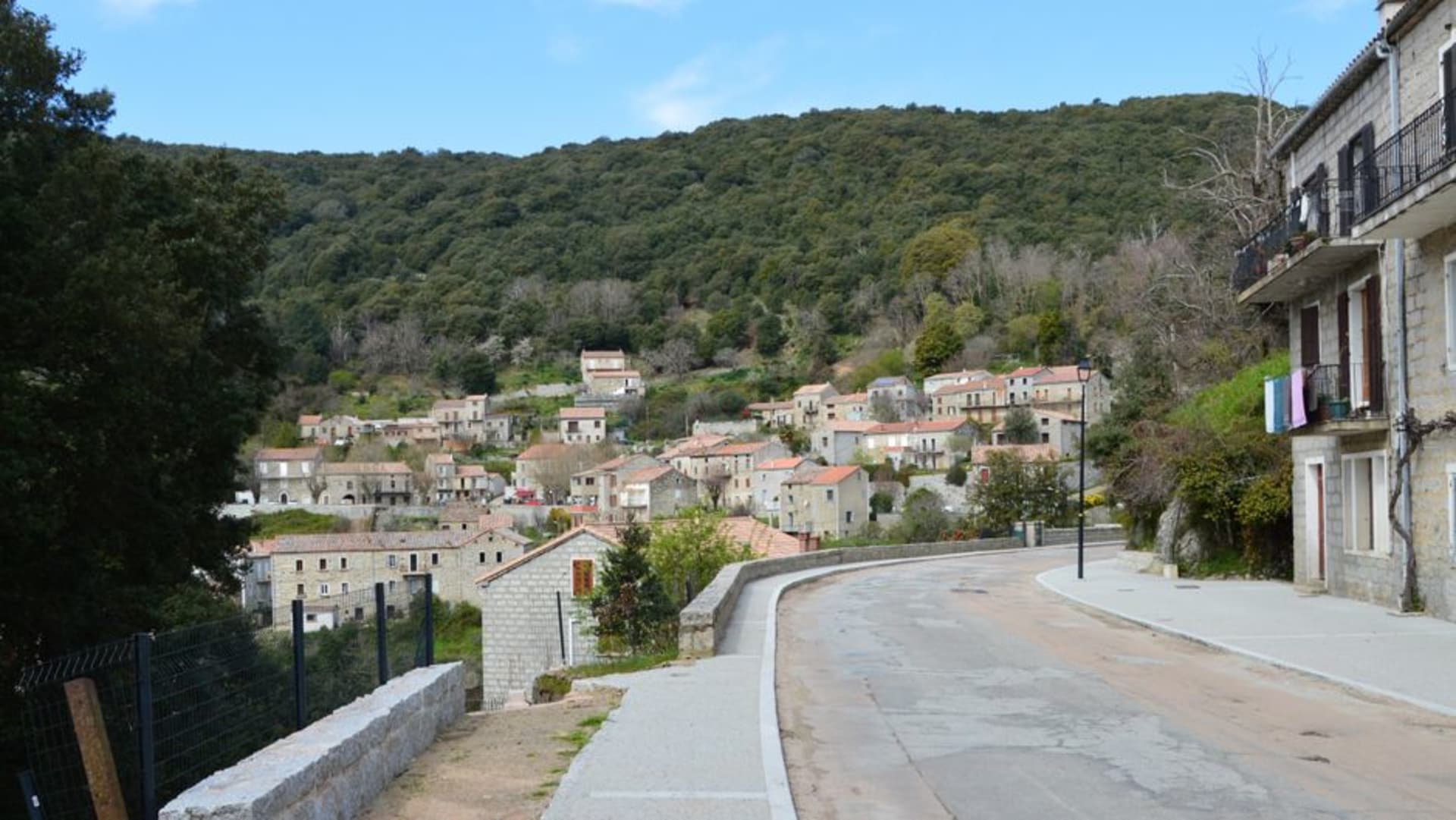
Levie doesn’t sell itself. It’s a working town in the Alta Rocca, chestnut country in the hills above Corsica’s southern coast, and if you drive through without stopping you’d assume it was just a waypoint toward the mountains or the Bavella needles. I nearly did exactly that, on my first pass through the region, before someone in Sartène told me I was making a mistake, and for once the advice was completely right.
The archaeology museum and a woman who lived six thousand years ago
The Musée de l’Alta Rocca, a modest building on Levie’s edge, holds the single object from Corsica that’s stayed with me longest: the skeletal remains of a woman archaeologists nicknamed “the Dame de Bonifacio,” found in a cave near Bonifacio and dated to roughly 6570 BC, making her among the oldest known human remains on the island. She’s displayed with the quiet, careful lighting museums use when they know they’re showing you something serious, and I stood in front of the case for longer than I usually give any exhibit, doing the math on how long ago that actually was and failing to make it feel real, which I think is the honest response. Lia read every panel twice. I mostly just looked at the bones and thought about how ordinary her life probably felt to her.
Cucuruzzu and Capula, stone that predates everyone’s ancestors
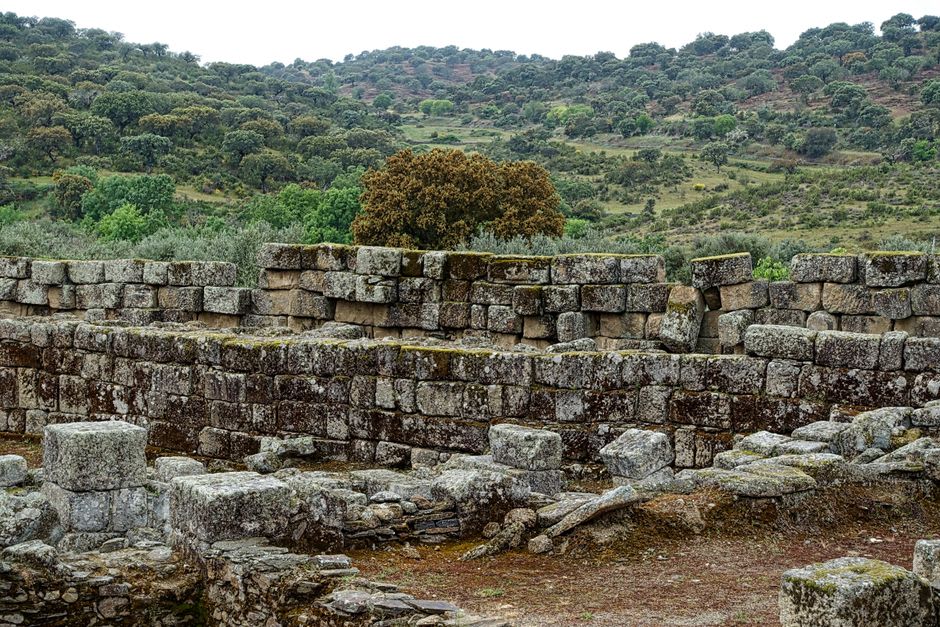
A few kilometers outside town, in oak and chestnut forest, sit the sites of Cucuruzzu and Capula — Bronze Age settlements of dry-stone structures, a torre built without mortar sometime around 1400 BC, and later medieval fortifications layered right on top, as if every generation that found the site agreed it was worth defending. Walking the marked trail between them, granite boulders half-swallowed by forest, stone walls that have held their shape for over three thousand years without a drop of mortar, I kept losing the thread of centuries — Bronze Age structure, medieval wall, another Bronze Age structure, the forest not caring which was which. It’s one of the few places in Corsica where you feel the island’s depth rather than just its scenery.
Levie itself, once you’re back in town, is chestnut-flour beignets at the bakery and old men playing cards outside the church and absolutely no attempt to dress any of this up for visitors. That plainness is what makes the museum and the sites hit harder — nobody’s trying to sell you the past here, they’re just the people who happen to live next to it.
When to go: Late spring through early autumn for dry trails at Cucuruzzu and Capula; the forest canopy keeps the walk shaded even in summer heat. The museum is worth a full hour any time of year and is a good rainy-day plan if you’re based in Sartène or Zonza. Chestnut season in October brings the local flour and beignets at their best.
Keep exploring
More of Corsica