Tréguier
"Some towns perform their history for visitors. Tréguier just keeps living inside it."
A hushed cathedral town on the Jaudy estuary where Ernest Renan was born and where the pardon procession still fills the streets with banners once a year, whether the tourists notice or not.
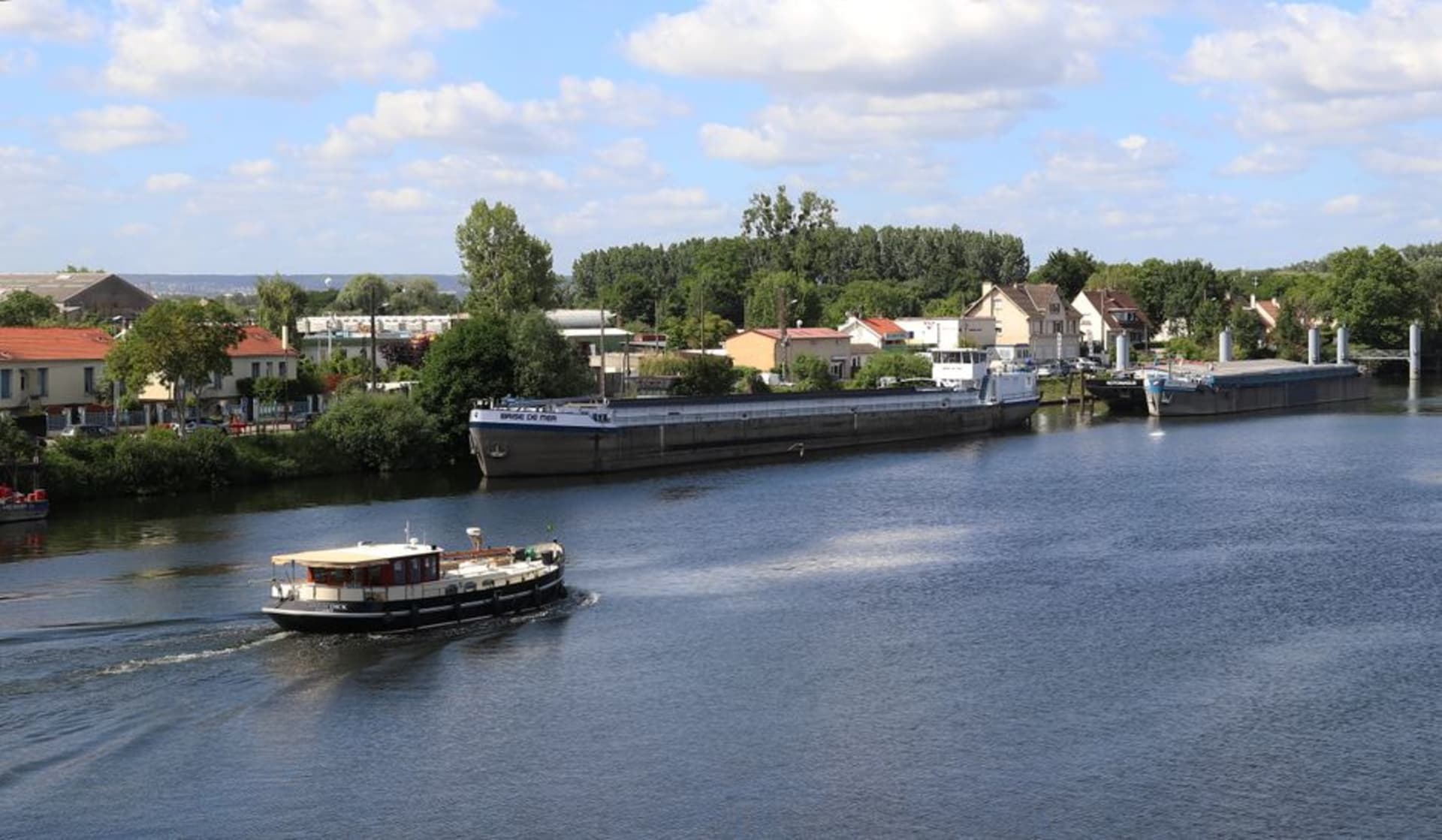
Tréguier sits at the point where the Jaudy and Guindy rivers meet and widen into a single tidal estuary heading out to the Channel, and it has the settled, slightly severe atmosphere of a town that was once genuinely important and has made a quiet peace with being smaller now. It was one of the seven founding bishoprics of Brittany, and the cathedral it built to prove it still dominates the town completely, its openwork Gothic spire visible from every approach road long before the houses come into view.
Saint-Tugdual’s cathedral and its cloister
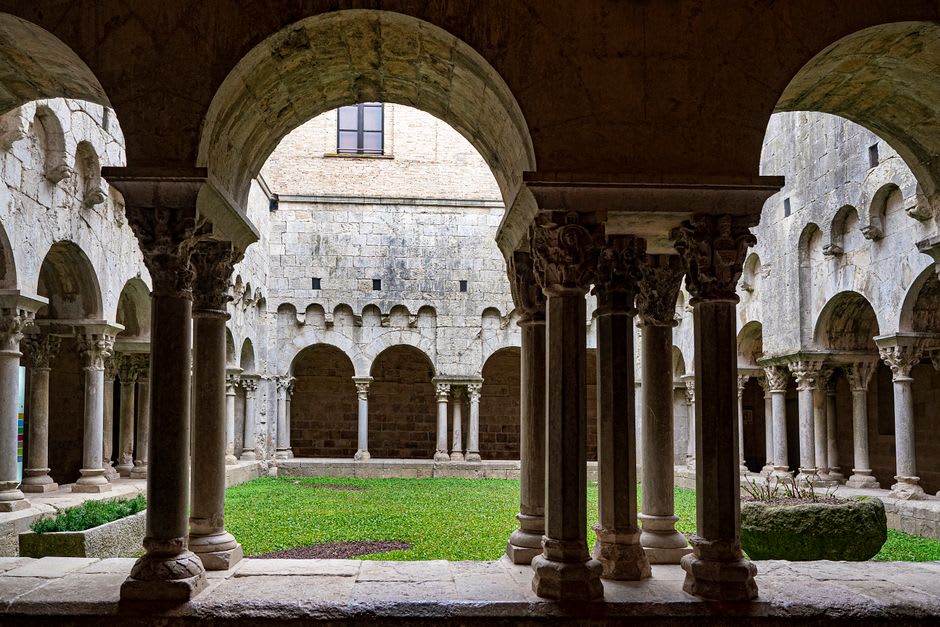
The cathedral of Saint-Tugdual is the reason Tréguier exists as a town at all, and it’s a genuinely severe, beautiful building — pink and grey granite, a soaring 14th-century choir, and a spire pierced with tracery that looks almost too delicate for the heavy stone town around it. What stopped me longest wasn’t the nave but the cloister attached to its side, one of the few complete Gothic cloisters left in Brittany, a quiet rectangle of arcades around a small garden where the light does something different every hour. We sat on the low wall there for a while, mostly in silence, while an elderly local swept the gravel path with the unhurried thoroughness of someone who’s done it every week for decades.
Renan’s house and the pardon in the streets
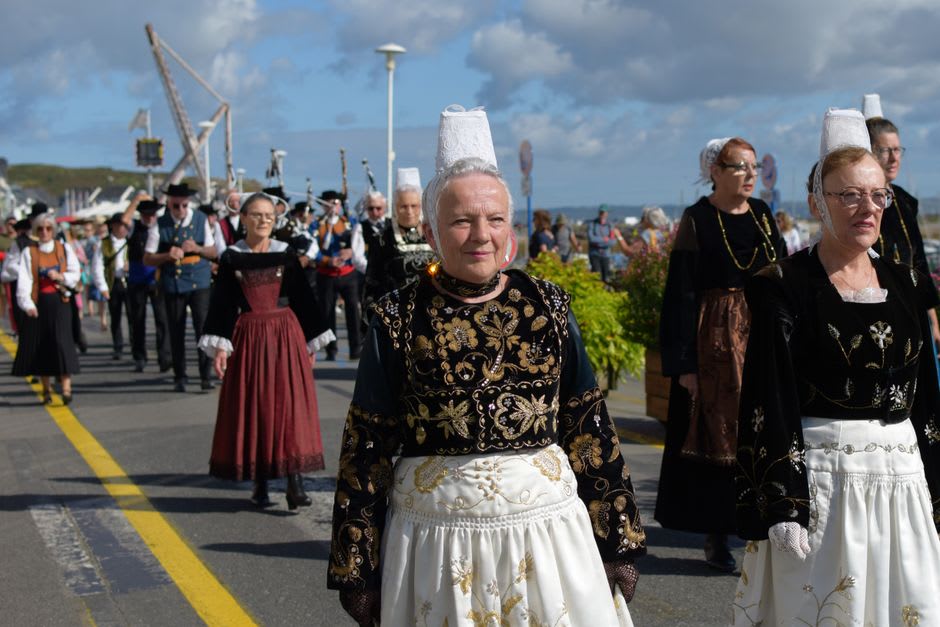
Tréguier’s other claim to fame is Ernest Renan, the philosopher and historian born here in 1823 whose childhood home, a modest half-timbered house near the cathedral, is now a small museum. Renan later scandalized the Catholic establishment with his skeptical writing on the life of Jesus, and there’s a certain irony in the fact that his statue now stands in the square directly opposite the cathedral that shaped his upbringing, the two of them staring each other down across the cobbles. That tension between devotion and independence feels very present here still, especially if you time a visit around the town’s pardon — the traditional Breton religious procession, held in Tréguier’s case in honor of Saint Yves, the patron saint of lawyers, who is buried in the cathedral. We didn’t plan our trip around it but happened to be there for a smaller local pardon, and the sight of banners, embroidered ceremonial dress, and a slow procession winding down streets normally full of nothing but parked cars and grocery shoppers was one of the more unexpectedly moving things we saw in Brittany.
When to go: The Grand Pardon de Saint-Yves takes place in mid-May and is worth planning around if you want to see the town at its most ceremonial. Otherwise, late spring through September gives the best weather for walking the estuary paths and sitting out in the cathedral square.
Keep exploring
More of Brittany