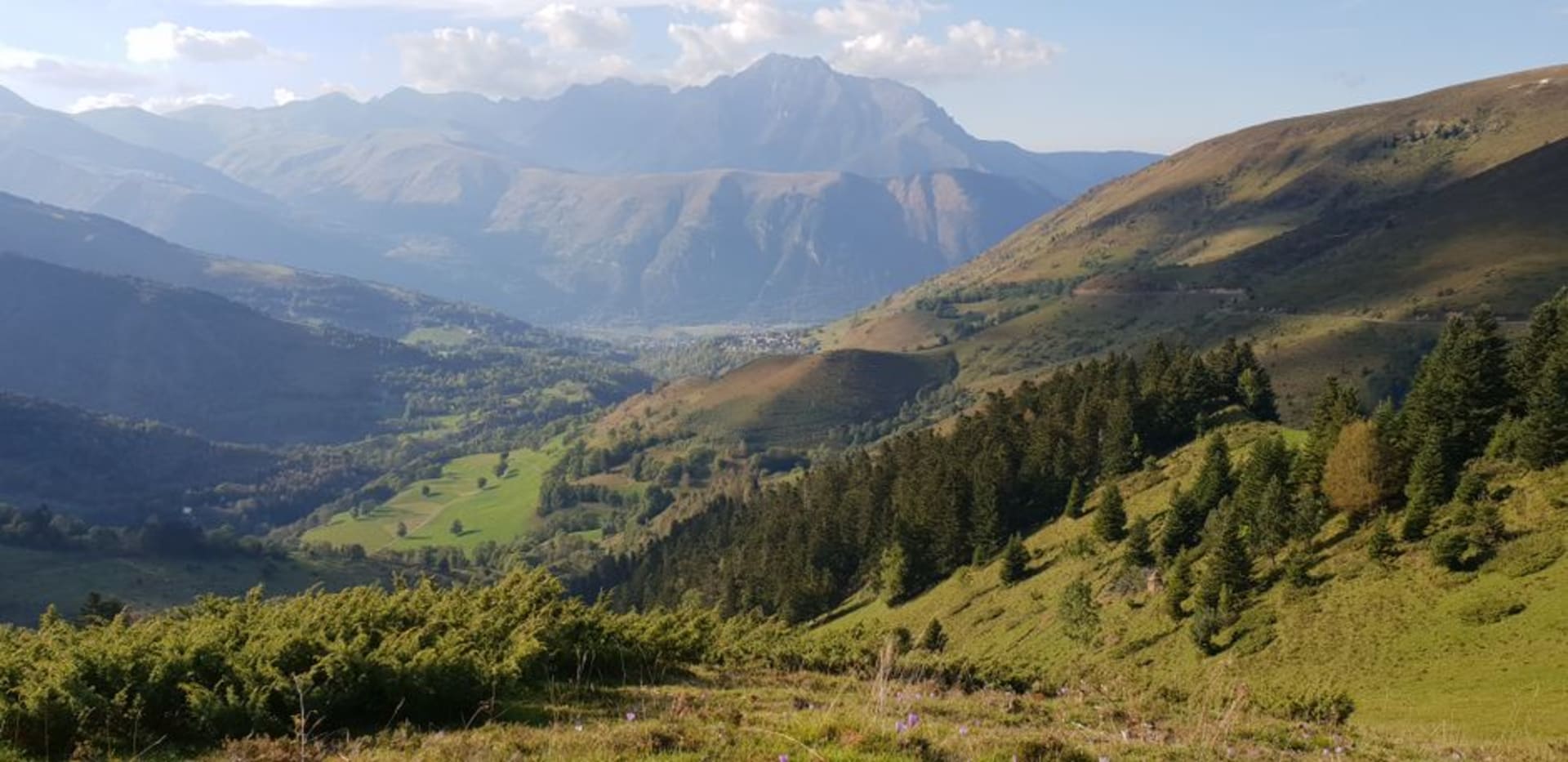
Laruns
"I've never watched a road this quiet turn, once a year, into one of the loudest places in France."
The last real village before the Col d'Aubisque, where shepherds still walk their flocks up to the high pastures every June and the Tour de France turns the same road into a wall of screaming fans every few summers.
Laruns sits at the mouth of the Vallée d’Ossau, right where the valley narrows and the road starts its serious business of climbing toward the Col d’Aubisque, and it’s the kind of place that spends most of the year in complete calm and then, every couple of summers when the Tour de France routes through, becomes briefly one of the most chaotic mountain towns in the country. We arrived on an ordinary Tuesday with none of that going on — just a handful of locals at the café by the church, a war memorial, and a road sign warning of livestock for the next twenty kilometres, which turned out to be the single most accurate sign I saw all trip.
Climbing the Aubisque without a bike race
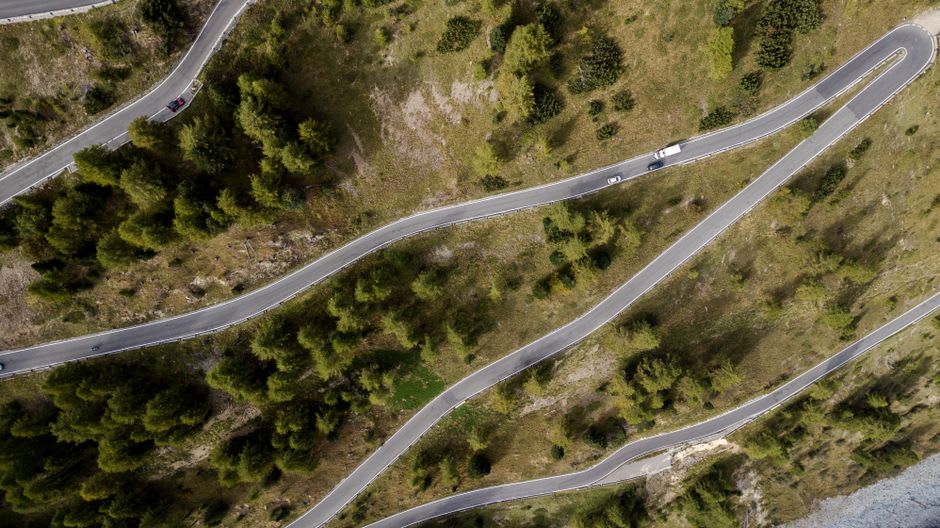
The road out of Laruns toward the Col d’Aubisque is one of the most-used climbs in Tour de France history, a brutal series of switchbacks that gains over a thousand metres before it tips over into the Vallée d’Ossau’s twin valley system, and cyclists come from all over Europe just to ride it on an ordinary day, painted encouragements from past editions still fading on the tarmac. We drove it slowly, windows down, past a small group of riders clearly suffering on the steepest section, and stopped at the top where the road cuts through a literal notch in the ridge and the view opens onto peak after peak with barely a building in sight.
A village that still moves its sheep the old way
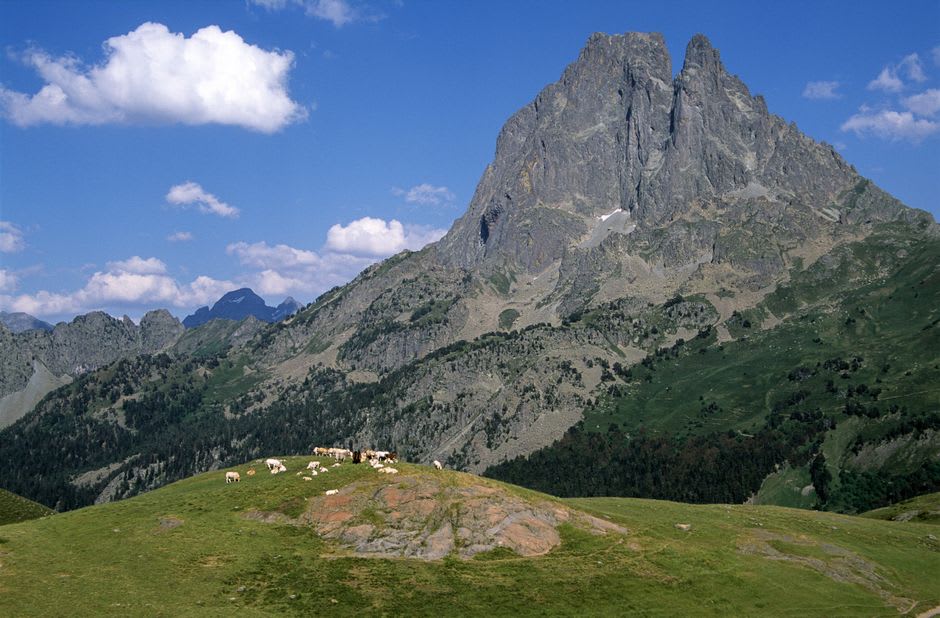
Laruns holds onto the transhumance tradition harder than most Pyrenean towns — every June, shepherds from the valley walk their flocks of sheep up to the high summer pastures below the ridgeline, a practice that’s continued for centuries and that the village now marks with its Fête du Fromage in October, celebrating the Ossau-Iraty cheese made from those same flocks’ milk. We happened to catch the tail end of a smaller local gathering, a handful of families in traditional Béarnais dress dancing in the square outside the church, unhurried and entirely unstaged for anyone watching.
When to go: June brings the transhumance up to the high pastures, October brings the cheese festival, and if you’re chasing the Tour de France, check the route years in advance — the Aubisque doesn’t feature every edition.
Keep exploring
More of Basque Country