Annecy
"I came for a pretty stop between two cities and cancelled the next two nights to stay."
I have a private rule about any town that markets itself as the Venice of somewhere. The nickname almost always does more work than the place. Annecy is the exception that made me quietly retire the rule. Lia and I arrived on an early-July morning expecting a photogenic pause between Geneva and Chamonix, walked along the lakefront for twenty minutes, looked at each other, and cancelled the two nights we had booked further up the valley.
The lake that ruins other lakes
Lac d’Annecy is fed by mountain springs and an underground river, and the people who live here will tell you, with the calm certainty of those who swim in it every morning, that it is the cleanest lake in Europe. I am not equipped to referee that claim, but I can report that I have rarely seen water do what this water does: it shifts from a deep alpine blue in the centre to an almost Caribbean turquoise over the shallow gravel near the shore, and it is cold enough to make you yelp and clear enough to make you stay in anyway.
We rented a small electric boat at the harbour — no licence required, a fact that worried me more than it should have — and spent an afternoon puttering toward the southern end where the mountains crowd in and the villages thin out. Lia took the wheel and developed an immediate and alarming confidence. We swam off the back of the boat in water so transparent I could count the stones four metres down, ate a baguette and a wedge of reblochon we had bought that morning, and felt, briefly, like the kind of people who do this all the time.
The old town, minus the postcard
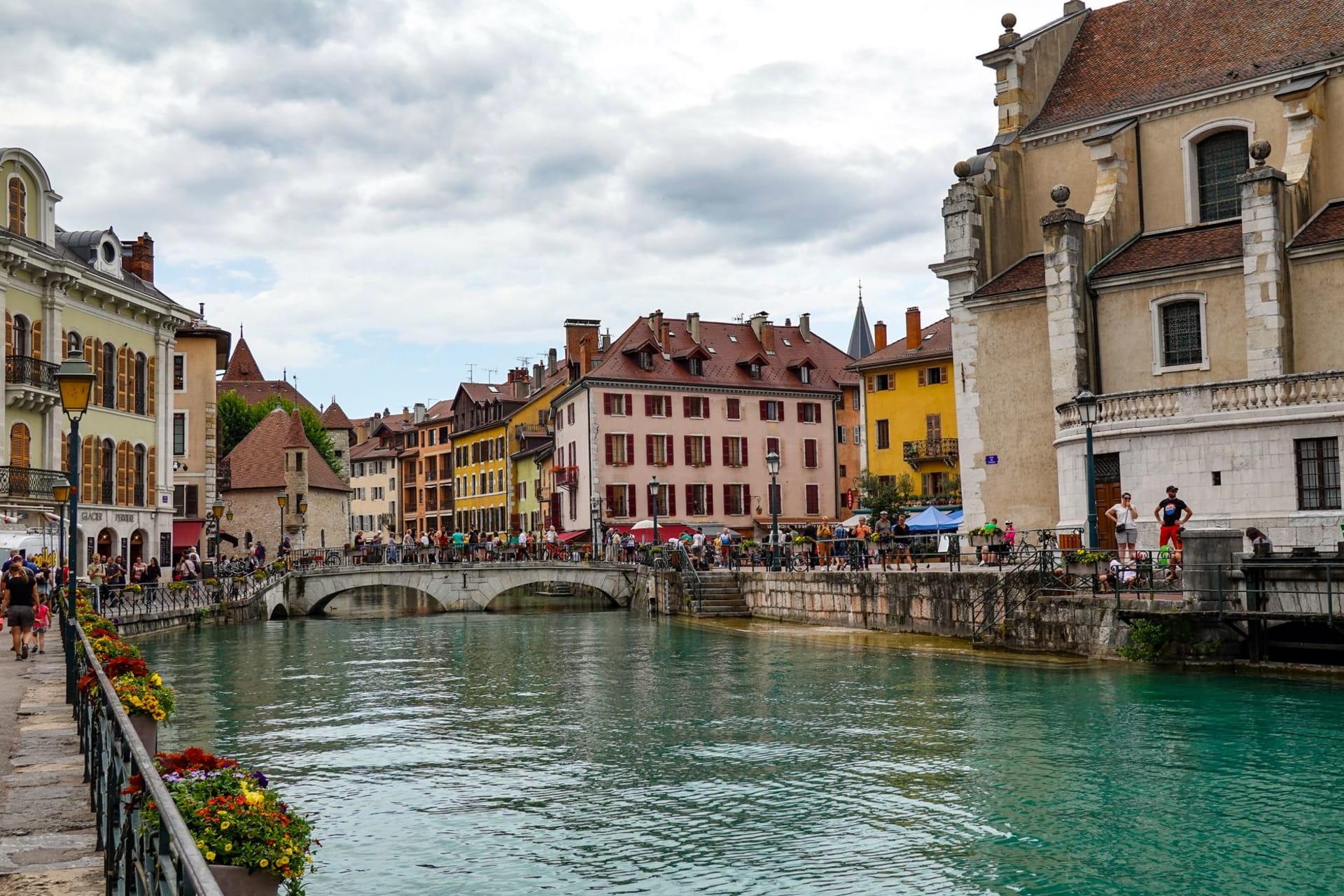
The Vieille Ville is built around the Thiou, a short canal that drains the lake and once powered the town’s mills and tanneries. At its heart sits the Palais de l’Île, a stone building shaped like the prow of a ship that has been, over the centuries, a residence, a courthouse, and a prison, and is now the most photographed object in Haute-Savoie. I will admit it is genuinely lovely, even with the tour groups arranged in front of it like sediment.
What saved the old town from being merely cute was the Tuesday market. We followed the smell of roasting chickens through arcaded streets and found stalls of Savoyard cheese stacked like masonry, charcuterie, mountain honey, and a man selling diots — local sausages cooked in white wine — to a queue of people who clearly were not tourists. We ate standing up, leaning on a canal railing, and watched the water go by.
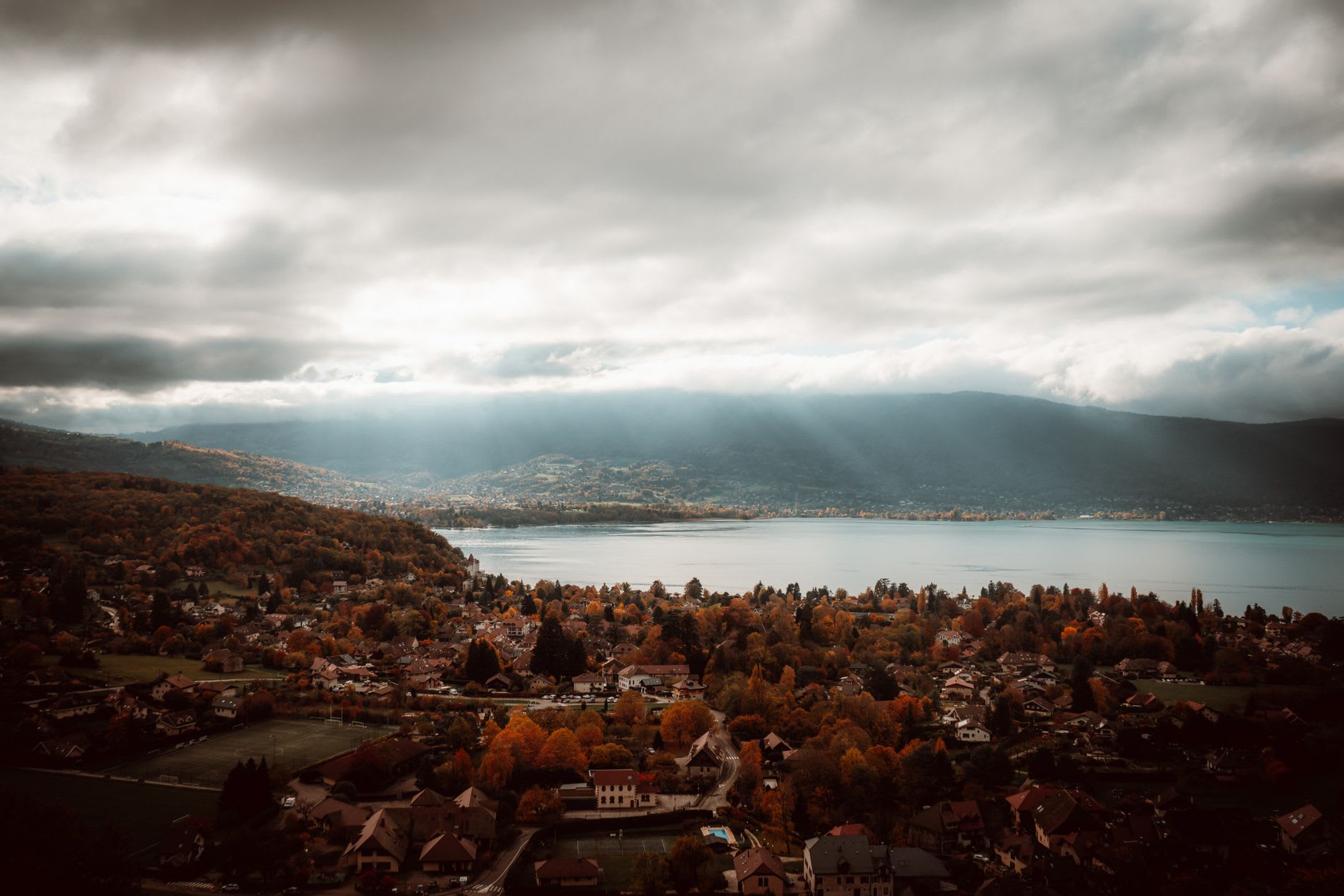
The climb up to the Château d’Annecy is short and the reward is the whole basin laid out below — the lake, the rooftops, the mountains closing the far end like a wall.
When to go: June and September are the sweet spot — the water is swimmable, the light is long, and the July-August crush of French holidaymakers has not yet turned the lakefront into a single slow-moving crowd. Winter has its own quiet charm, but the lake is the point, and the lake wants summer.