Sarrebourg
"We stopped in Sarrebourg for fifteen minutes to stretch our legs and stayed for two hours because of one window."
A modest Lorraine crossroads town that happens to hold one of Chagall's largest stained-glass windows in a converted medieval chapel, which is reason enough to stop between Nancy and Strasbourg.
Sarrebourg isn’t a town anyone plans a trip around. It sits at the point where Lorraine’s rolling farmland starts giving way to the first hills of the Vosges, a functional crossroads between Nancy and Strasbourg that we’d only stopped in because Lia needed a coffee and I needed to stop staring at the autoroute. Neither of us expected the best half-day of that whole drive to happen there.
The Chapelle des Cordeliers and a window the size of a wall
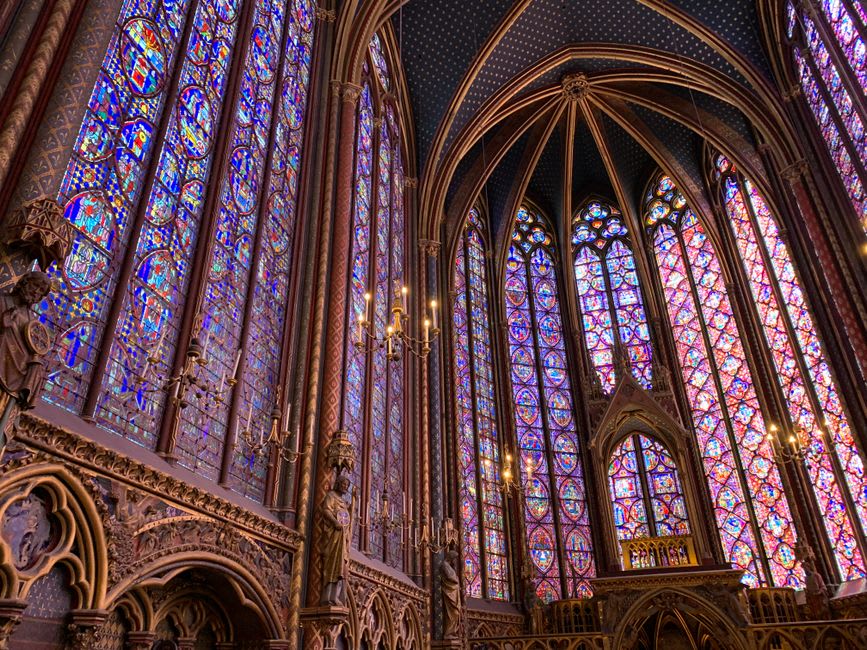
Tucked into the old Franciscan Chapelle des Cordeliers, a plain thirteenth-century building that had been deconsecrated and repurposed more than once over the centuries, is a stained-glass window by Marc Chagall that runs the entire width of the chapel’s rear wall — twelve metres across, among the largest he ever completed, installed in 1976 as what he described as a gift symbolising peace between peoples. The window is called La Paix and floods the small stone chapel with a wash of blue and touches of red and yellow, figures and animals and biblical scenes drifting through the colour the way they do in his paintings, except here the light itself is doing the work rather than pigment on canvas. We arrived close to midday, when the sun sits almost directly behind the glass, and the whole nave filled with a deep, moving blue that neither of us could stop looking at, coffee forgotten in the car.
A gateway town, and a Roman wall underneath it
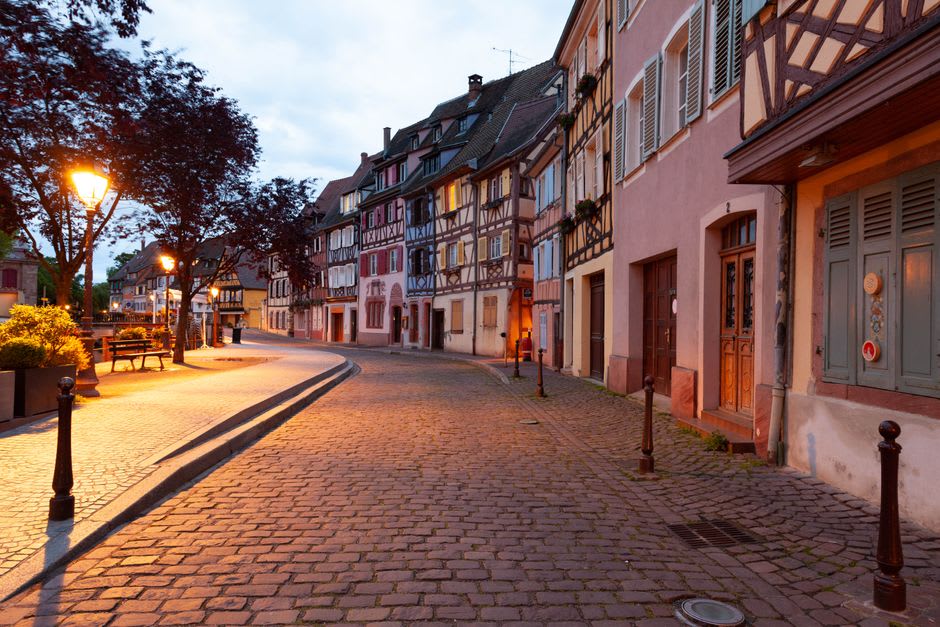
Sarrebourg has functioned as a passage point for far longer than the modern road network suggests — the Romans built a fort here to guard the route through the Vosges, and a stretch of Gallo-Roman wall still survives near the old town, unassuming enough that we nearly walked past it without noticing the small plaque explaining what it was. Walking the quiet streets afterward, past half-timbered houses that lean slightly toward Lorraine rather than Alsace in their style, it was easy to feel exactly where you were on the map: not quite one region, not quite the other, a genuine hinge point that has been letting people cross between the two for two thousand years. We left in the early evening having completely rearranged the rest of the day’s plans, which felt like the correct response to a town that gives you a Chagall out of nowhere.
When to go: Late morning to early afternoon on a sunny day is essential for the Chagall window, since the effect depends entirely on direct light coming through the glass; spring and autumn keep the town quiet enough that you can have the chapel largely to yourself.
Keep exploring
More of Alsace