
Dry Tortugas
"Seventy miles from Key West, the water turns a color for which I have no word in French or Spanish."
The ferry to Dry Tortugas leaves Key West at seven in the morning, and by the time you’re thirty miles out you’re in open Gulf water with no land visible in any direction, and you understand, in your body rather than your mind, that this is not a day trip to a beach. The Dry Tortugas are seventy miles west of Key West — reachable only by seaplane or the Yankee Freedom ferry — and the journey is part of what makes them matter. Two and a half hours of open water, flying fish skimming the surface, frigatebirds hanging motionless in the updrafts above the bow. When Fort Jefferson appears on the horizon, it appears improbably: a massive hexagonal brick fortress rising directly from the sea, no land around it except the shallow reef and the sand spit the fort occupies, the walls sixty-five million bricks high and the color of old blood against that impossible turquoise.

Fort Jefferson was begun in 1846 and never finished. The Union used it as a military prison during the Civil War — Dr. Samuel Mudd, convicted of treating John Wilkes Booth’s broken leg, was imprisoned here for four years, and you can find his cell in the northwest bastion. But the fort’s history is almost beside the point once you’re in the water. The moat around the walls holds brain coral colonies and parrotfish and the occasional sea turtle, and the snorkeling from the public beach on the southeast side is the best I’ve found in Florida without hiring a dive boat: the water is so clear you can see individual sea fans moving in the current from twenty feet above them.
The island is home to a remarkable number of migrating birds that use the Tortugas as a waypoint during spring migration — warblers, tanagers, and the occasional exotic blown off course from Cuba, a hundred miles south. In late April, the fort’s moat walls are sometimes draped with exhausted migrants resting before continuing north. I saw a painted bunting there once, electric blue and green and red, sitting on a cannon and looking deeply inconvenienced by the entire journey.
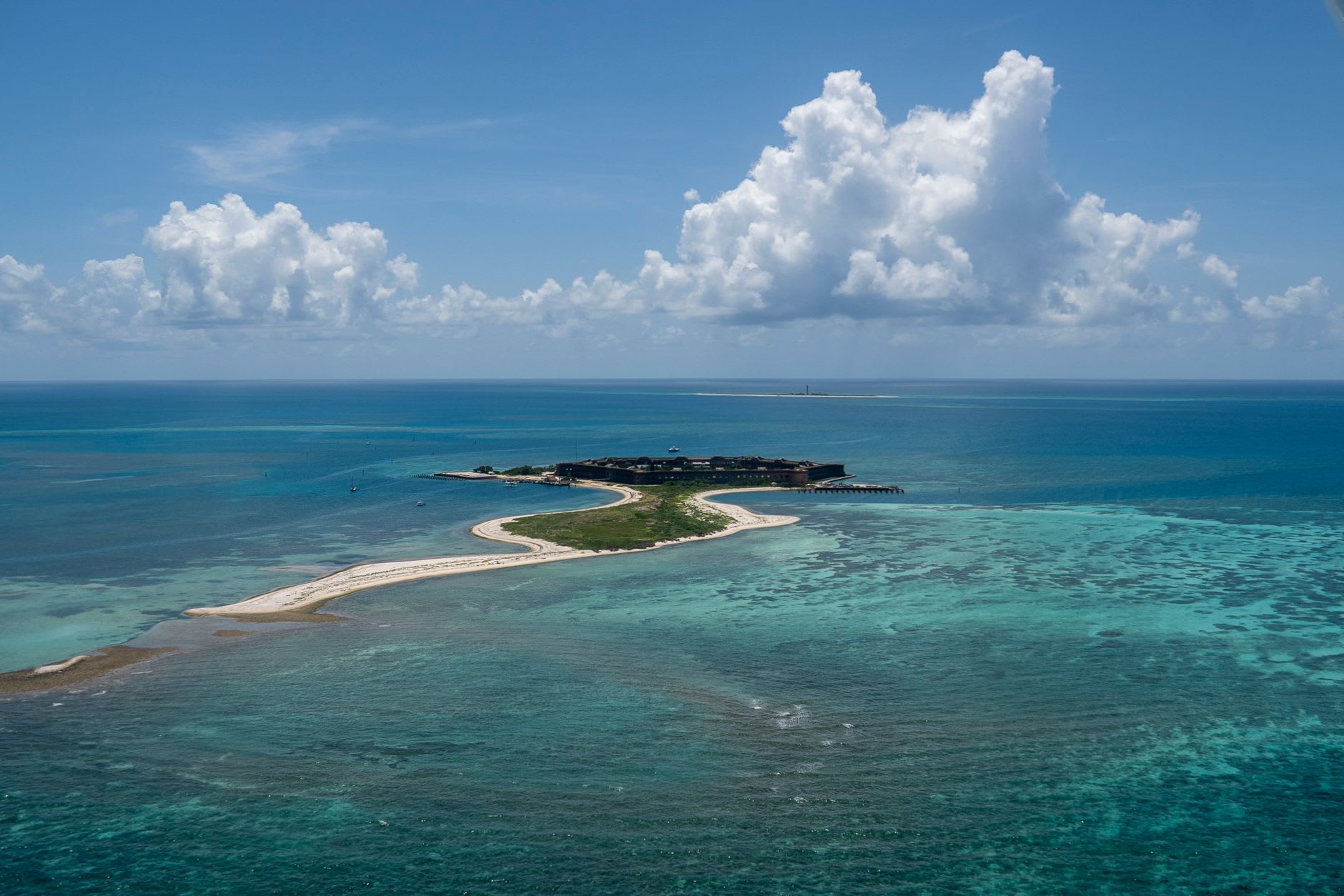
Camping is permitted on Garden Key, the island the fort occupies, and the people who stay two or three nights report sunsets and star visibility that the day-trippers never experience. With no artificial light for seventy miles in any direction, the sky at night is something else entirely. The ferry returns to Key West by late afternoon; if you haven’t arranged camping, plan to spend your seven hours in the water and the fort, and don’t waste any of them.
When to go: January through June, before hurricane season properly begins. April and May bring the spring bird migration and excellent snorkeling conditions — the water is clear and the current mild. Summer is hot and the tropical storm risk increases significantly after June. The ferry operates year-round weather permitting, but winter days can bring choppy crossings and occasional closures; check the Yankee Freedom website before booking.