
Maumere
"Everyone told me Maumere was just a place to fly out of. I stayed four days and resented leaving."
Maumere has an image problem. Every traveler I met on Flores treated it as a transit point — the town with the airport, the place you grit your teeth through before the real island begins. We arrived intending exactly that: one night, then west to Moni and Kelimutu. We left four days later, and I spent the flight out faintly annoyed at everyone who had told me not to bother.
It is, admittedly, not a pretty town in the postcard sense. The main streets are low concrete shopfronts, the air smells of diesel and dried fish and frangipani in roughly equal parts, and the heat sits on you like a wet towel. But Maumere is the biggest town on Flores, and it has the texture that smaller places lack — a real market, a working harbor, churches that fill to bursting on Sunday, and a population that seemed genuinely, almost suspiciously, pleased to see foreigners who were not just there to catch a plane.
The bay the earthquake remade
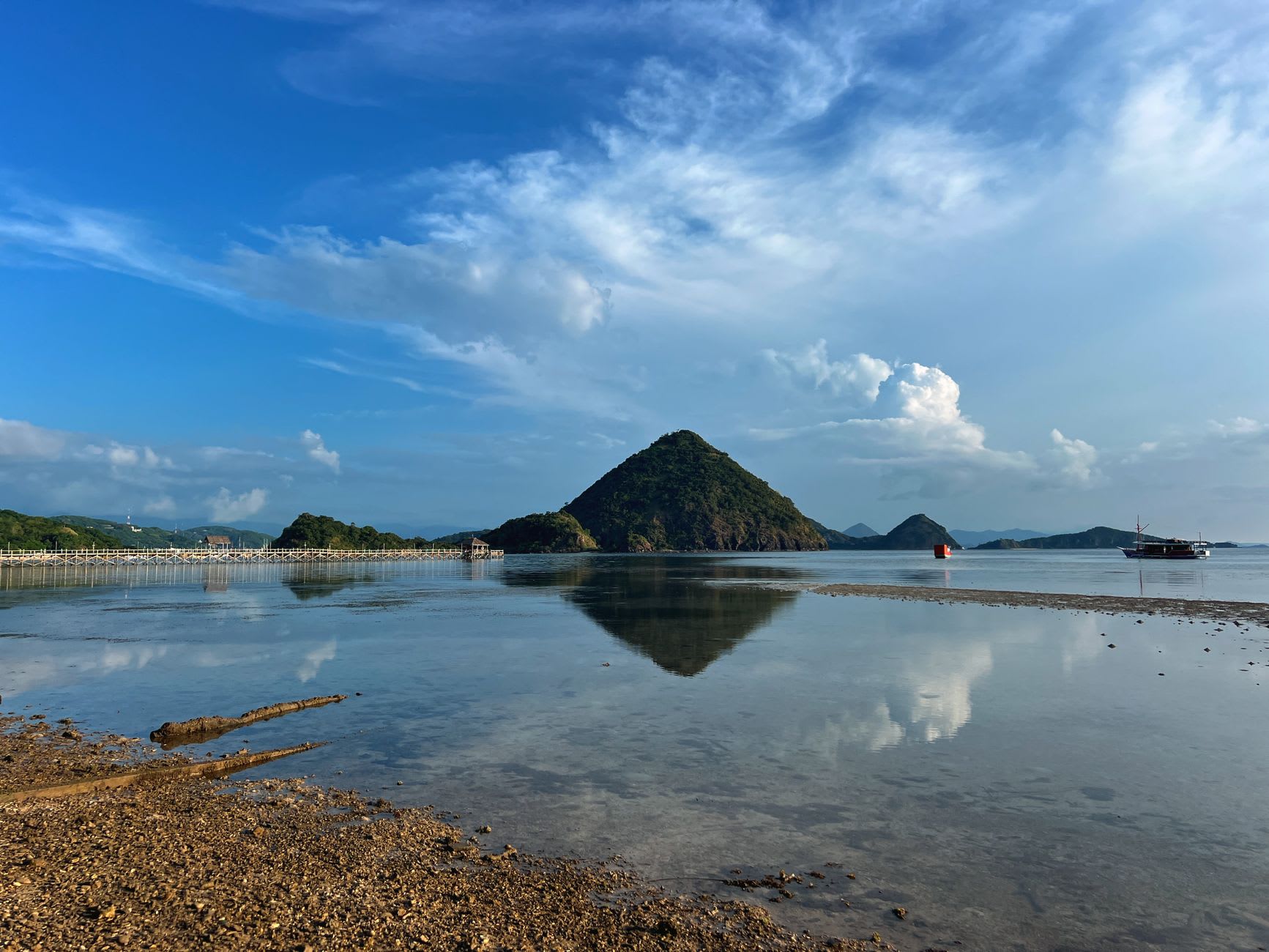
The reason divers used to come to Maumere is the bay, and the reason they mostly stopped is also the bay. In 1992 a massive earthquake and tsunami hit this coast hard — thousands died, the waterfront was wrecked, and the famous reefs offshore were largely flattened. What is down there now is recovery: thirty years of coral regrowing over the rubble, patchy in places and astonishing in others. I went out with a local operator to the reefs near Pulau Babi, one of the small islands in the bay that was hit worst, and the guide told me his father had survived the wave by clinging to a coconut palm. The reef we dropped onto was young, bright, busy — a generation of coral that had grown entirely since the disaster. There is something quietly moving about swimming over a thing that is still rebuilding itself.
Ikat, and a region that prays
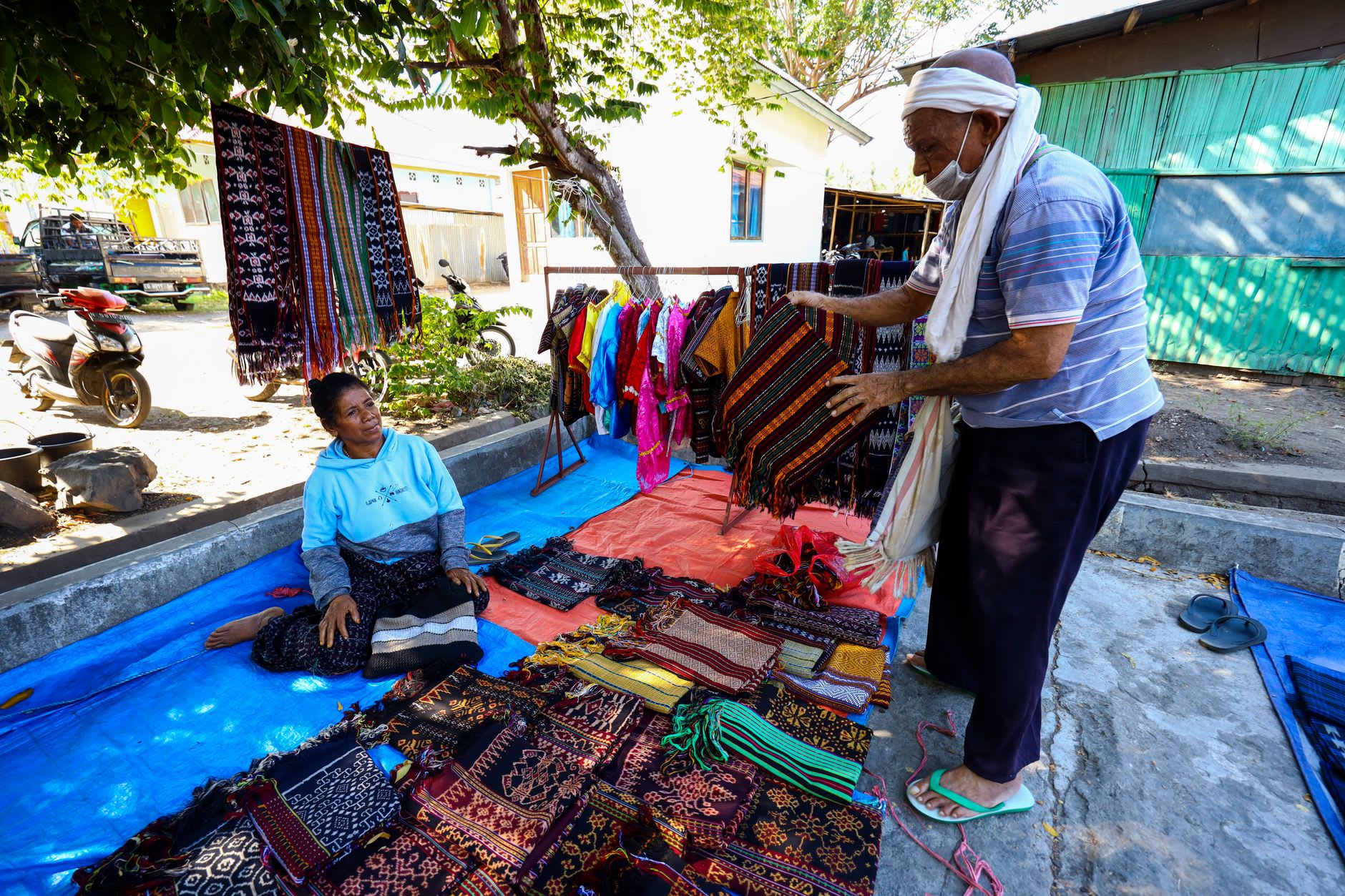
Maumere sits in the Sikka regency, which is the heart of Flores’ Catholicism — the Portuguese landed here centuries ago and the faith stuck in a way it did not elsewhere in Indonesia. The result is a town of churches and grottoes and, in the surrounding villages, some of the best ikat weaving in the country. Lia is the one who dragged me out to a weaving village in the hills behind town, and I am glad she did. We watched a woman work a backstrap loom on her porch, the warp threads tied off in resist-dyed patterns she had memorized from her grandmother, the indigo coming from a vat fermenting in the corner that smelled, frankly, alarming. She sold us a cloth that now hangs in our apartment in Mexico. I think about her hands every time I look at it.
The food in Maumere is straightforward and good. We ate grilled fish on the waterfront most nights — whatever had come in that afternoon, split and charred over coconut husks, served with rice and a sambal so hot it made Lia hiccup. One evening a family at the next table simply handed us a plate of their food because we looked, the father said, like we needed feeding. That is the thing the guidebooks get wrong. Maumere is not a place you endure. It is a place that takes you in.
We used the town as a base — day trips out to the villages, an afternoon at the Sunday market watching betel-stained grandmothers haggle over chilies, a long slow morning drinking thick Flores coffee at a stall while the harbor woke up. By the time we finally caught the bus west, I had stopped thinking of Maumere as the gateway to Flores and started thinking of it as part of the island worth knowing in its own right.
When to go: The dry season from May to September is the time to come, with the calmest water for diving and the most reliable roads inland. The Holy Week processions around Easter are extraordinary if you can time it — the whole Sikka region turns out — but accommodation fills fast, so book ahead.