
Larantuka
"The Easter procession in Larantuka is the most complete act of collective belief I have ever witnessed, and I am not a believer."
I arrived in Larantuka on a bus that had been on the road since Ende that morning, which meant six hours on the Trans-Flores Highway through mountain passes and coastal stretches and one extended argument between the driver and a passenger about road fees that held us stationary for twenty minutes in the sun. The town appeared around a final headland as a cluster of white buildings at the eastern edge of the island, the Solor Strait visible beyond it, the dark outline of Adonara Island just across the water. The end of the road, literally.
Larantuka is the most Catholic place I have ever been in the southern hemisphere. The Portuguese arrived here in the mid-sixteenth century and over the following decades converted the local raja’s family and established a church that has been maintained and rebuilt and maintained again for nearly five hundred years. The cathedral of Saint Maria de Victoria holds a wooden statue of the Virgin that is believed to have washed ashore in the early colonial period, and the relationship between the town and this statue — the prayers it receives, the processions organized around it, the faith invested in it — is not the formal Catholicism of Europe but something older and more visceral, syncretic in ways that neither fully acknowledges nor fully denies.
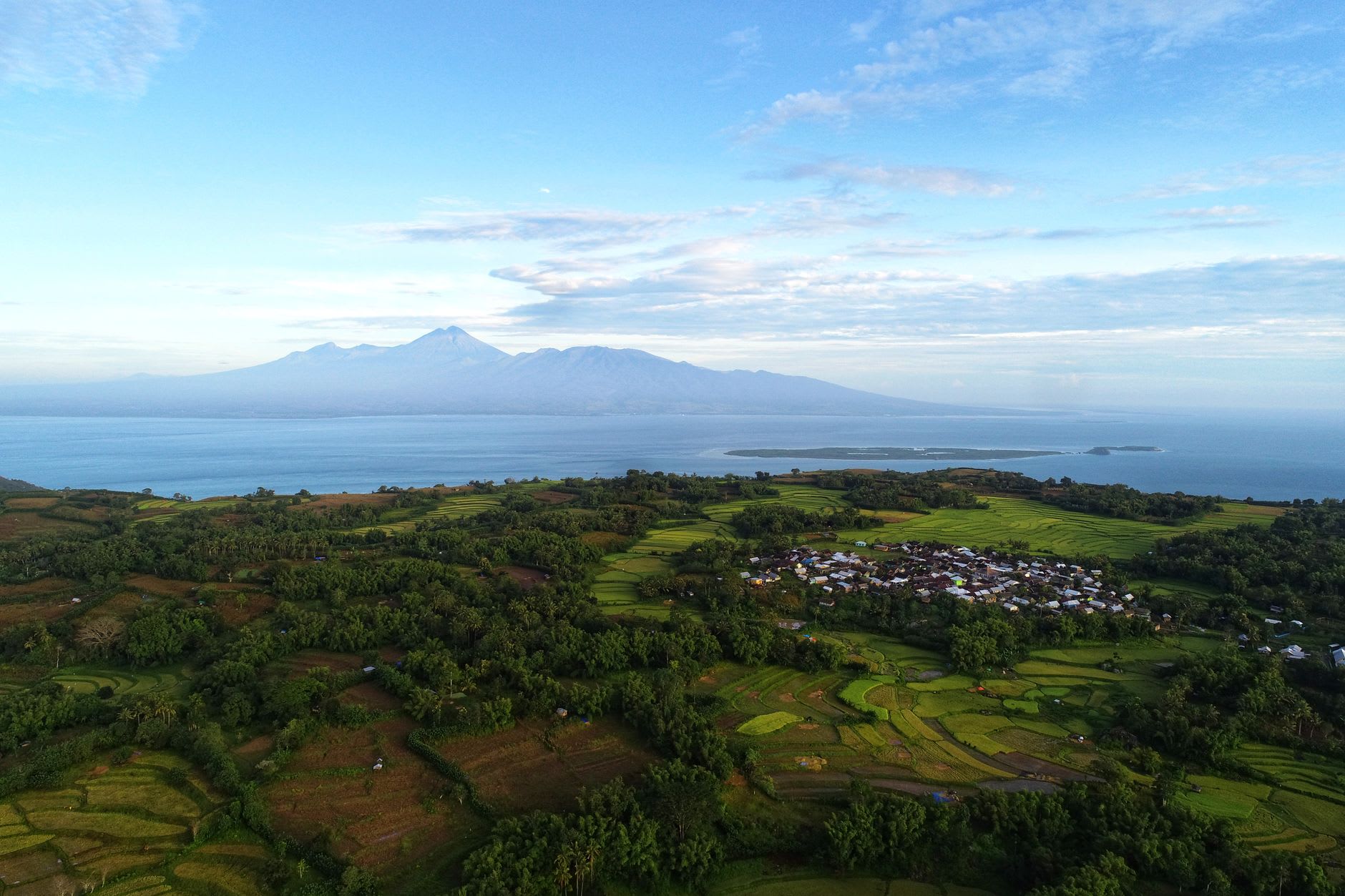
I did not visit during Easter Week, when the Semana Santa processions bring tens of thousands of pilgrims from across eastern Indonesia and the town becomes something that sounds more like a medieval European festival than anything recognizable in contemporary tourism. But even on an ordinary week in June, the faith was visibly structural to the town. Every neighborhood had its chapel. The sound of evening prayers came from multiple directions at once. An old man I sat with on a bench near the market told me, through an interpreter, that his family had participated in the Easter procession for seven generations. He said it the way you say something that doesn’t require emphasis.
The market near the harbor is one of the better ones in Flores — a wholesale trade in dried fish and spices and garden produce that feeds not just the town but the nearby islands. I spent an hour walking through it, past bins of dried squid and whole nutmeg and bags of dried shrimp that filled the air with an intense, almost architectural smell of salt and iodine. A woman sold me a packet of fresh turmeric, still muddy from the ground, and told me in Indonesian that she had grown it herself. I believed her completely.

In the evenings I walked the waterfront road in the direction of the strait, where the current runs visibly between Flores and Adonara — white caps on the surface, a churning that makes you understand why these waters required experienced pilots to navigate. The ferries cross multiple times a day as though the crossing is routine, and it probably is for everyone but me. I watched one pull away at dusk, overloaded with motorbikes lashed to the railings, and disappear into the narrow bright slot between the islands while the sun was still doing what it does in this part of the world, which is to say spectacular things with the last twenty minutes of light.
When to go: Larantuka is accessible year-round. Easter Week — Semana Santa — falls in March or April and is the defining event of the town’s calendar, drawing enormous crowds; book any accommodation months in advance. June to October is dry and pleasant for ordinary travel. The market runs daily but is largest on Tuesdays and Fridays.