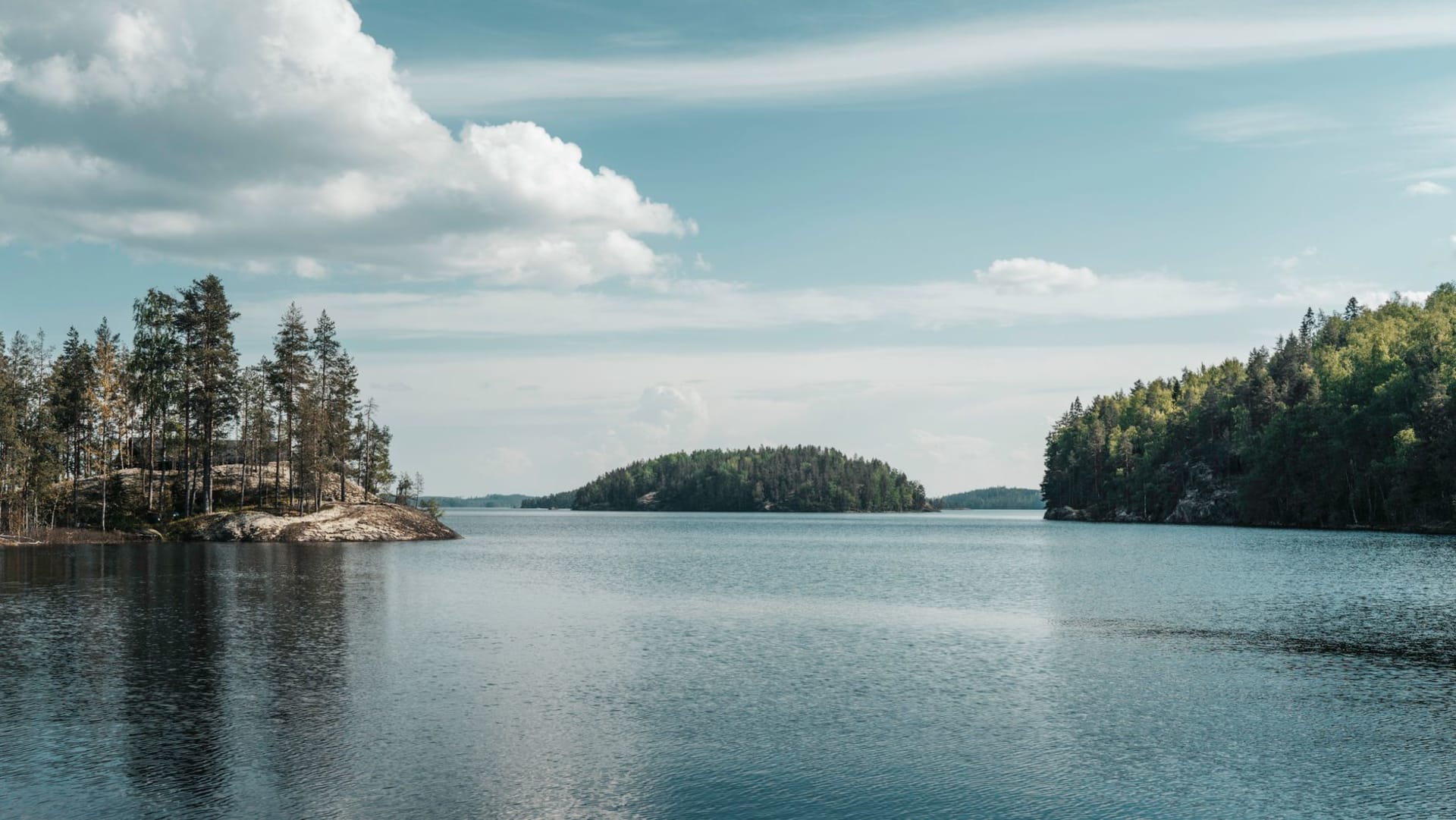
Nuuksio National Park
"The forest here doesn't perform for visitors. It just carries on doing what forests do, which is what makes it worth paying attention to."
The idea that a genuine wilderness begins forty kilometres from a capital city of six hundred thousand people sounds like a tourism board talking point until you’re standing in it. Nuuksio National Park takes about an hour from central Helsinki by bus and a short walk, and the transition from suburban Finland to old-growth boreal forest is more abrupt than it has any right to be. I arrived at the Haukkalampi visitor centre on a grey Tuesday in October, picked up a trail map from the wooden box outside, and walked into the trees.
The forest is what the Finns call taiga — the northern boreal belt that stretches across Eurasia and North America, characterized by spruce and pine and birch, a ground cover of reindeer lichen and blueberry heath, and a quality of light that filters green through the canopy and turns everything slightly underwater. The silence is not absolute — there’s wind, there are birds (the Siberian jay in particular has apparently decided that hikers are a reliable food source and has no fear whatsoever of human proximity), there’s the creak of old wood in a light wind — but it’s a silence that absorbs human noise rather than giving it back, which is the silence I find most restorative.
Nuuksio has something like eighty lakes, most of them small and dark-watered and surrounded by the same dense forest. The trails connect them without fanfare: you walk through birch and pine for twenty minutes and emerge at a lake shore with a wooden dock and, often, a lean-to shelter with a fireplace that hikers use for their coffee and lunch breaks. The system of laavu lean-tos throughout Finland’s national parks is one of those quietly civilizing infrastructure decisions that makes outdoor life here both accessible and deeply pleasant.

I spent an afternoon following the six-kilometre Maahisen trail, which moves through the park’s most ecologically interesting terrain: old-growth spruce where the trees are a hundred years old and the understory is thick with mosses, over rocky outcrops of Precambrian granite that are older than anything living by a factor of a billion, and past Haukkalampi lake, which was still enough in the late afternoon that the reflection was indistinguishable from the forest above it.
In Finland, the right to roam — jokamiehenoikeus, “everyman’s right” — means you can walk, camp, and pick berries anywhere in nature, including private land, as long as you don’t disturb anything or anyone. In October, Nuuksio is carpeted with lingonberries, small and slightly tart, growing in dense clusters at ankle height. I ate berries for an hour while walking and arrived back at the visitor centre with purple fingers and the particular satisfaction of having gathered something from a place rather than just looked at it.

The park has facilities for guided experiences — husky safaris in winter, guided foraging in autumn — but the real thing is simpler: a map, good boots, and enough discipline to leave the phone in a pocket. In a country that is two-thirds forest, Nuuksio is not exceptional by Finnish standards. By every other standard I know, it’s remarkable.
When to go: September and October for autumn colour and berry-picking season. March and April for snowshoeing when the light returns. Avoid July and August peak weekends when the park gets crowded by Helsinki standards — though “crowded” here means occasionally seeing another person on the trail.