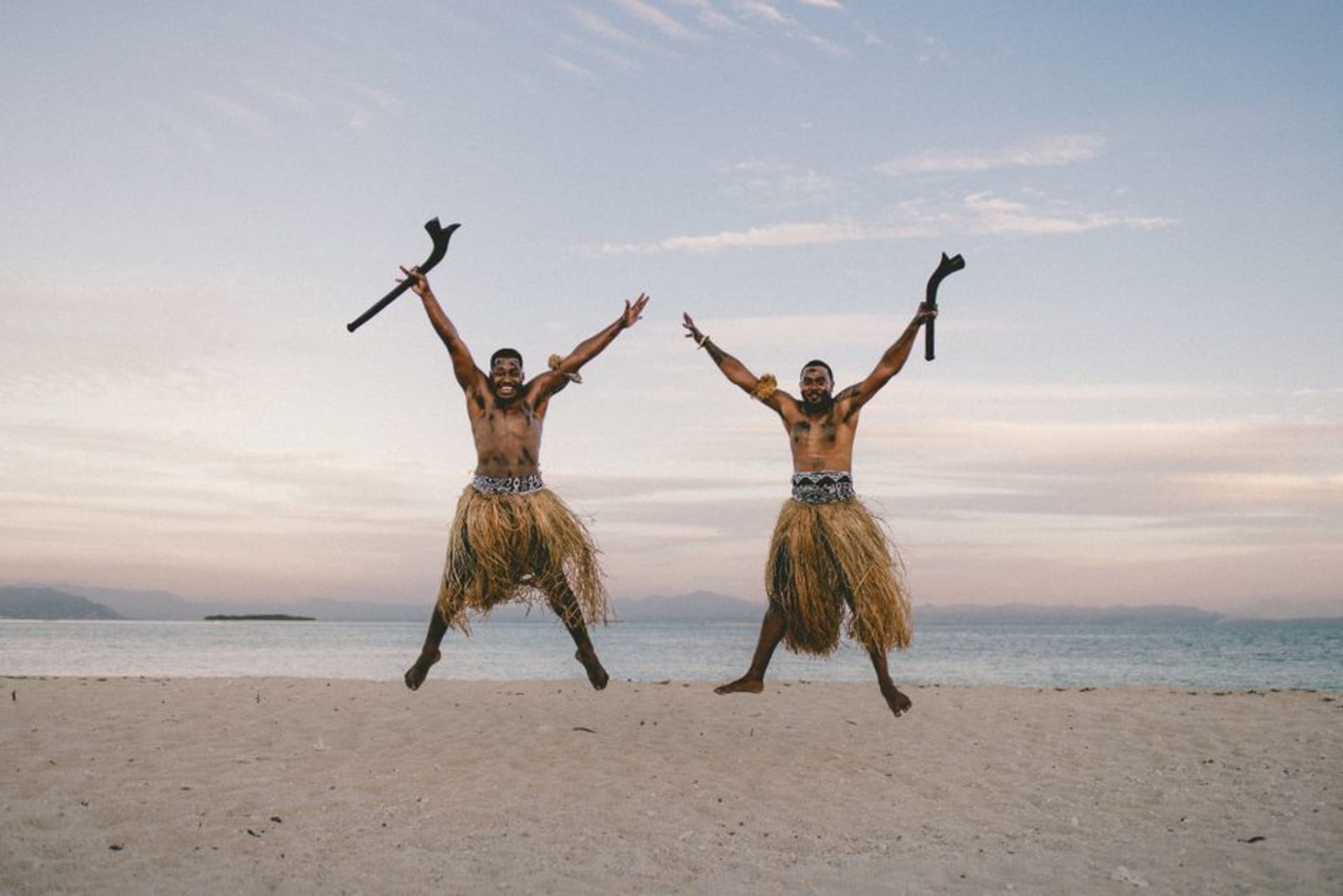
Yaukuve Levu
"The whole island took eight minutes to walk around. I know because I did it twice before breakfast, unable to believe how good the light was."
A private islet inside the Great Astrolabe Reef with a single small resort, a resident hermit crab population that outnumbers the guests, and some of the calmest water in Fiji.
Yaukuve Levu is one of the small islets scattered inside the arc of the Great Astrolabe Reef, close enough to Kadavu’s main landmass to reach by a short boat transfer but distinct enough — an actual private island with a single small resort and nothing else — that it feels like its own separate world the moment the engine cuts. Lia had found it through a diver’s forum months before our trip, one photo of an empty white beach that she’d sent me with no caption, which turned out to be entirely representative of what we found when we arrived.
The island is genuinely tiny, walkable end to end along the beach in under ten minutes, ringed by a reef that starts almost at the waterline and drops gradually into the lagoon rather than falling away in a dramatic wall. This makes it one of the gentler introductions to the Great Astrolabe system — good for a first open-water swim over coral if you’re not yet confident diving the more current-driven passages elsewhere on Kadavu, and genuinely excellent for an early-morning snorkel before the light gets too high and flat to see color properly.
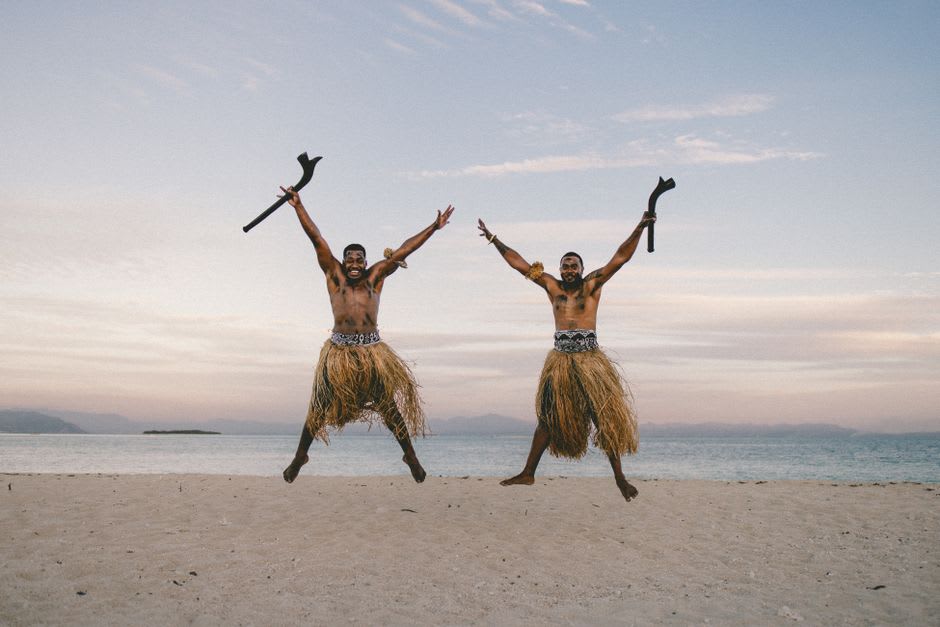
Because the resort caps its guest numbers low, the island has developed an oddly confident population of hermit crabs that treat the beach as uncontested territory — dozens of them, in shells ranging from thumbnail-sized to fist-sized, going about visible daily business along the tideline with total indifference to anyone stepping around them. Lia became genuinely attached to tracking one particular crab with an unusually striped shell over the three days we were there, to the point where the staff started asking after “her crab” by the second morning.
The diving from Yaukuve Levu reaches several sites on the reef’s inner face that are rarely visited because so few operators are based on this side of the lagoon, including a shallow bommie thick with lionfish and a resident group of spotted eagle rays that patrolled a sandy channel near the drop-off on both dives I did there. Snorkeling directly from the beach, meanwhile, delivered one of the more memorable ten minutes of the whole Kadavu trip — a pod of spinner dolphins that came through the lagoon mid-morning, close enough to hear their breathing before we even saw them, moving with an unhurried, looping energy that had nothing to do with performing for anyone watching.
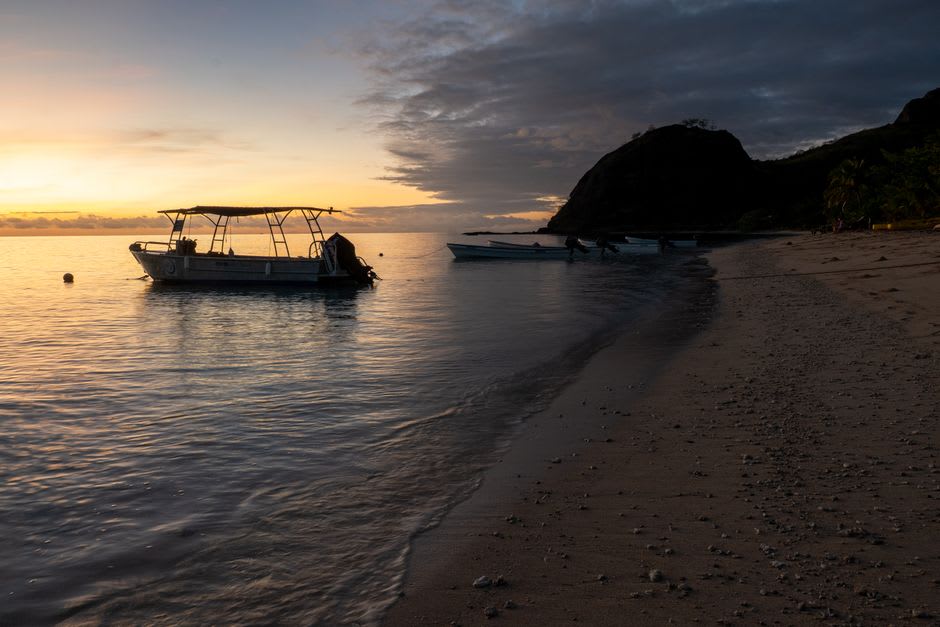
Evenings on the island have almost no artificial competition for your attention — a generator that runs for a few hours around dinner, a sky that goes properly dark after that, and a silence broken only by the reef and, occasionally, the scrabble of a hermit crab investigating a discarded flip-flop.
When to go: May through October for the calmest lagoon conditions and best snorkeling visibility. The resort’s capacity is small, so book well ahead, especially around the July and August peak.