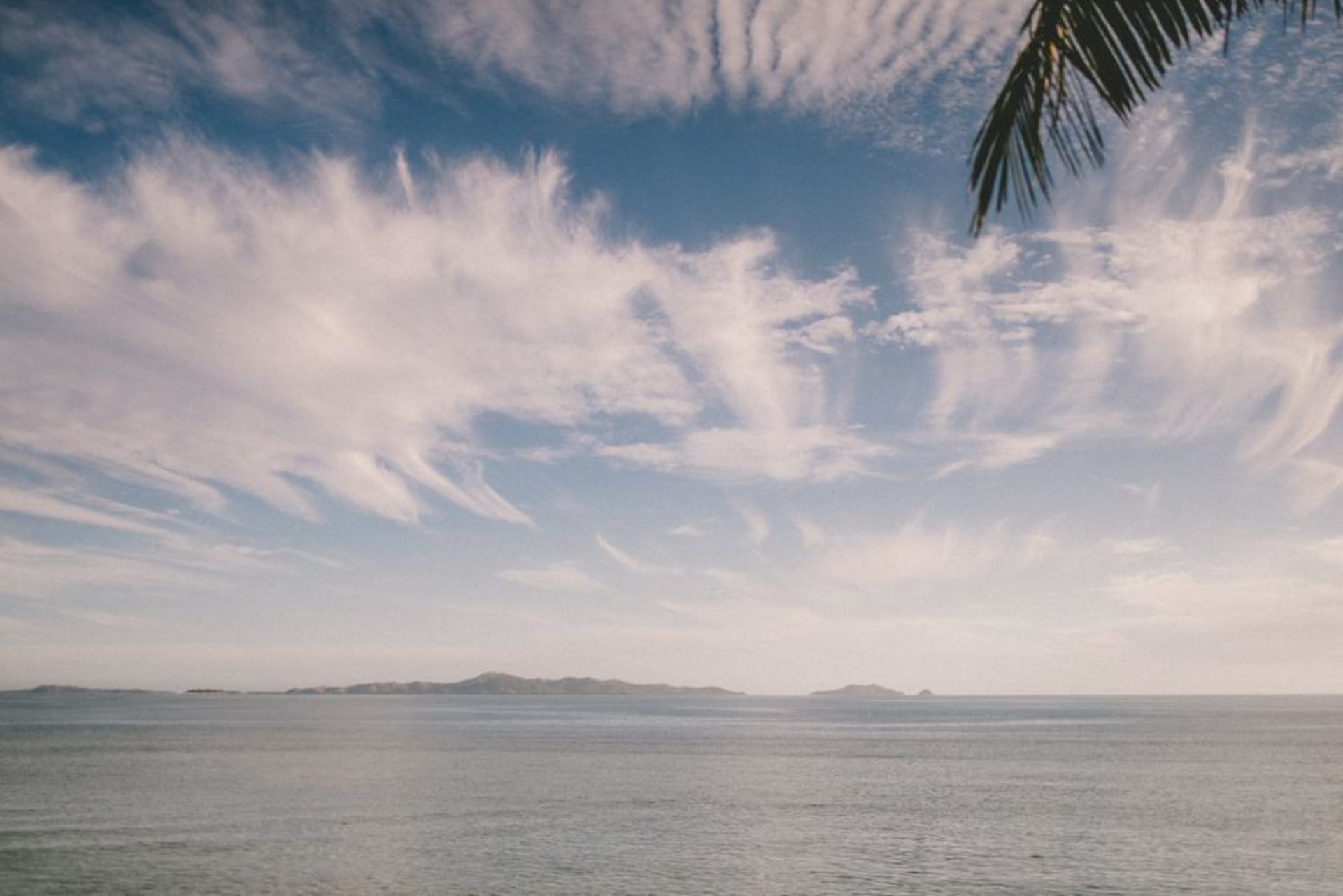
Namuana Village
"They sing to the turtles and, sometimes, the turtles actually come. Nobody in the village pretends to have a scientific explanation, and none of them seem to need one."
A Kadavu village famous for a turtle-calling legend passed down through its women, sung to the sea on the rare occasions the ceremony is still performed.
Namuana sits on the southern coast of Kadavu, a modest village of maybe two hundred people reachable by a bumpy coastal track from Vunisea, and it’s known throughout Fiji for a single, specific piece of oral tradition: the vilavilairevo of turtle-calling, in which the women of the village — and only the women, the ability said to be inherited through a specific female lineage — sing a chant from the cliffs above a particular bay, and green turtles are said to surface in response. The legend attached to it involves two women, ancestors of the village, who were turned into turtles after a tragic escape by sea generations ago, and the calling is understood locally not as a performance trick but as a genuine communication with those ancestral spirits.
I want to be honest about what actually happened when we visited: the turtle-calling ceremony isn’t performed on demand for tourists, and it’s increasingly rare even for special occasions, both because fewer women in the village still hold the specific chant and because the turtles themselves, like sea turtle populations everywhere, have become less reliably present than in older accounts. Our guide, arranged through a Kadavu lodge with a longstanding relationship to the village, was upfront that we likely wouldn’t see an actual calling, and we didn’t. What we got instead was something I found nearly as valuable: a long, unhurried conversation with two of the village elders about the tradition itself, its place in Kadavu’s broader culture, and the responsibility they feel to keep the story intact even as the practical circumstances around it change.

We did the sevusevu on arrival, presented through our guide to the village headman, and spent an afternoon walking through Namuana itself — modest bures and a few newer concrete-block houses along a single dirt lane, a church at the village center, kids herding a couple of goats back from the shoreline as the tide came in. One of the elders, a woman named Miriama who guessed correctly that we’d come specifically for the turtle story rather than passing through by accident, sang a short verse of the chant for us unprompted, without ceremony, sitting on the steps of her house in the late afternoon light — not the full ritual, she was clear about that, but enough to hear the melody itself, which had a plaintive, almost mournful quality that made the legend behind it feel entirely earned.
Lia asked, carefully, whether the village worried about the tradition eventually disappearing, and Miriama’s answer was more matter-of-fact than sad — she said every generation worries about that, and every generation, so far, has found someone to carry it. Whether that holds indefinitely, nobody pretended to know.
When to go: Visits should be arranged well in advance through a Kadavu-based lodge or guide with an established village relationship; do not expect a scheduled turtle-calling performance, as it depends on both the village’s willingness and factors entirely outside anyone’s control. The dry season, May through October, makes the coastal track from Vunisea passable.
Keep exploring
More from Fiji
 fiji
fiji Nananu-i-Ra Island
A small, roadless island off Rakiraki where the trade winds funnel through the channel and turn the water into a kitesurfer's dream.
Explore fiji
fiji Nanuya Lailai Island
The island that gave the Blue Lagoon its name, where a single beach curves between two shades of impossible blue and a small village keeps the film's legacy at arm's length.
Explore fiji
fiji Natadola Beach
A wide crescent of white sand on the Coral Coast's western edge, kept undeveloped enough that horseback rides down the beach still outnumber sunbeds.
Explore fiji
fiji Nausori
The unglamorous commercial heart of the Rewa Delta, where sugarcane trucks, a chaotic market, and Fiji's original international airport reveal a working town most visitors only ever drive past.
Explore fiji
fiji Nausori Highlands
The steep, waterfall-laced hill country behind Suva, threaded by a single rough road through villages that still farm the same terraced slopes their grandparents did.
Explore fiji
fiji Navala Village
The last village in Fiji built entirely of bamboo and thatch, tucked into the Ba highlands where the government still requires every roof to be traditional.
Explore