Kioa Island
"Kioa is Fijian land with a Tuvaluan heart, and the two things sit together so naturally you forget to be surprised by it."
A small island off Vanua Levu settled by Tuvaluan islanders in the 1940s, where a Polynesian community lives inside a Melanesian nation and nobody makes a fuss about it.
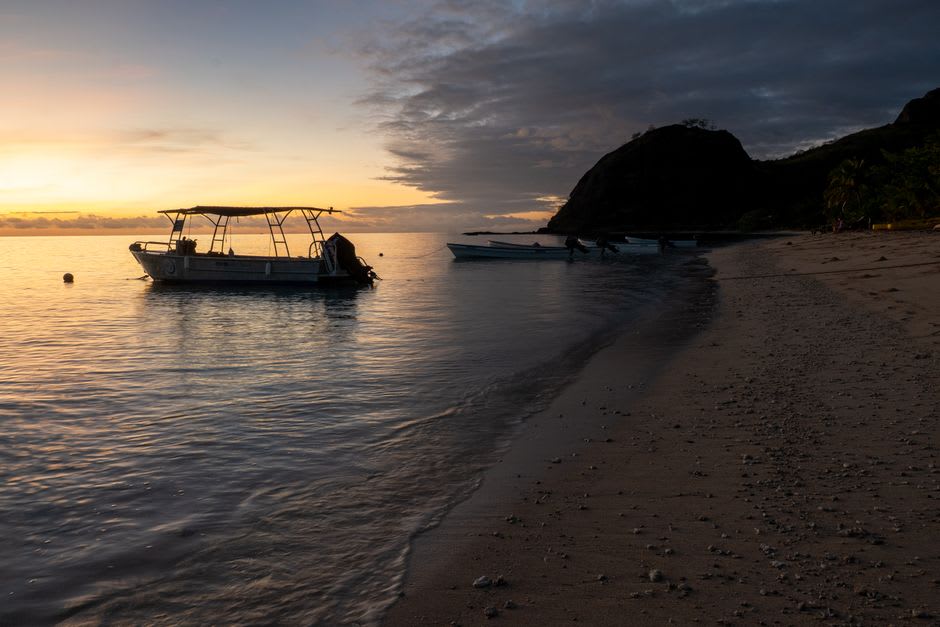
I’d read a single paragraph about Kioa in an old guidebook and couldn’t stop thinking about it: an island bought outright in 1946 by Ellice Islanders — what’s now Tuvalu — fleeing overcrowding on their home atolls, resettled here in Fiji’s Buca Bay with the blessing of the local Fijian chiefs. Eighty years later it’s still a distinctly Tuvaluan community, speaking Tuvaluan as a first language, inside a country that speaks Fijian and Hindi and English. I chartered a small boat from Buca Bay, on Vanua Levu’s northeast coast, for the twenty-minute crossing, having arranged a visit in advance through a contact in Savusavu — Kioa doesn’t get casual drop-in tourism and prefers it that way.
The village that greets you from the water looks, at a glance, like any coastal Fijian settlement — a church, a school, houses on stilts and houses on the ground, nets drying on fences. But the language changes everything. Children ran past speaking Tuvaluan to each other and switched fluently into Fijian-accented English the moment they addressed me. An elder named Fiaui, who’d been a boy on the original crossing as told to him by his father, sat with me under a mango tree and talked for an hour about atoll life on Vaitupu, the low coral island his family came from, comparing its flatness and vulnerability to the sea against the mountainous safety of Kioa. “We are Fiji now,” he said, “but we are also still there.”
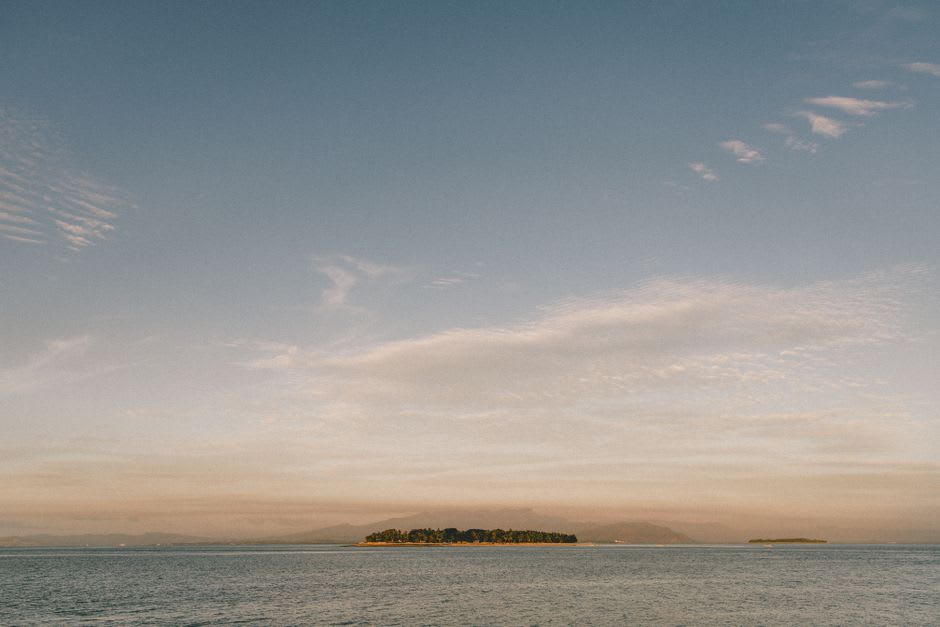
The island itself is steep and densely forested, rising sharply from a narrow coastal shelf, and a track climbs from the village through plantations of cassava and yaqona to a ridge with a view back across Buca Bay toward Vanua Levu and, on a clear day, the silhouette of Taveuni beyond it. I walked it with two teenage boys who’d offered to guide me for the cost of a cold drink afterward and who narrated the whole climb in a mix of Tuvaluan, Fijian, and English depending on which language the joke landed better in.
There’s a small museum-like room near the community hall with photographs from the original settlement, black-and-white images of thatched boats loaded impossibly high with belongings, and a framed copy of the original land deed. It’s not curated for visitors in any polished sense — it’s just there, maintained by whoever has the key that week, which felt more honest than anything a formal museum could offer.
When to go: Visits should be arranged in advance through a local contact or tour operator in Savusavu, as Kioa has no tourism infrastructure of its own. The dry season, May through October, makes the boat crossing from Buca Bay considerably more comfortable.
Keep exploring
More from Fiji
 fiji
fiji Koro Island
One of the largest islands in the Lomaiviti group and one of the least visited, a long volcanic ridge of copra plantations, waterfalls, and villages that see maybe a handful of foreigners a year.
Explore fiji
fiji Korotogo
A low-key beach settlement wedged between resort properties on the Coral Coast, where the coastal footpath and a scrappy local surf break outlast the marketing.
Explore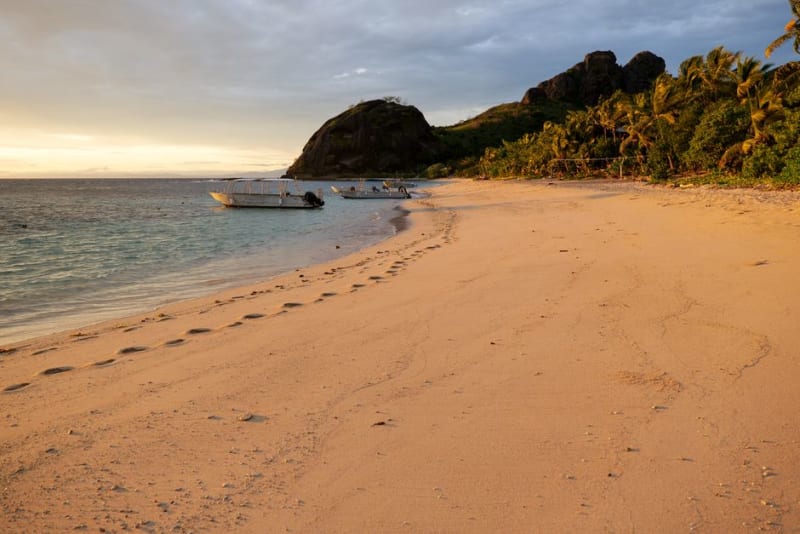 fiji
fiji Kuata Island
The southernmost Yasawa, small enough to circle on foot in an hour, and home to one of the most reliable reef shark dives in Fiji.
Explore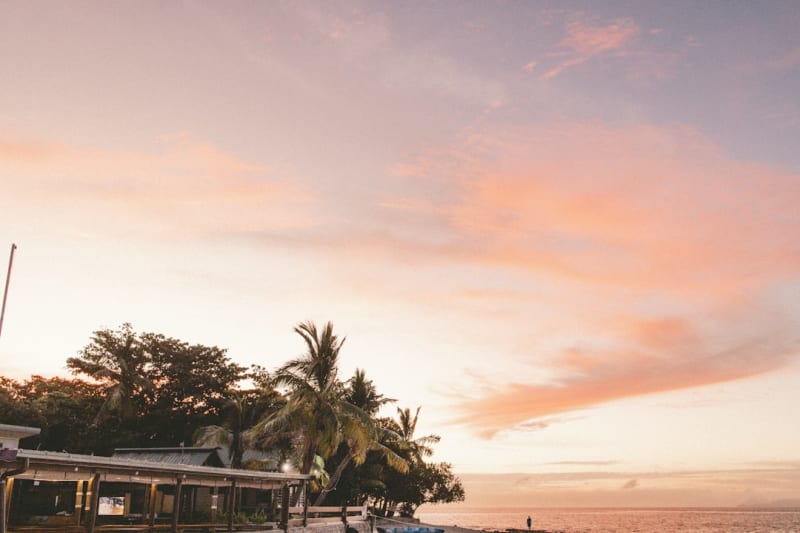 fiji
fiji Lami Town
Suva's scruffy, working waterfront suburb, home to fishing boatyards, the country's best curry houses, and a mangrove foreshore locals actually use rather than photograph.
Explore fiji
fiji Laucala Island
A privately owned island off Taveuni turned into one of the most expensive resorts on Earth — worth understanding even if, like me, you're only ever going to see it from a boat.
Explore fiji
fiji Lautoka
Fiji's Sugar City, a working port town where cane trains still cross the main road and the market feels built for locals rather than tourists.
Explore