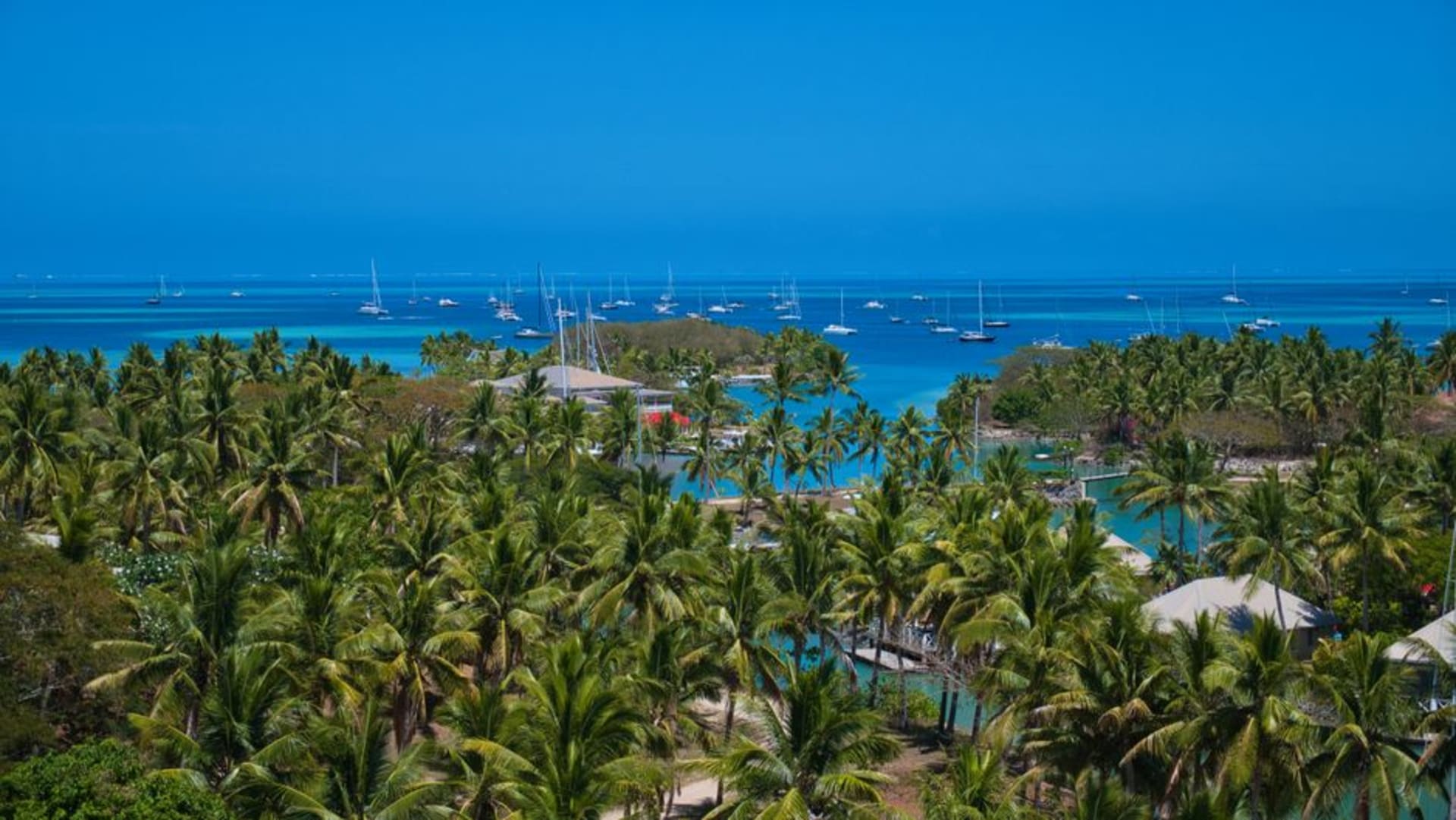
Deuba
"Nobody at Deuba was trying to sell us anything. It took me a day to relax into how strange that felt."
The unglamorous beach strip next door to Pacific Harbour, where backpacker resorts and a long grey-sand shoreline make for the most relaxed few days we had in Fiji.

Deuba doesn’t try very hard, and after two weeks of activity-forward travel around Fiji’s south coast, that turned out to be exactly what Lia and I needed. It’s a loose strip of guesthouses and mid-range resorts a few kilometres past Pacific Harbour proper, fronting a long beach that isn’t the postcard white sand of the Mamanucas — it’s a darker, coarser grey-gold, volcanic in origin, and somehow more interesting for it. We’d booked three nights and ended up staying five, mostly because nobody was pressuring us to book an excursion and the reef offshore turned out to be worth exploring on our own.
The place we stayed had an open-sided restaurant built out over the tide line, and every evening around five the local sea eagles would work the shallows for fish as the light went orange, close enough to watch clearly without binoculars. Between the eagles and the actual sunset, which drops fast and low over the water this far south on the island, we developed a habit of just sitting there with a Fiji Bitter each, not talking much, watching a fairly ordinary evening perform itself extremely well.

The reef break at Deuba isn’t famous — it’s a secondary consideration compared to the surf spots further along the coast — but a local guy running a beach shack rented us a couple of battered longboards for a token price, and I spent two mornings catching small, forgiving waves that suited exactly my level of competence, which is to say modest. Lia, who doesn’t surf, borrowed a paddleboard from the same shack and worked her way along the reef edge at low tide, coming back with photos of anemonefish in water so shallow she could stand up beside them.

The village of Deuba itself, a short walk inland from the beach strip, has a Saturday market that draws sellers from the surrounding farms — tomatoes, bele greens, dalo, and a woman who sold the best coconut bread I had anywhere in the country, still warm, wrapped in a page torn from an old exercise book because she’d run out of proper paper.
When to go: Year-round, though May through October gives you the driest, calmest conditions for the reef and the small surf break. The Saturday market runs early — arrive before nine for the best selection, since the good bread sells out fast.
Keep exploring
More from Fiji
 fiji
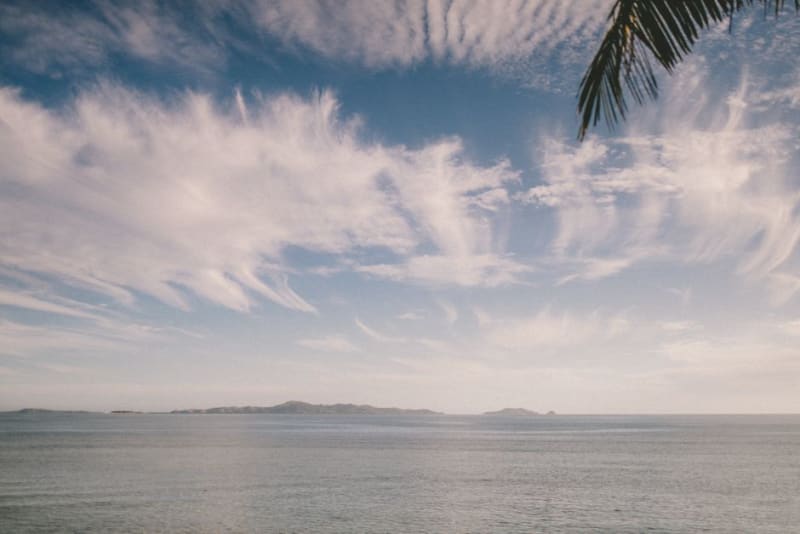
fiji Dravuni Island
A speck of sand and green hill at the northern tip of the Great Astrolabe Reef, best known as a cruise ship anchorage that empties out completely by four in the afternoon.
Explore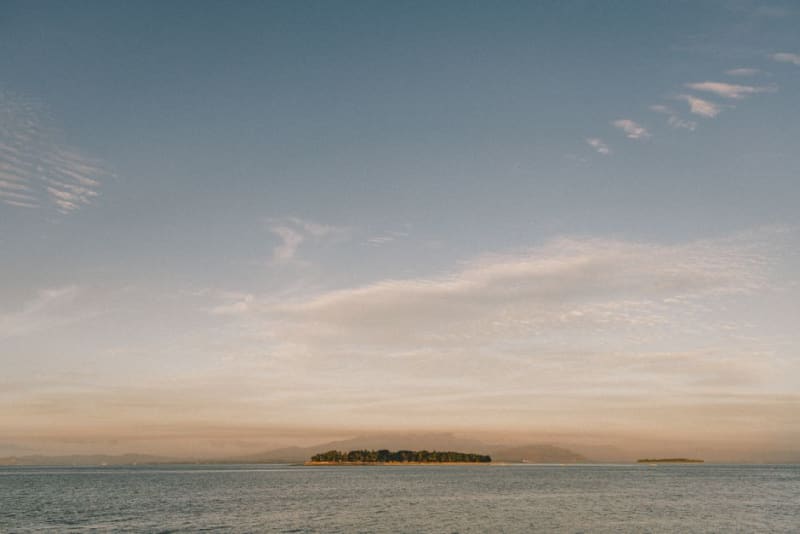 fiji
fiji Drawaqa Island
A small, largely uninhabited island whose entire reputation rests on a narrow channel where manta rays feed for half the year.
Explore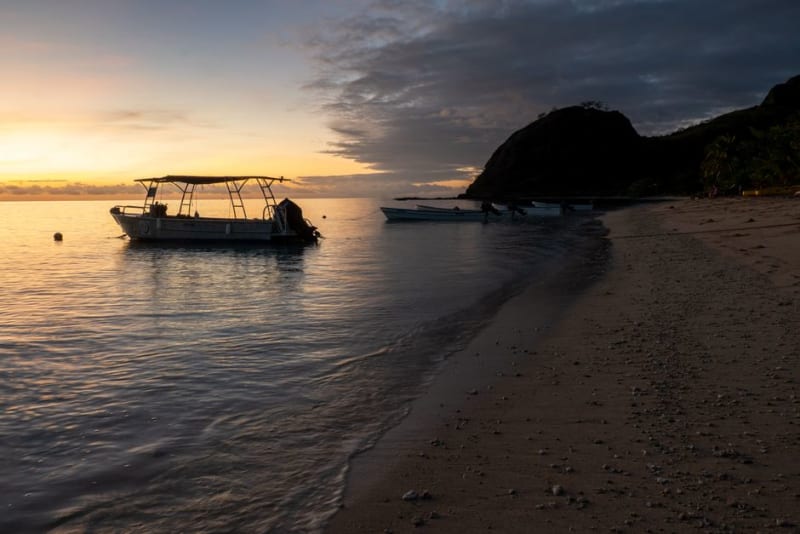 fiji
fiji Frigate Passage
A serious offshore reef break south of Pacific Harbour where a strong left barrels over shallow coral and the boat ride out is half the experience.
Explore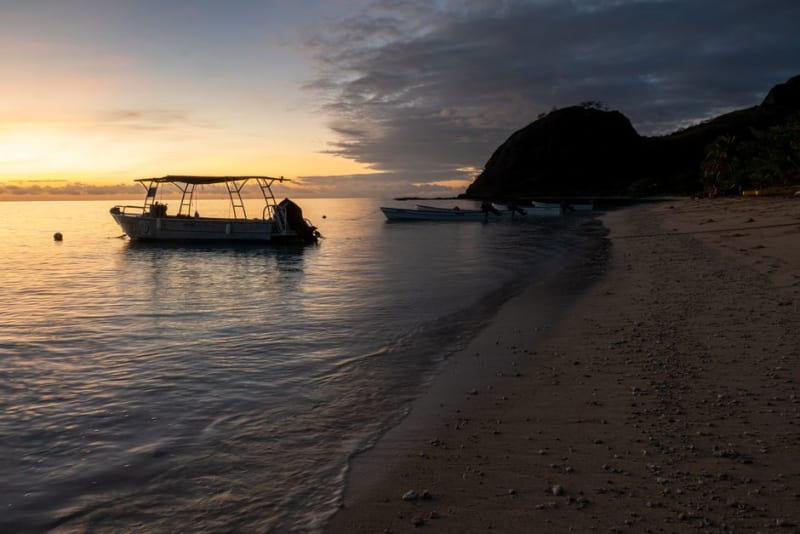 fiji
fiji Galoa Harbour
A working fishing harbour south of Pacific Harbour where the boats to Beqa and Yanuca actually leave from, and the morning fish market runs on its own unhurried clock.
Explore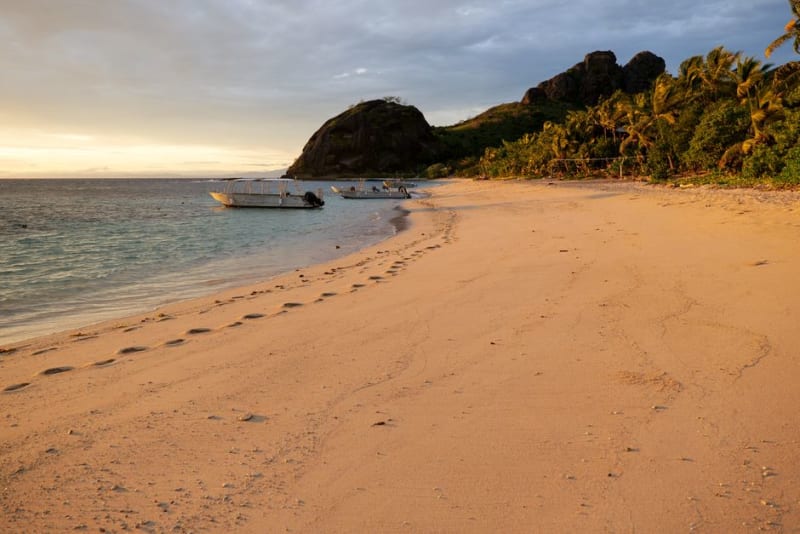 fiji
fiji Gau Island
Fiji's sixth-largest island, a volcanic dome ringed by reef and home to the last stronghold of the endangered collared lory, with barely any tourism to speak of.
Explore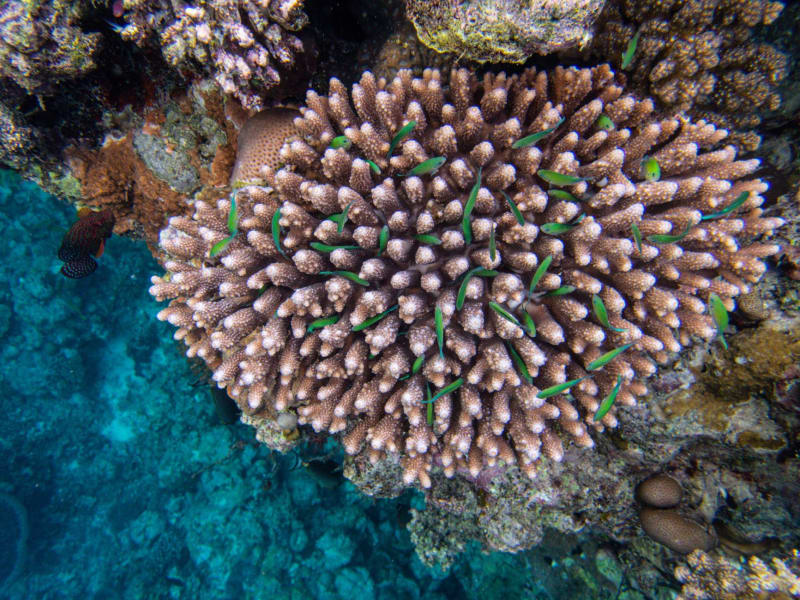 fiji
fiji Kadavu
Fiji's fourth-largest island and one of its least visited, where the Great Astrolabe Reef draws serious divers and village life runs exactly as it has for generations.
Explore