Kasan
"The caravanserai is empty but still standing. These things outlast everything they were built to serve."
I went to Kasan because someone at my guesthouse in Namangan mentioned it in passing — not as a recommendation exactly, more as a geographical observation, the way you might mention a bend in a river. “There are old walls up there,” he said, gesturing north toward the mountains. That was the sum of the description. I took a shared taxi the next morning and got out at a junction where the driver pointed up a dirt road and drove away before I could ask anything else.
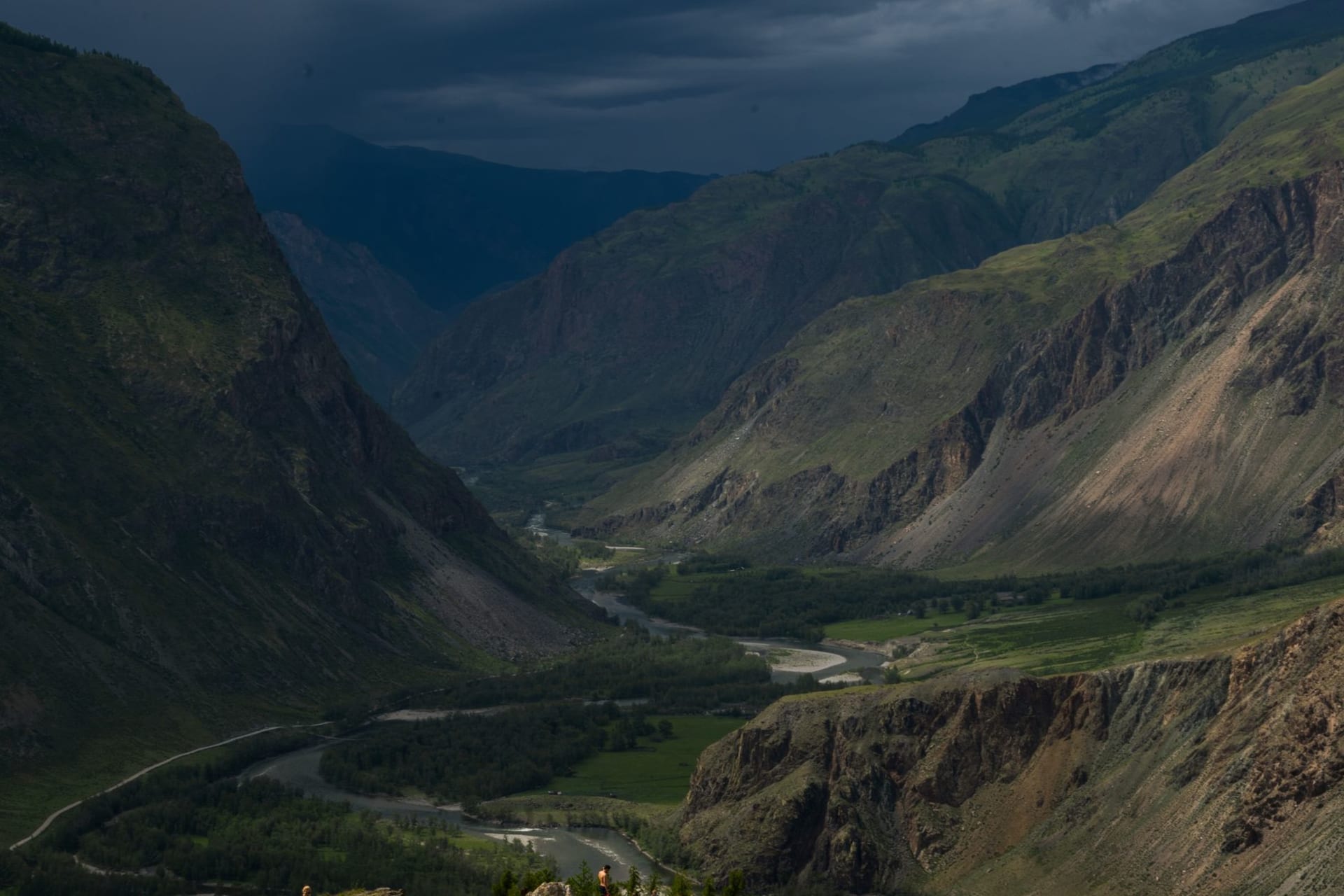
Kasan sits at the foot of the Chatkal Mountains where the Fergana Valley begins its transition into harder, higher terrain. It was once a stop on the branch of the Silk Road that ran north toward the Talas Valley and the western steppes — not one of the famous stops, not a city of palaces and madrasas, but the kind of place where caravans stopped because the water was good and the walls were there, and which mattered enormously for several centuries before the trade routes shifted and the matter went away. The ruins of the caravanserai are substantial: thick mud-brick walls that have been dissolving back into the earth for three or four hundred years, arches still standing in sections, a courtyard the size of a city block that you can walk through freely because there is no one to stop you and no entrance fee to collect.

The walnut trees growing inside the caravanserai courtyard were old — their trunks had the girth of several human embraces — and they had cracked the ancient brickwork in places and heaved the earth floor into gentle waves. In autumn, the ground was thick with fallen walnuts, and the smell — that sharp, slightly oily scent of a fresh walnut — mixed with the smell of old earth and the faint animal smell from goat herds grazing nearby. I ate lunch sitting against one of the intact walls: bread from my bag, apricot paste I’d bought at the Namangan bazaar, and three walnuts I picked from the ground and cracked between two stones.
The village of Kasan itself is small and agricultural — mud-brick houses behind high walls, a water channel running along the main track, a chai house that was open when I arrived and closed when I returned in the afternoon. The older inhabitants have faces that look like they have absorbed the landscape — weathered, specific, not particularly interested in the fact of a French traveler sitting in their caravanserai eating apricot paste. I spoke with an elderly man who had lived his entire life here and who remembered archaeologists coming during the Soviet period, digging carefully, noting everything, and then never coming back. The notes are somewhere, he said. He said this without bitterness, as a simple fact about where things end up.

Kasan is for people who have a reason to go to it — curiosity about the Silk Road’s unglamorous infrastructure, or an appetite for places that are genuinely off the circuit. It offers nothing that has been curated for visitors: no signs, no café, no English. What it offers is walls that were built when the trade between China and Rome still functioned, now inhabited by walnut trees and the particular silence of a place that has been waiting a long time for someone to notice it.
When to go: September and October, when the walnuts are falling and the air has cooled from summer extremes. The dirt road from the Namangan junction is passable by standard taxi in dry conditions but becomes difficult after rain. Spring is also excellent — the mountains above are still snow-capped and the wildflowers on the approach road are remarkable.