Klaksvík
"Klaksvík feels like the Faroes when no one is watching — less performed, more itself."
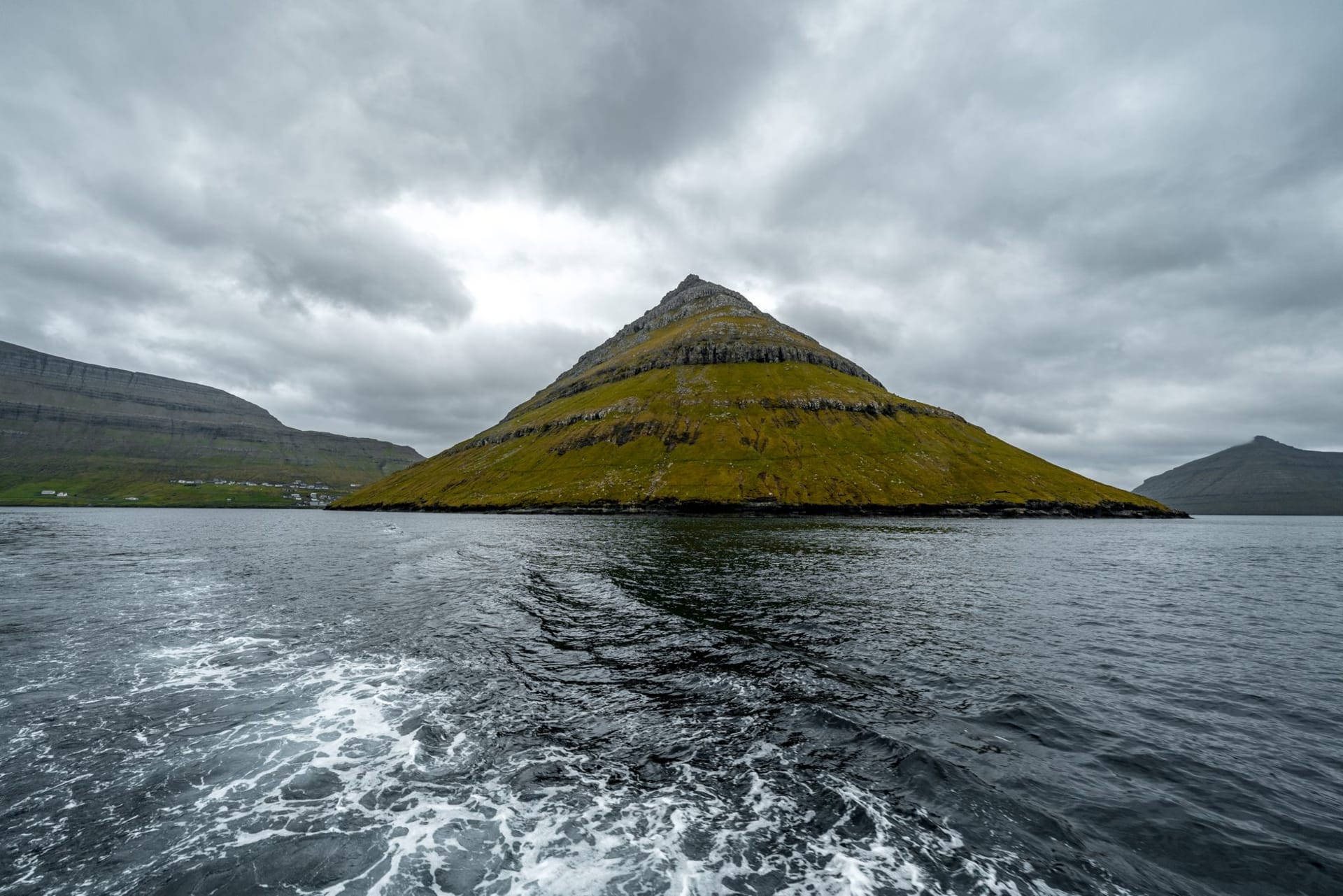
Klaksvík appeared through the tunnel connecting the two parts of Borðoy island as a sudden brightness — a harbour town strung across the valley between two fjords, water visible in both directions, the houses climbing the hillsides in that Faroese manner that seems to prioritise view over flatness. I had driven from Tórshavn in under an hour, through the series of tunnels and causeways that stitch the northern islands together, and arrived in what is technically the Faroe Islands’ second city feeling as though I had crossed into a different register entirely.
The fish processing industry that dominates Klaksvík’s economy gives the harbour a working character that Tórshavn, with its tourist cafés and parliament buildings, has partly shed. The quays here smell of salt and diesel and something industrial-aquatic that I find more interesting than unpleasant. Trawlers come and go with a purpose-first indifference to aesthetics that is quietly refreshing after the carefully curated turf-roof prettiness of the south. I walked the harbour front in the morning while boats were unloading and a forklift moved crates of silver catch past me, and I felt the particular satisfaction that comes from watching people do real work in a real place, without any layer of presentation between the work and the watching.

The Christianskirkjan — the modern church completed in 1963 — is the building Klaksvík is most architecturally known for, and it earns that attention. It sits above the harbour on a rise, a long low structure that incorporates a Viking-age baptismal font inside and manages to feel simultaneously contemporary and rooted. I sat inside for twenty minutes in an empty afternoon and appreciated the silence and the quality of light through the thin windows, which fell on the wooden pews in a pale northern way that I found difficult to photograph but easy to sit in. The font is the oldest artifact in the islands, moved here from a twelfth-century church long since replaced, and its presence inside a mid-century building creates a layering of time that is quietly disorienting in the best possible sense.

In the evenings, Klaksvík has bars and restaurants that serve a working population rather than a tourist season. I had dinner at a place on the harbour where the menu was written on a board and the fish was caught that morning, which is the kind of sentence that sounds like restaurant marketing copy and in this case was simply the situation. The man at the next table was a fisherman who had opinions about the following day’s weather, and we discussed them with the help of a translation app and a shared understanding that around here, weather is everyone’s primary concern, first topic, and most accurate form of social bonding.
When to go: Klaksvík is accessible year-round and makes an excellent base for the northern islands — Kalsoy, Kunoy, Borðoy’s interior. The town’s summer rowing festival draws community participation with no tourism packaging. Winter strips it to its working self, which is an entirely valid way to encounter a place that has never particularly needed to perform.