Pebble Island
"I came for the penguins and left with my pockets full of jasper. The island gives you more than you come looking for."
Pebble Island gets its name from the semi-precious pebbles that wash up on its northern shore — agate, jasper, quartz in shades from pale cream to deep orange, worn smooth by millennia of Atlantic swell. I didn’t know this when I arrived. I landed on the grass strip, was met by the lodge manager, and was driven the short distance to the settlement in the kind of amicable silence that the Falklands seem to produce — a quiet that isn’t awkward but simply reflects the scale of the landscape around you, which makes small talk feel insufficient.
It was only when I walked to the beach after lunch that I understood the island’s name, and also its particular spell. The stones underfoot clicked and shifted, and I crouched down and picked up an agate the size of my thumbnail, translucent orange-red, perfectly smooth. And then another. And then I was there for an hour, crouched over wet gravel, entirely absorbed in something I had not planned for at all. This is a quality the Falklands shares across its many moods: it keeps offering you things you weren’t expecting to want.
The 1982 war left a more dramatic mark on Pebble Island than on most of the archipelago. On the night of 14–15 May 1982, a team of British SAS soldiers landed here and destroyed eleven Argentine aircraft on the grass airstrip — the Pucará ground-attack planes and other aircraft the Argentines had positioned as a forward operating base. The airstrip is still there, the grass now grazed by the same sheep that graze the rest of the island, and the concrete hardstanding where the aircraft stood has weathered to something that looks more ancient than it is. Walking out to it in the morning light, with a pair of upland geese moving through the grass nearby and the wind doing what the wind always does here, it is possible to stand in the exact place where a significant moment in a small but intensely felt war occurred and feel nothing but the wind and the ordinary miracle of an island that simply continued after it.
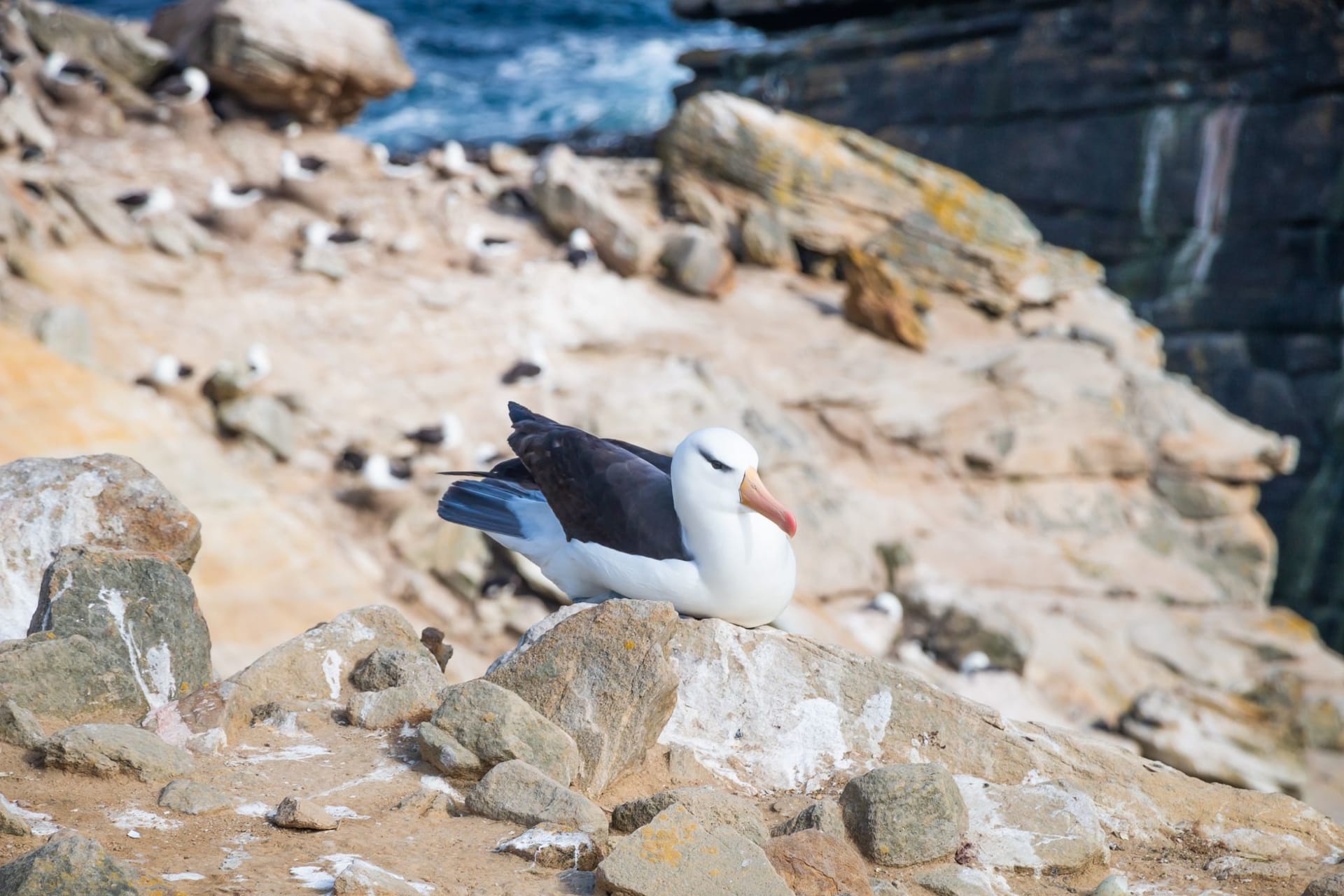
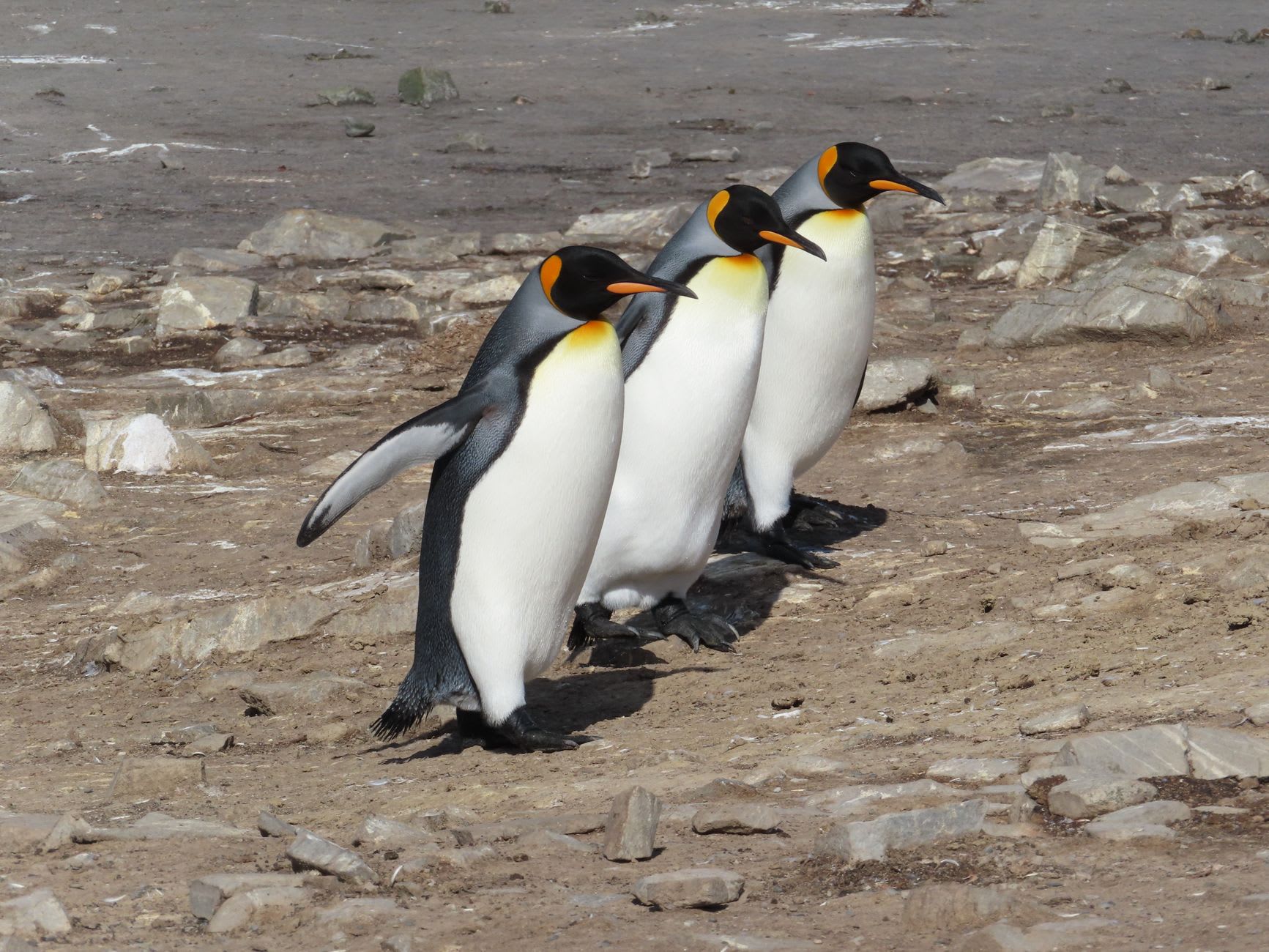
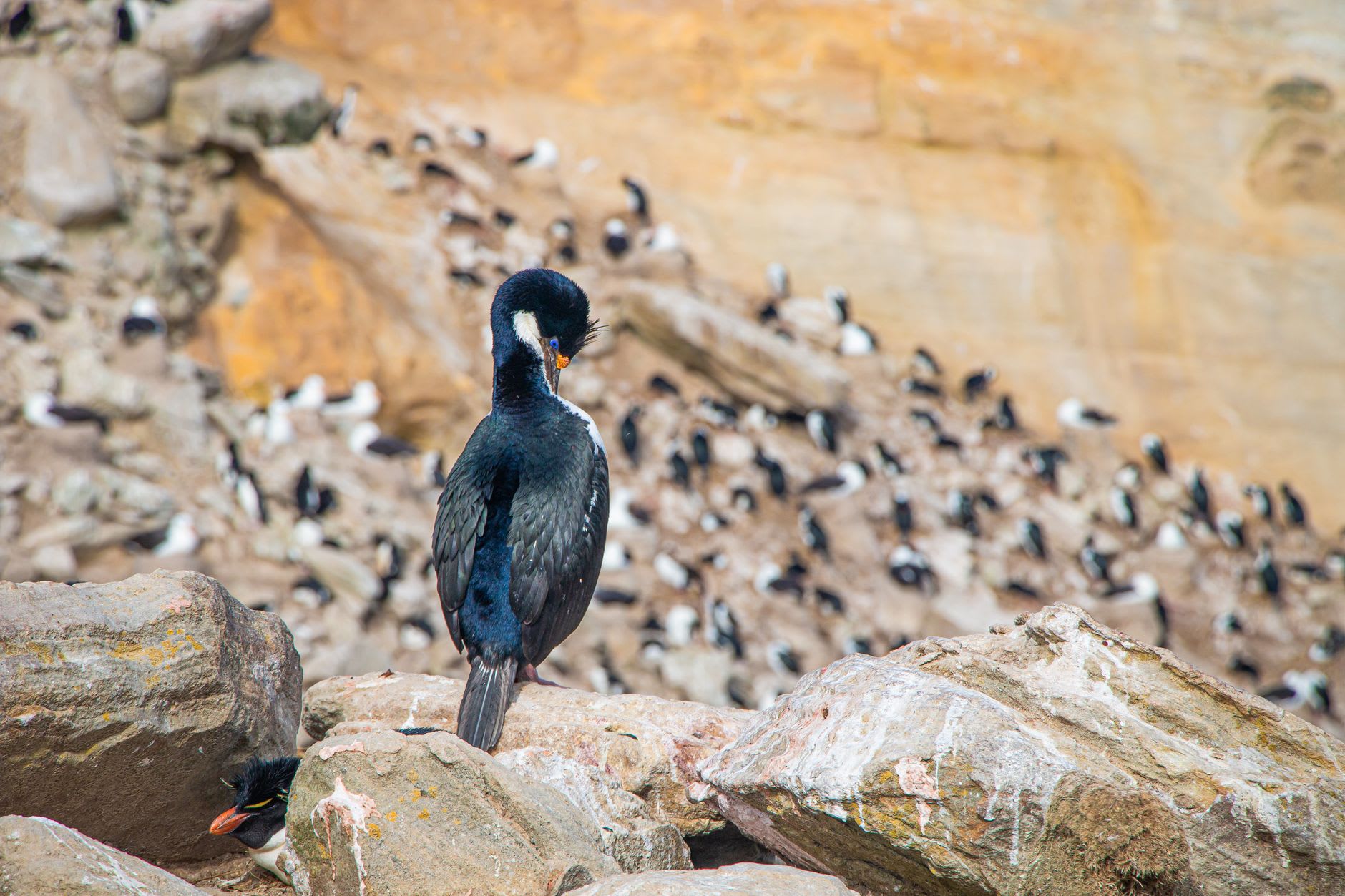
The wildlife is excellent and varied. Gentoo penguins occupy a colony near the beach within easy walking distance of the lodge. Magellanic penguins have dug their burrows through the tussock banks. Rockhoppers breed on the northern cliffs, where the sea is rougher and the rocks slicker. And over all of it — the penguins, the sheep, the old airstrip, the pebble beach — the black-browed albatrosses make their long, unhurried passes, riding the westerly wind that never fully stops.
Evenings at the lodge are the kind of evenings the Falklands does well: warm rooms, substantial food, and the peculiar pleasure of being somewhere so far from any city that the sky after dark is absolute. I went outside after dinner and stood in the dark for a long time, looking at a Milky Way that needed no dark-sky designation to justify itself. The pebbles in my jacket pocket clicked together softly. I had taken three — agate, jasper, and a piece of clear quartz that caught the moonlight before I put it away — and I thought about the ship that had first found this island and the sailor who had noticed, or perhaps not noticed, what was underfoot.
When to go: October through March for the wildlife colonies. The 1982 airstrip and war site can be visited year-round. The northern beach pebbles are present in all seasons — low tides are best for finding the most distinctive pieces, washed freshly onto the shore.