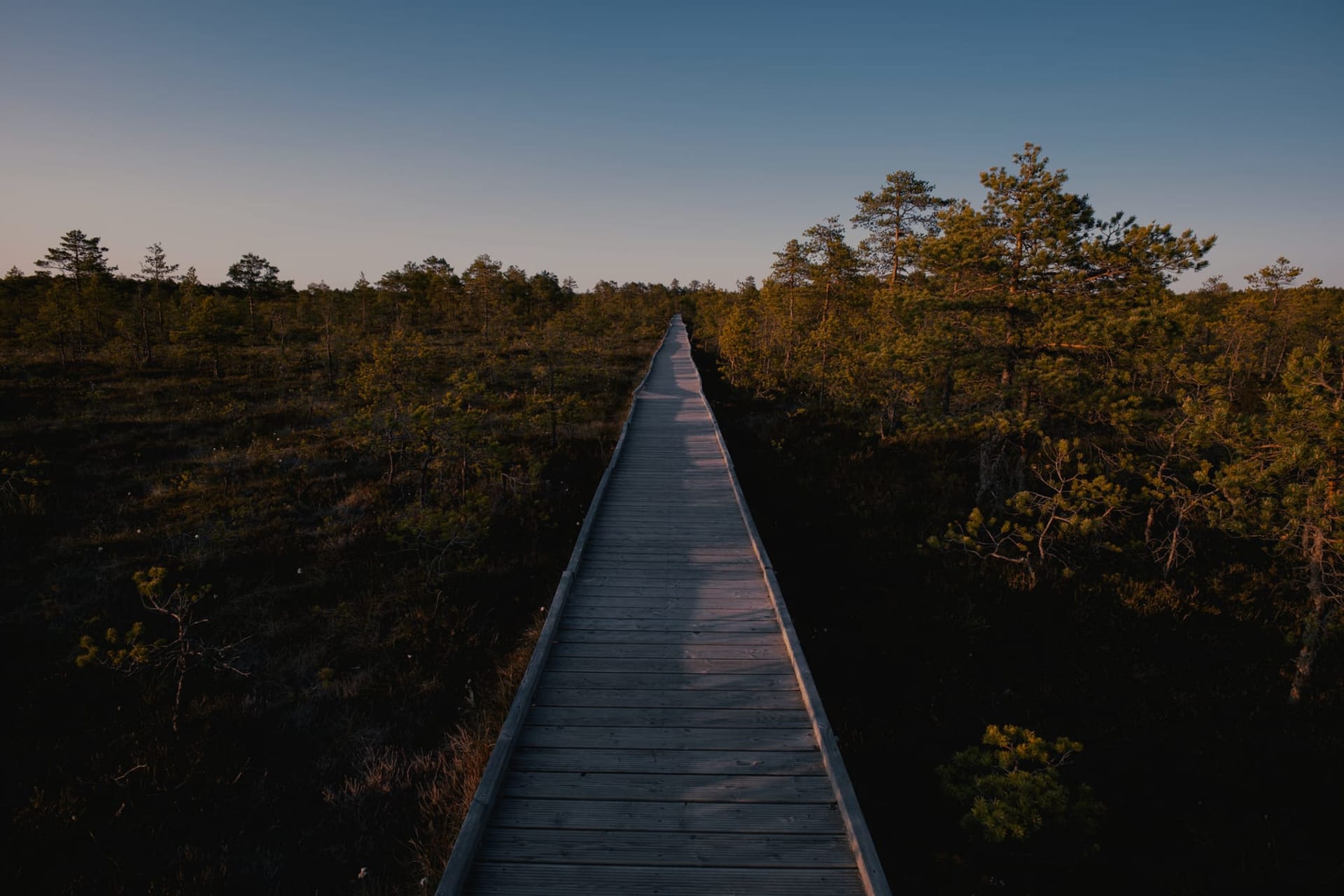
An Estonian wilderness of raised bogs and floodplain forests with a fifth season when spring floods turn roads into canoe routes.
The Estonians have a word for it — viiendaaastaaeg — the fifth season. Not a metaphor, not a folk saying dressed up for tourists. A genuine climatic event that arrives each spring when snowmelt and rain overwhelm the Halliste and Raudna rivers and push silently outward into the forest, the meadows, the gravel roads. I had read about it before coming, but reading about it and standing knee-deep in a pine forest while paddling a dugout canoe between the trunks are two entirely different experiences.
Into the Bog
We arrived at Soomaa through Kõpu village, a handful of farmsteads strung along a road that, three weeks earlier, had been submerged under a metre of cold brown water. The park sits in a shallow basin in southwestern Estonia, its raised bogs — Kuresoo, Valgeraba, Öördi — rising like slow islands above the surrounding floodplain. The largest of them, Kuresoo, spans nearly two thousand hectares of open sphagnum moss that bounces underfoot like a waterlogged mattress. Walking on it feels improbable, almost transgressive. The moss holds a decade of rainwater. The air above it smells of nothing at all, which is its own kind of richness — an absence of rot, of soil, of anything decomposing. Bogs are too acidic for that.
Lia went quiet about ten minutes in, which is how I know she was paying attention. She stopped and pointed: a lone Scots pine, twisted and minimal, growing from a moss hummock the way bonsai aspire to grow. Around it, the flat bog stretched to a treeline that seemed painted on.
The Fifth Season
The canoe guides work out of a farmstead near the Innu river trailhead. Our guide, a taciturn man named Raivo, pulled a dugout from the shed with the ease of someone who has done it a thousand times, which he probably has. What I had not expected — the genuine surprise — was the silence. Not the absence of noise, but a specific acoustic quality of paddling through a flooded forest: the dip of the paddle, the knock of bark against the hull, and underneath it all the faint creak of trees standing in water they were not designed to stand in. Raivo said the flood is different every year. Some years it reaches the road to Tõramaa. Some years it barely comes. You cannot book the fifth season. You can only come and hope.
The water is the color of dark tea, stained by tannins leaching from the bog above. In certain light — late afternoon, sun low and northern — the flooded forest turns amber and the reflections are indistinguishable from the trees themselves.
What Remains
Soomaa is not a dramatic landscape. There are no cliff faces, no viewpoints, no obvious photographs. What it offers is more patient: the sense of a place that has been doing the same thing for ten thousand years and will continue long after. The bog will sink another millimetre this century. The rivers will flood and retreat. The pines will grow another ring.
When to go: The fifth season typically runs from late March through April, peaking in early April — timing varies by year, so check conditions with local guides before booking canoe trips. For bog walks without floods, late summer keeps the sphagnum firm and the berries ripe.