Lahemaa
"The forest here doesn't announce itself. It simply goes on until you stop expecting it to end."
What the Park Contains
Lahemaa National Park is Estonia’s largest, but what struck me on my first day inside it was how un-park-like it feels. There are no entrance gates, no visitor centers blocking the road, no apparatus of tourism interposed between you and the place. You drive through villages that have been here for centuries. You park on the side of a forest road and walk into pine trees. The park boundary is largely administrative.
The landscape is diverse in a low-key way: granite boulders deposited by glaciers, river valleys, coastal wetlands, raised bogs, old-growth forest, and a coastline of bays and peninsulas. In autumn, the forests smell of mushrooms and cold water. In summer they smell of resin. The light through the canopy has that filtered Baltic quality — not warm exactly, but soft in a way that makes everything look considered.
The Manor Houses
Lahemaa contains several manor houses from the Baltic German nobility — the class that owned Estonia for centuries before independence. Palmse manor, the most visited, is a neoclassical estate that has been meticulously restored. I walked through the formal gardens, the coach house, the distillery. The family that built this lived here until 1919. The estate then became a Soviet state farm, then a restoration project. It holds all of this history without resolving it.
Sagadi manor, smaller and less touristed, struck me more. The forest comes closer to the buildings here, and the estate has an intimacy Palmse lacks. I had coffee in the café occupying what used to be stables and watched a woodpecker work through an old linden tree for about twenty minutes. Nobody interrupted either of us.
The Coastal Villages
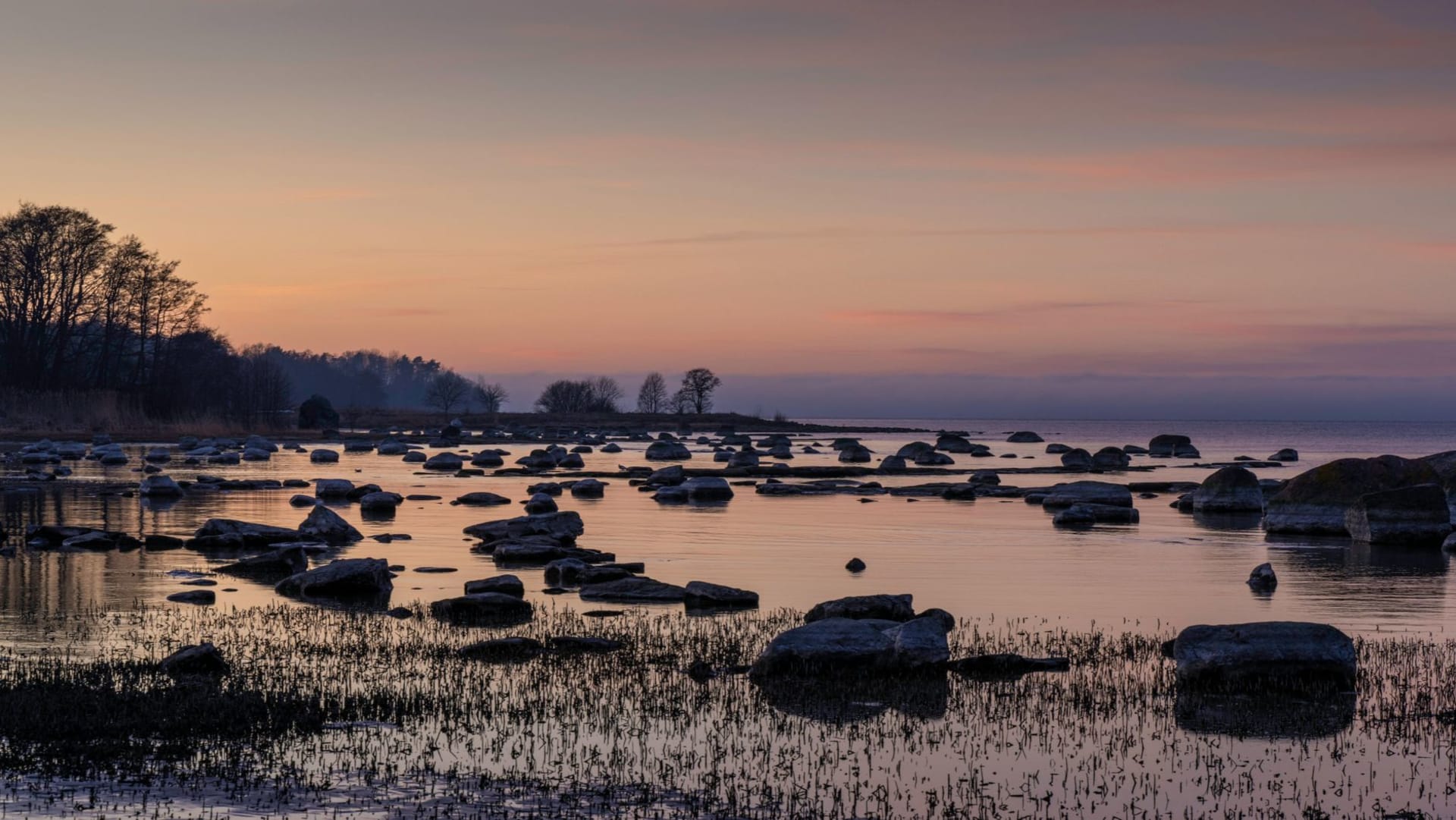
The fishing villages on Lahemaa’s coast — Käsmu, Altja, Võsu — are among the best-preserved in Estonia. Käsmu was a sea captains’ village in the nineteenth century; the wooden houses are larger and more elaborate than typical fishing settlements. The bay in front of Käsmu is almost perfectly calm, ringed by pines, and on the morning I arrived a mist was sitting on the water that made it look like ink on pale stone.
Altja has a traditional Estonian swing in the village green — the tall frame with a long board, a social piece of equipment that families and neighbors shared in summer. It was being used when I arrived, which surprised me. Some traditions don’t need revival because they never stopped.
The Viru Bog
The Viru Bog boardwalk is Lahemaa’s most accessible feature and, in my view, its most affecting. A wooden path winds through a raised bog that has been growing for around ten thousand years. The bog surface is a mosaic of sphagnum moss in a dozen shades of green and red, punctuated by stunted pines that have been growing for decades but are still only knee-high. The water between the moss hummocks is dark brown and almost perfectly still.
I walked the loop in an hour. It felt longer. The bog has no hurry in it, and some of that transfers.
When to go: May and June for forest-floor wildflowers and quieter paths. July and August for warmth and full daylight. September and October for mushroom season and birch trees turning gold. The park is accessible year-round; a winter visit with snow is reportedly spectacular, though it requires some logistical patience.