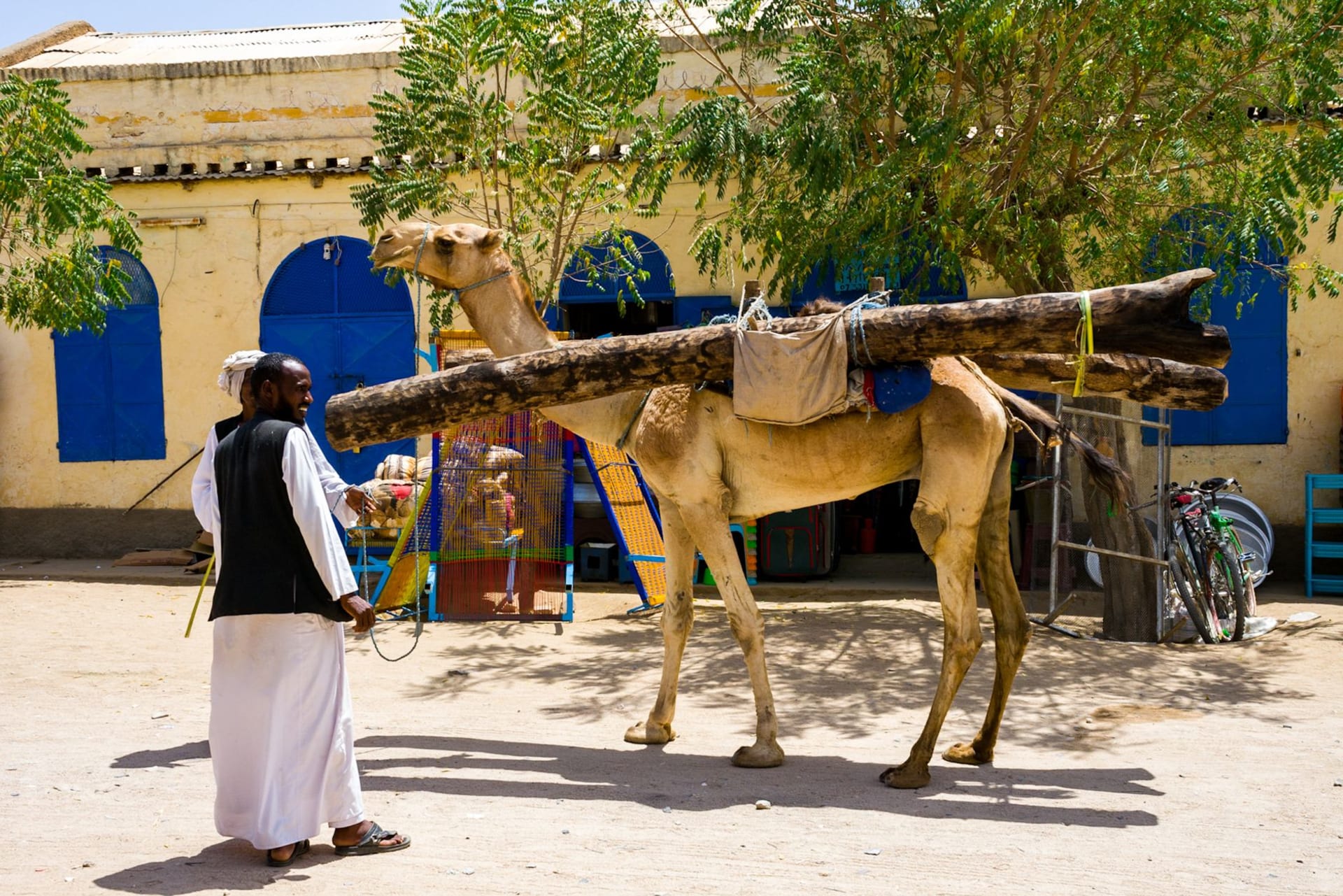
The first time I walked down Harnet Avenue in the early evening, I thought I was hallucinating from the altitude. Two thousand three hundred meters above sea level, and there it was: a colonnade of pale peach Art Deco buildings stretching as far as I could see, filled with men in plastic chairs playing chess, women selling oranges from small pyramids, and the smell of espresso drifting out from every other doorway. Nobody was performing for tourists. There were no tourists. The street was simply alive in the way African streets are alive when they haven’t been arranged around foreign visitors.
Asmara was built in the 1930s by Italian colonizers who had grand ideas about what an African capital should look like, and then the country’s subsequent history — British occupation, federation with Ethiopia, three decades of independence war — essentially froze the city in place. New construction barely happened. Demolition barely happened either. So what remains is this extraordinary open-air museum of Modernist and Art Deco architecture, casually inhabited, lightly weathered, and almost completely unmarked. You can walk past Cinema Impero — one of the most beautiful Rationalist cinemas anywhere in the world — and notice that the poster in the window is for a film currently showing. It functions. It charges the equivalent of fifty cents. I went twice.

The coffee culture here is serious in a way I wasn’t prepared for. Eritrea was an Italian colony, and the espresso tradition seeped deep into the national culture and never left. The macchiato — called a macchiato here too, with a slight Tigrinya accent — comes in a tiny cup, is extremely dark, and is often accompanied by a small glass of sparkling water and a piece of hard candy. I watched an elderly man at Bar Vittoria drink four in the space of an hour while reading a newspaper and speaking to absolutely no one. This felt like a cultural ideal I could work toward. The pastries are also inexplicably good: sfogliatelle and cornetti that would not embarrass a bar in Naples.
The Fiat Tagliero building, a few blocks off the main avenue, remains the set piece of any visit. It’s shaped like an airplane — a futurist service station with two enormous concrete wings extending sideways, each more than fifteen meters long, neither supported by a single pillar. The story goes that the Italian engineer who designed it had to hold a gun to the head of the builder to get him to remove the temporary supports. Whether true or not, it has the quality of being exactly the kind of story this building deserves. It sits now at an intersection, cream and terra-cotta, occasionally used as a café or rented for events, mostly just existing in its own architectural category.

Asmara rewards walking above all else. The side streets off Harnet Avenue hold small workshops where men repair radios and sewing machines, open-fronted restaurants where the lunchtime injera is served with a spiced meat stew that carries warmth without overwhelming heat, and the occasional Italian-built villa with a garden gone slightly wild. The pace is slow in a way that feels structural, not lazy — a city that has learned to move at the speed of people rather than cars.
When to go: October through March is ideal — the highland air is dry and cool, never cold at night, perfect walking weather during the day. April and May heat up but remain manageable. Avoid the rainy season (June through September) if you want clear light for the architecture, though the brief afternoon rains can themselves be beautiful, clearing the dust and brightening the facades.