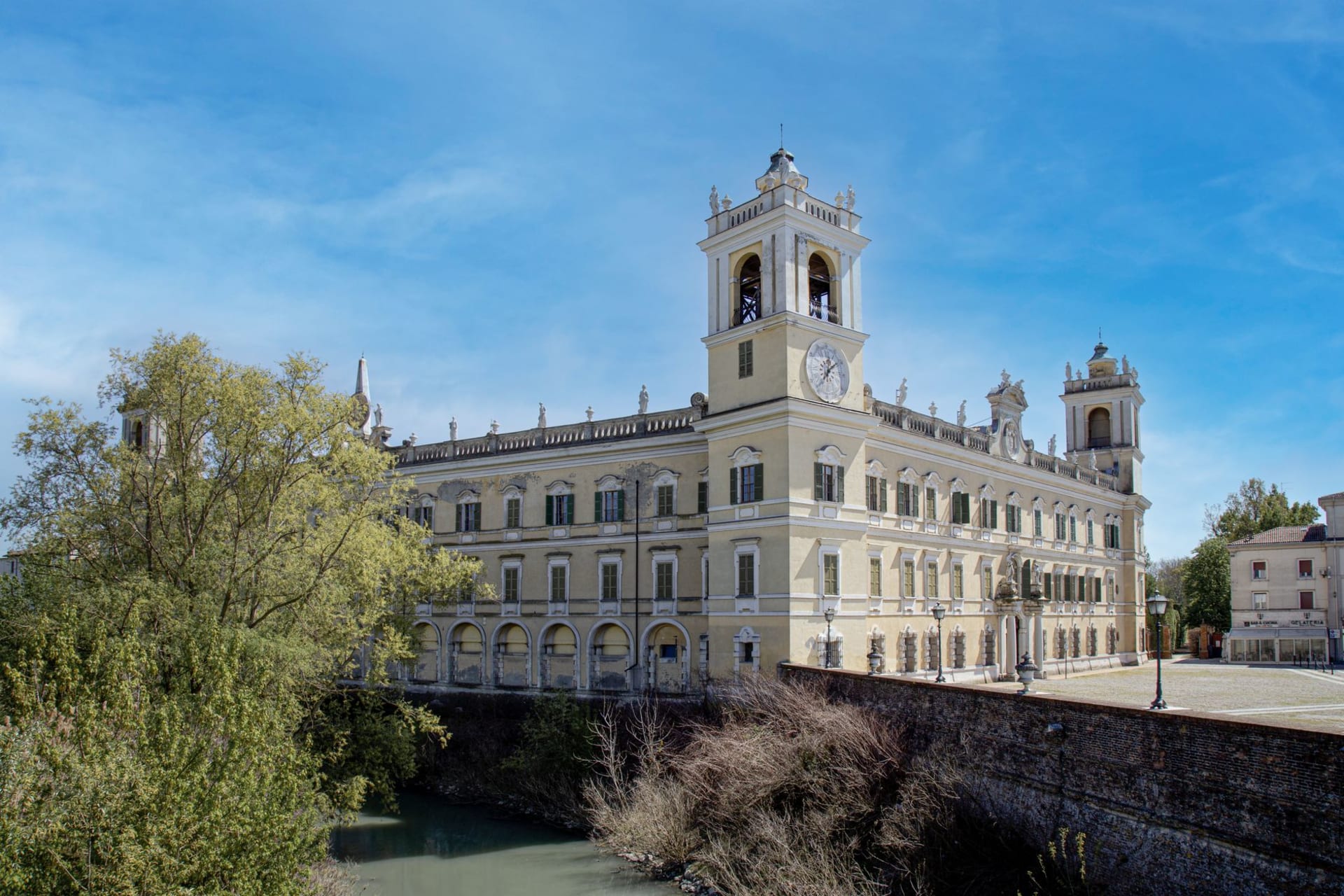
Modena
"Twenty-five years in a barrel and it comes out tasting like time itself — that's Modena's balsamic logic."
I understood Modena on my third day there, not at a restaurant or a museum, but in an attic. A woman named Luisa had invited me to see her family’s acetaia — the balsamic vinegar workshop — which occupied the top floor of a farmhouse on the southern edge of the city. The attic was warm from the roof and smelled extraordinary: sweet and sharp and ancient, like old wood soaked in concentrated grape must. The barrels were arranged in a series of diminishing sizes — from the large mulberry barrel where the cooked must begins its life, down through cherry, chestnut, oak, to the final tiny barrel of juniper where the vinegar concentrates into something that, after twenty-five years, falls in single drops. Luisa let me taste some. It had the complexity of a good Cognac and the sweetness of dried figs. It cost about forty euros a hundred millilitres. The supermarket version costs four.
That distinction — between the genuine article and the simulacrum — defines Modena. This is a city that produces the real thing at the cost of extraordinary patience, then quietly watches the rest of the world produce faster, cheaper approximations and label them the same name. The traditional balsamic has its own certification — Aceto Balsamico Tradizionale di Modena DOP — and the producers are few, the process unchanged. I spent the rest of that afternoon reading about it in the Museo del Aceto Balsamico Tradizionale, in a small room beside the cathedral, and came away genuinely moved by the idea of a condiment that takes longer to make than it takes a child to reach adulthood.

The cathedral is the other argument for Modena. Begun in 1099 by an architect named Lanfranco, decorated in reliefs by a sculptor named Wiligelmo whose name appears proudly on a stone plaque — a medieval artist signing his work — the Duomo di Modena is one of the definitive examples of Italian Romanesque. I sat in the piazza in front of it for an hour one morning with a coffee and watched the light move across the stone. The Ghirlandina tower — separate from the cathedral, leaning fractionally — rises beside it in pale marble. UNESCO inscribed the ensemble in 1997. They were right to.
The Ferrari Museum is about twenty minutes by bike — the Galleria Ferrari in Maranello, a suburb south of the city. I went expecting spectacle and found something more interesting: a careful history of the company alongside the cars, tracing Enzo Ferrari’s obsessive character through the machines it produced. The engineering involved in a 1960s racing Ferrari is beautiful in the way that all serious craft is beautiful, regardless of whether you follow motorsport. The bright red under the museum lights is a colour that seems to generate its own light source.

Modena’s Mercato Albinelli — the covered market just off the central piazza — is where the city shows its domestic self. Mortadella sold from whole legs, piles of tigelle (small flatbreads made for stuffing with cured meat), crescentine fried until golden. I ate three tigelle filled with lardo and rosemary at the market at ten in the morning and felt completely justified. The market operates Tuesday through Saturday and has a quality that feels entirely unrehearsed — this is where Modenesi actually buy their food.
When to go: October is ideal — the new grape must is being processed into balsamic, the harvest festivals are running, and the Cathedral plaza is at its most beautiful in the autumn light. June to August brings summer heat and some festival programming, though the city is quieter than Bologna in summer.