
Machalilla National Park
"I woke up to howler monkeys and walked to a beach that looked photoshopped, all before nine in the morning."
A stretch of dry tropical forest and marine reserve on the central coast where howler monkeys call at dawn a few hundred meters from one of Ecuador's most photographed beaches.
Machalilla National Park is Ecuador’s only coastal national park, and it does something I hadn’t seen combined quite this way elsewhere — dry tropical forest, marine reserve, and archaeological sites, all inside one modestly sized protected area a short drive from Puerto Lopez. I based myself in Puerto Lopez and made the park a series of day trips rather than trying to see it all at once, which turned out to be the right call given how different each section feels from the last.
Los Frailes
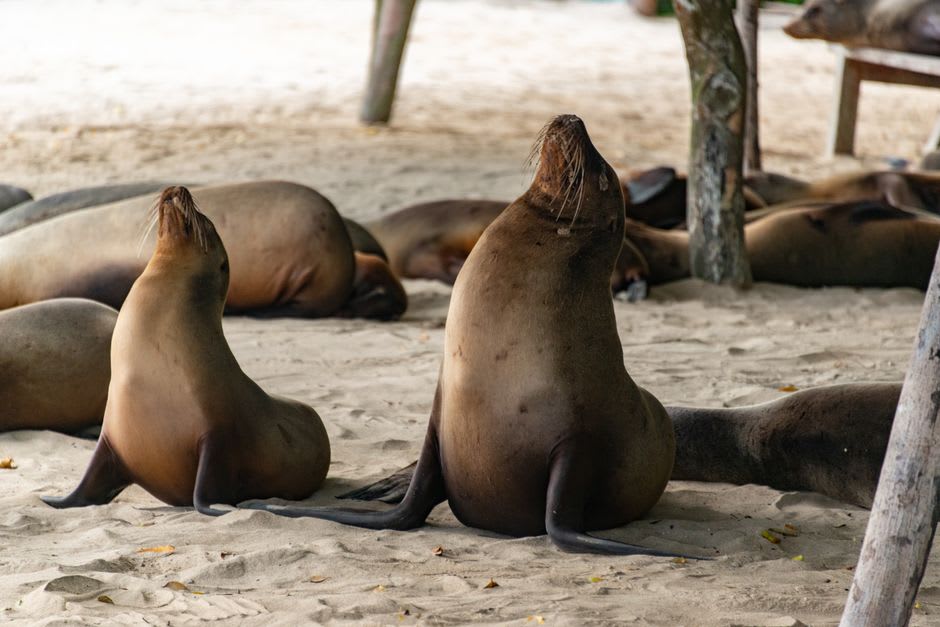
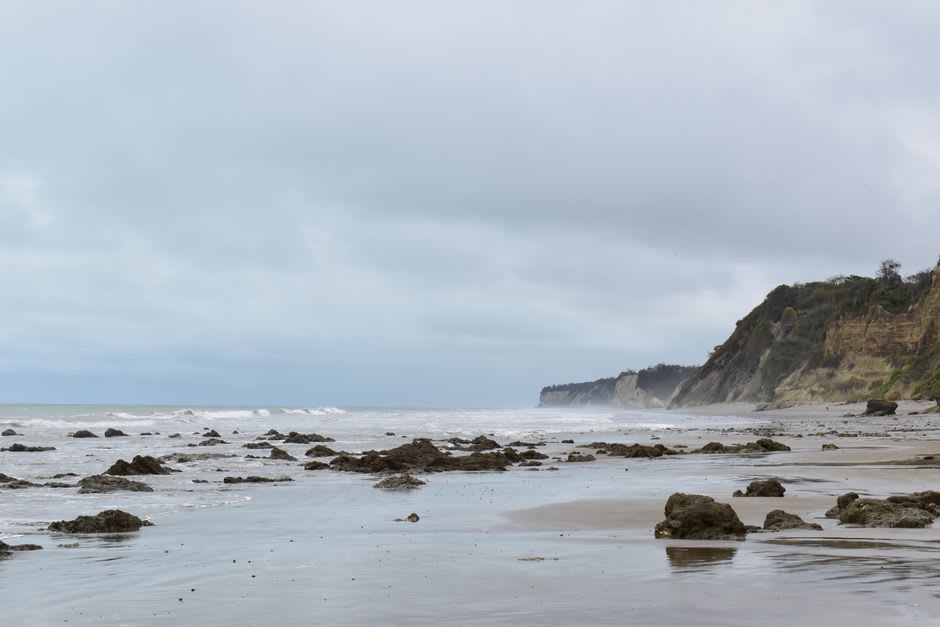
Los Frailes is the park’s signature beach and deserves the reputation — a curve of pale sand backed by forested cliffs, water shifting between turquoise and deep blue depending on the cloud cover, and, crucially, no beach bars, no vendors, nothing built on the sand at all because the park protects it that strictly. Reaching it requires a short hike down from a viewpoint trail through dry forest, past a smaller cove called La Playita, and the lack of any development makes it feel more remote than its actual accessibility would suggest. I arrived early enough to have a fifteen-minute stretch completely alone before a family showed up, and it remains one of the best beaches I found anywhere on the Ecuadorian coast.
Agua Blanca and the Archaeological Community
Inland from the coast, the community of Agua Blanca manages a small archaeological site connected to the Manteño culture that predated the Inca in this region, including a museum with recovered ceramics and funerary urns, and a genuinely warm sulfur-scented lagoon where locals swim and coat themselves in mineral mud. The community runs the site themselves, guiding visitors through the ruins and the lagoon in a way that felt more like a shared local resource than a packaged tour. I floated in the lagoon with mud drying on my arms while a guide explained the Manteño’s trade routes along the coast, which is not a sentence I expected to be writing about a national park visit.
Howler Monkeys and the Dry Forest
The transitional dry forest that covers much of the park’s interior looks almost leafless in the dry season, a landscape of grey branches and ceiba trees that seems dead until a howler monkey call — a deep, guttural roar that carries for kilometers — reminds you it very much isn’t. I heard them most mornings from wherever I was staying, well before I ever managed to actually spot one in the canopy, and eventually gave up trying to see them and just enjoyed the sound as the park’s daily alarm clock.
When to go: May through December is dry season and the best window for the forest trails and clearer coastal visibility. June through September overlaps with whale-watching season from nearby Puerto Lopez, letting you combine both in one trip.