Guayaquil
"Everyone in Quito had warned me off Guayaquil, and everyone in Guayaquil had warned me off wherever I'd just come from — I liked it more than either side expected."
Ecuador's largest city and economic engine, a hot, humid river port that spent two decades rebuilding its waterfront into one of South America's more genuinely successful urban makeovers.
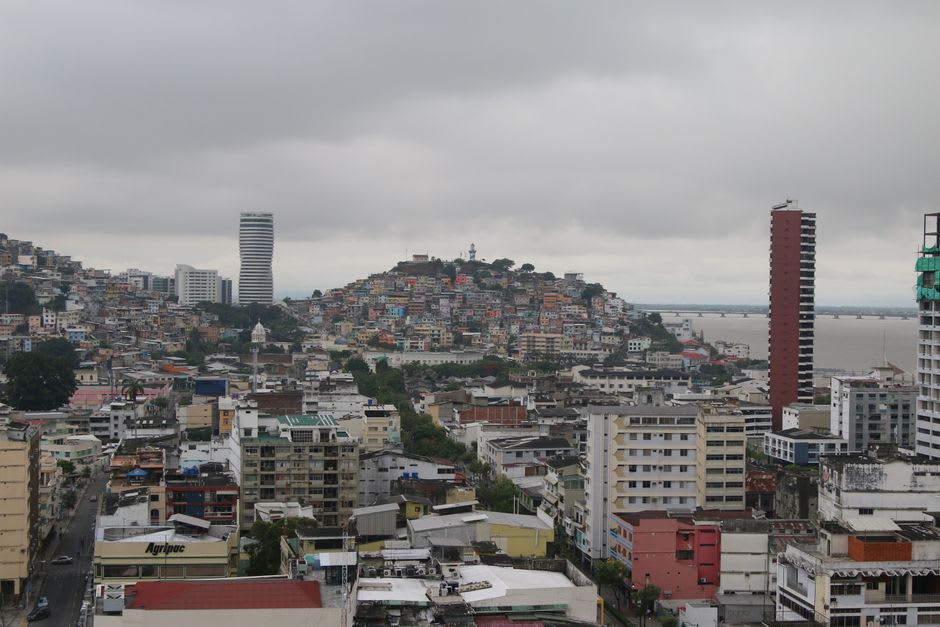
Guayaquil hits you first as heat — a wet, coastal heat completely different from the thin cool air of Quito, four hundred meters lower and a world away in temperament. This is Ecuador’s commercial capital, a city of container ships and banks and traffic, and it carries a reputation among highland Ecuadorians as rougher and less refined than Quito. I found a version of the city that didn’t match that reputation at all, at least along the river where the city has spent real money and real intention rebuilding itself.
The Malecon 2000
The Malecón Simón Bolívar, universally known as the Malecón 2000 after the renovation project that transformed it, runs for roughly two and a half kilometers along the Guayas River, and it’s a genuinely well-executed piece of public space — gardens, fountains, a botanical garden with butterflies, monuments, food courts, and constant river breeze that cuts the heat noticeably once you’re walking along the water. I spent an entire evening just moving slowly down its length, watching families out for the same reason I was, joggers, a small crowd gathered around street performers near the IMAX theater.
Las Peñas and the Iguanas
At the northern end of the Malecón, the historic Las Peñas neighborhood climbs Cerro Santa Ana via 444 numbered steps, lined with brightly painted houses that have been turned into small galleries, cafés, and bars, culminating in a lighthouse with a genuinely good view over the river and the city sprawl. I climbed it at golden hour and stopped counting steps somewhere past two hundred, which I’d recommend as the correct approach. Back down at street level, Parque Seminario — nicknamed Parque de las Iguanas — is exactly what it sounds like: a small central plaza with a resident population of large, entirely unbothered green iguanas draped over branches and benches, utterly indifferent to the people photographing them a foot away.
A City Loosening Up After Dark
Guayaquil’s reputation for being unsafe isn’t invented from nothing, and I stuck to well-lit, populated areas after dark and used registered taxis rather than walking long distances at night, standard advice that applies to most big Latin American cities. Within those sensible limits, the city has real energy — the Urdesa neighborhood is packed with good ceviche and seafood restaurants that stay busy past 10 p.m., and the general pace felt more relaxed and coastal than I’d been led to expect, closer to a hot port town than the intimidating city Quito residents had described.
When to go: Guayaquil’s dry season runs roughly May through December, avoiding the heaviest humidity and rain of the January–April wet season. The Malecón is at its best in the two hours before sunset, when the heat breaks and the river light turns gold.
Keep exploring
More from Ecuador
 ecuador
 Ibarra
The 'White City' of the northern Andes, built on the ruins of an earthquake, known equally for its whitewashed colonial streets and a specific frozen dessert nobody leaves without trying.
Explore ecuador
 Ingapirca
Ecuador's largest surviving Inca complex, an elliptical sun temple built on top of an older Cañari site, in a windswept highland setting that most Andes-bound travelers rush past.
Explore ecuador
 Loja
A tidy, self-possessed Andean city in the far south that calls itself Ecuador's cultural and musical capital, and largely earns the claim without needing to convince anyone of it.
Explore ecuador
 Machalilla National Park
A stretch of dry tropical forest and marine reserve on the central coast where howler monkeys call at dawn a few hundred meters from one of Ecuador's most photographed beaches.
Explore ecuador
 Manta
Ecuador's biggest working port city, where a genuinely serious tuna industry operates a few hundred meters from beach clubs and ceviche stands that don't know the difference.
Explore ecuador
 Mindo Cloud Forest
A birdwatcher's paradise where 400 species share cloud forest trails with chocolate farms and butterfly gardens.
Explore