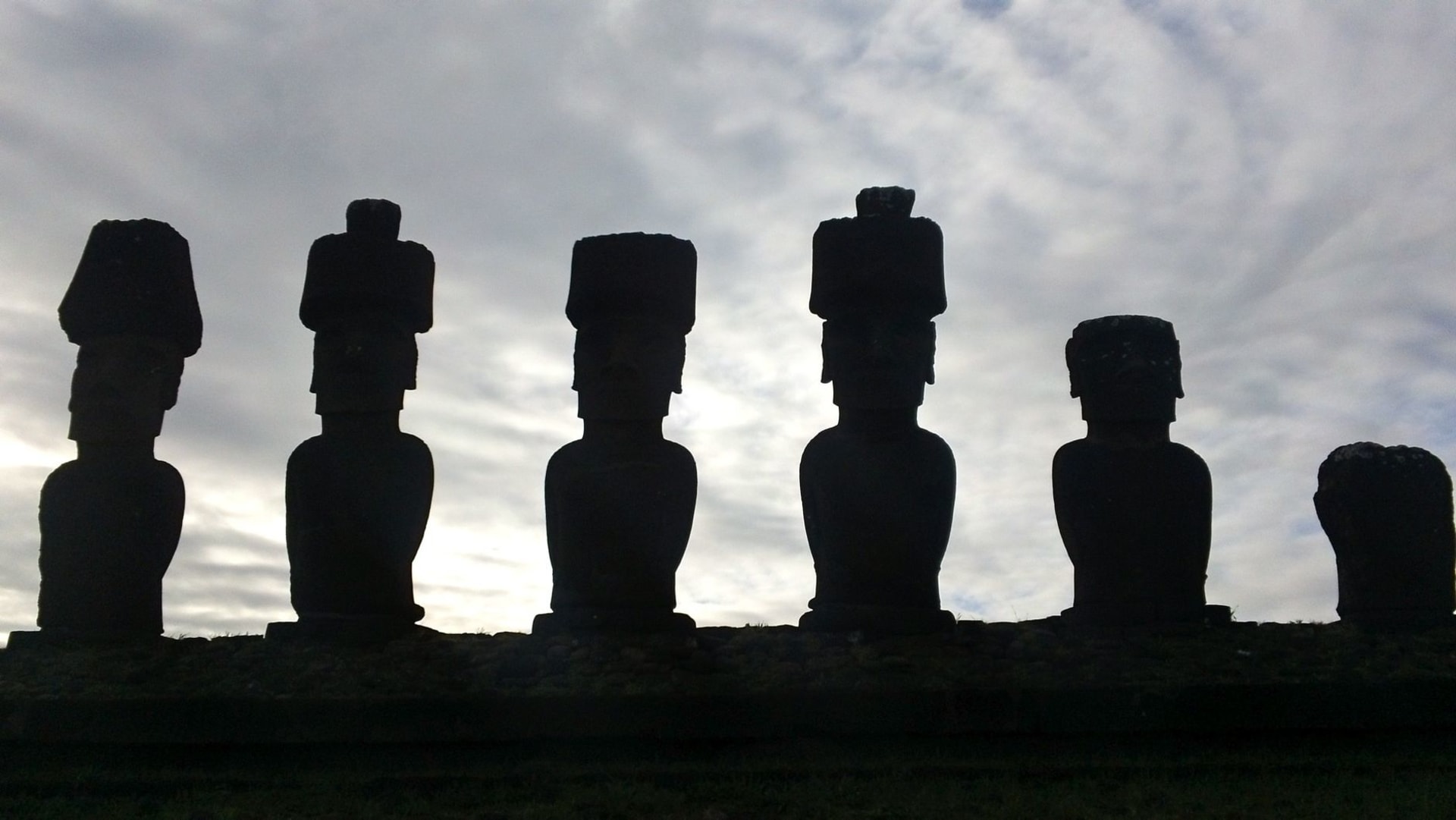
Te Pito Kura
"The biggest one they ever moved. It's lying on its face in the grass, and it still seems impossible that it ever stood."
Te Pito Kura means “the navel of the world’s light” or, depending on which translation you use, “the bright navel of the world.” The name refers to a smooth, almost perfectly spherical basalt stone about a meter across that sits in a circle of four smaller stones on a platform near the coast. The sphere is said to have been brought by Hotu Matu’a, the founding chief, from the Polynesian homeland. People touch it when they visit, or hold their hands near it without touching, and guide books will tell you it has a magnetic charge that sensitives can detect. I am not a sensitive, and I couldn’t detect anything except warm stone on a warm afternoon. But I spent a long time looking at it anyway, because the shape is extraordinary — too round for accident, too ancient for comfort — and because the grass and the ocean and the wind were doing their usual thing and I was in no hurry to go anywhere.
The main reason most people come to Te Pito Kura is not the stone, though. It’s the moai. Paro — the statue that once stood on this platform — was the tallest moai ever successfully erected on an ahu anywhere on Easter Island: ten meters from base to crown, with a topknot that added another two and a half meters. The topknot alone weighed nearly twelve tonnes. The entire statue weighed somewhere between eighty and ninety tonnes.
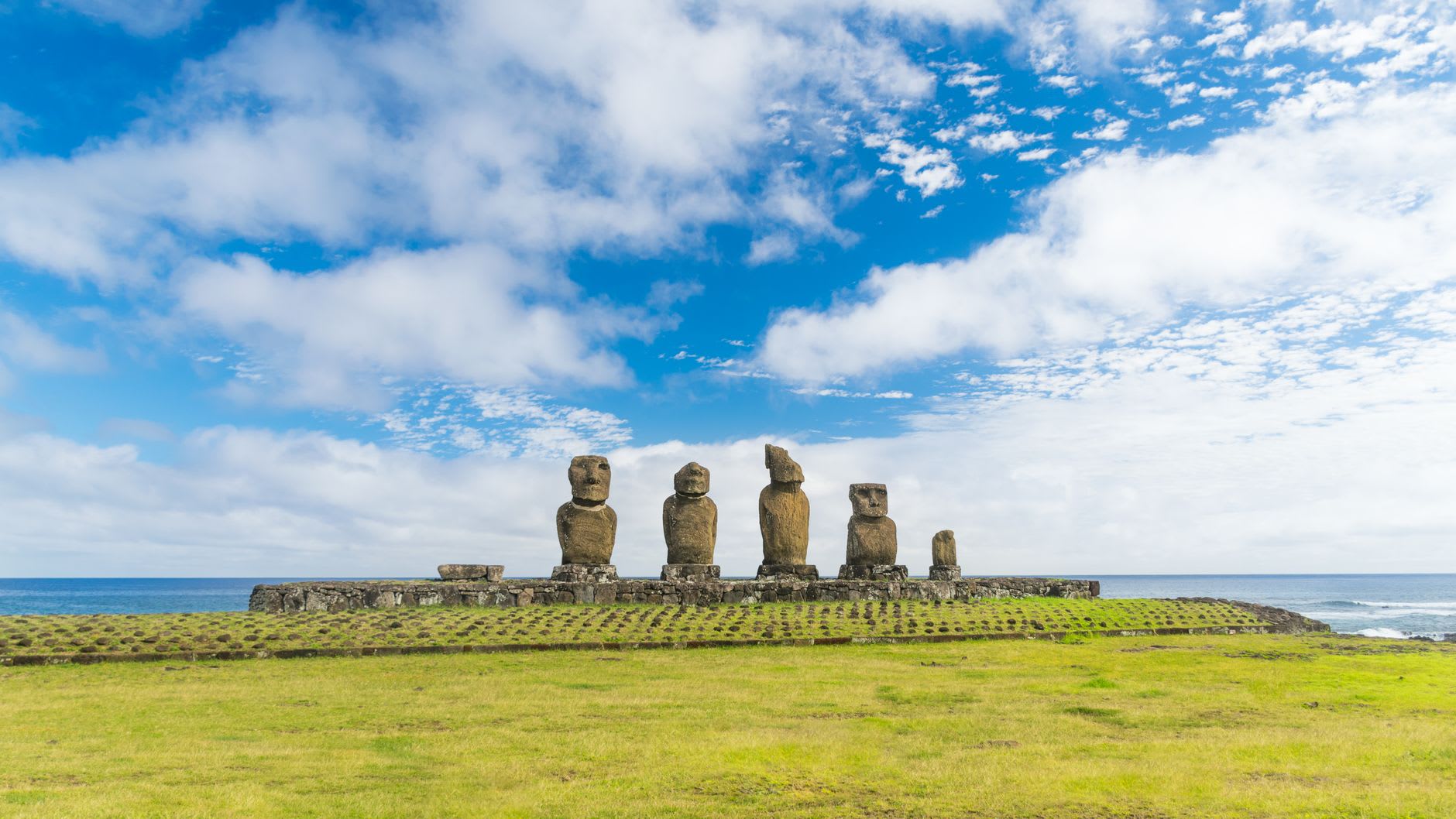
Paro was toppled during the clan wars of the eighteenth century and lies face-down near the platform. It was not restored. Looking at it on the ground — at its sheer length, the way the grass has grown up around it over the centuries, the stone face pressed against the earth — I found it more affecting than any standing moai. There’s a specificity to failure that success doesn’t have. Someone moved this thing — somehow, over grassland and coastal terrain, from the quarry at Rano Raraku to this cliff edge on the north coast — and stood it up, and eventually someone else brought it down. That whole arc of effort and destruction is right there in front of you, lying in the grass.
Te Pito Kura is on the north coast road between Hanga Roa and Anakena, which means most people pass through it as a stop on the circuit rather than a destination in itself. I went twice: once on the circuit, quickly, with a rental car, and once on foot from a point along the north coast road where I’d been walking. The second time was better. On foot, with no particular arrival time, I sat near the spherical stone for the better part of an afternoon and watched the light change on the fallen moai. The stone turns gold in late afternoon. The grass around Paro goes silver when the light is low. Two other visitors came and went. Nobody spoke much. Some places don’t invite it.
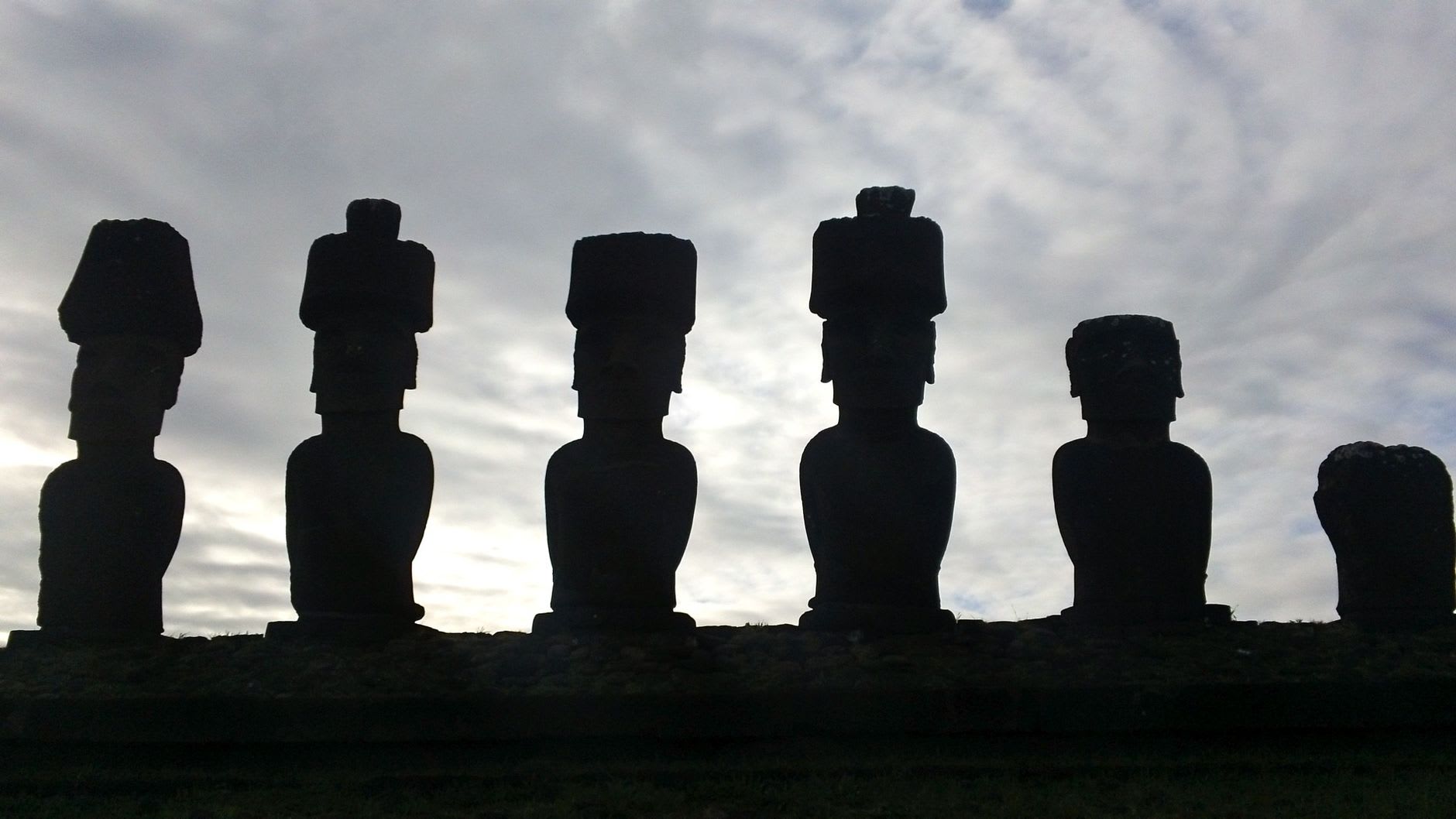
The setting is also simply beautiful — the north coast at this point is a series of low black volcanic shelves dropping to the sea, with the water very clear and very green over the shallow sections and very dark where it deepens. From the platform’s edge you can see the coast curving west toward Hanga Roa and east toward Anakena, and on a clear day the horizon is so sharp it looks drawn.
When to go: Te Pito Kura is about 16 kilometers from Hanga Roa along the north coast road, accessible by rental car, moped, or bicycle. Afternoon gives the warmest light on the fallen moai and the sacred stone. It’s a natural midpoint if you’re doing the north coast circuit to Anakena and back. Allow at least an hour — the site rewards slowness in a way that quick stops don’t allow.