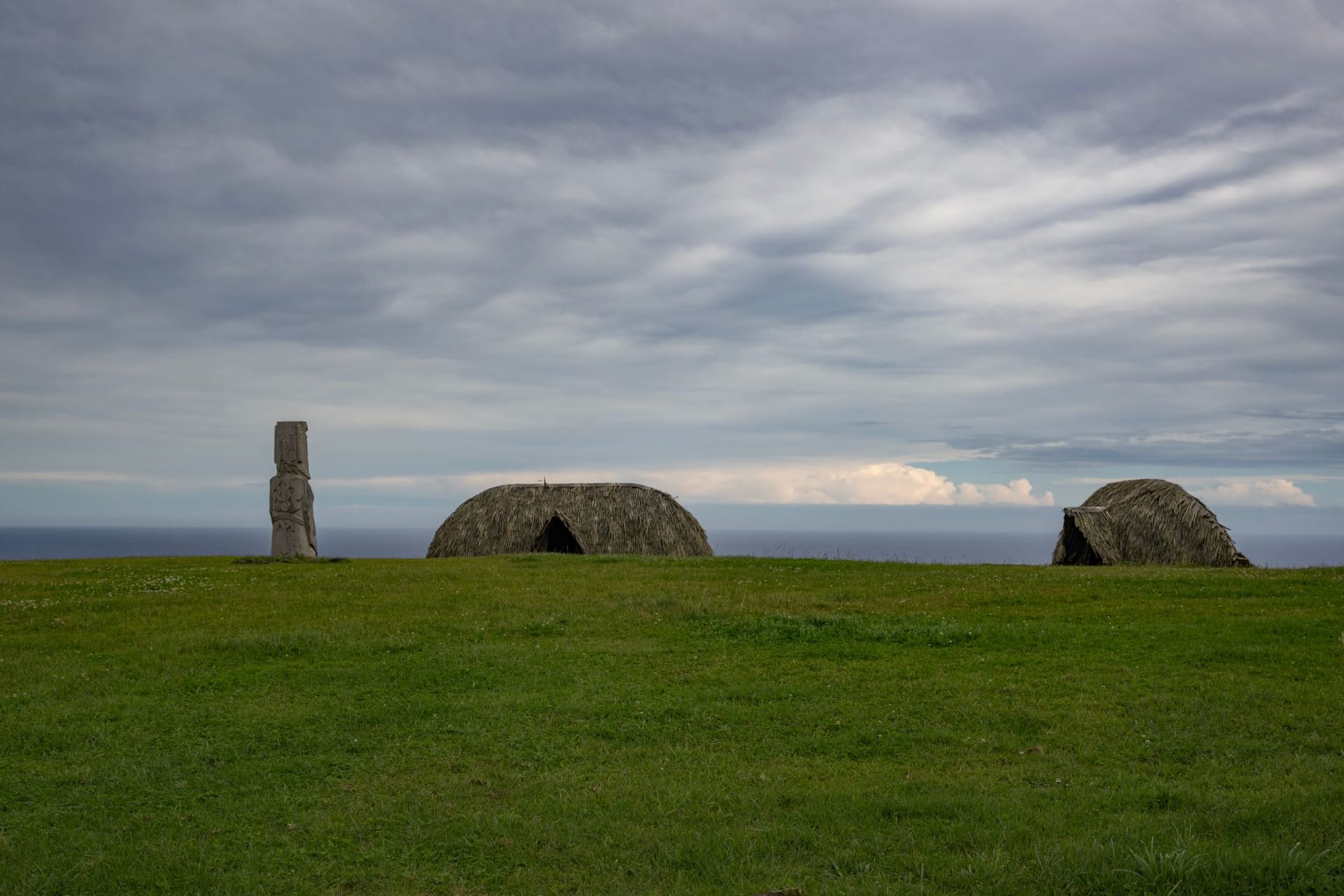
Ahu Tongariki
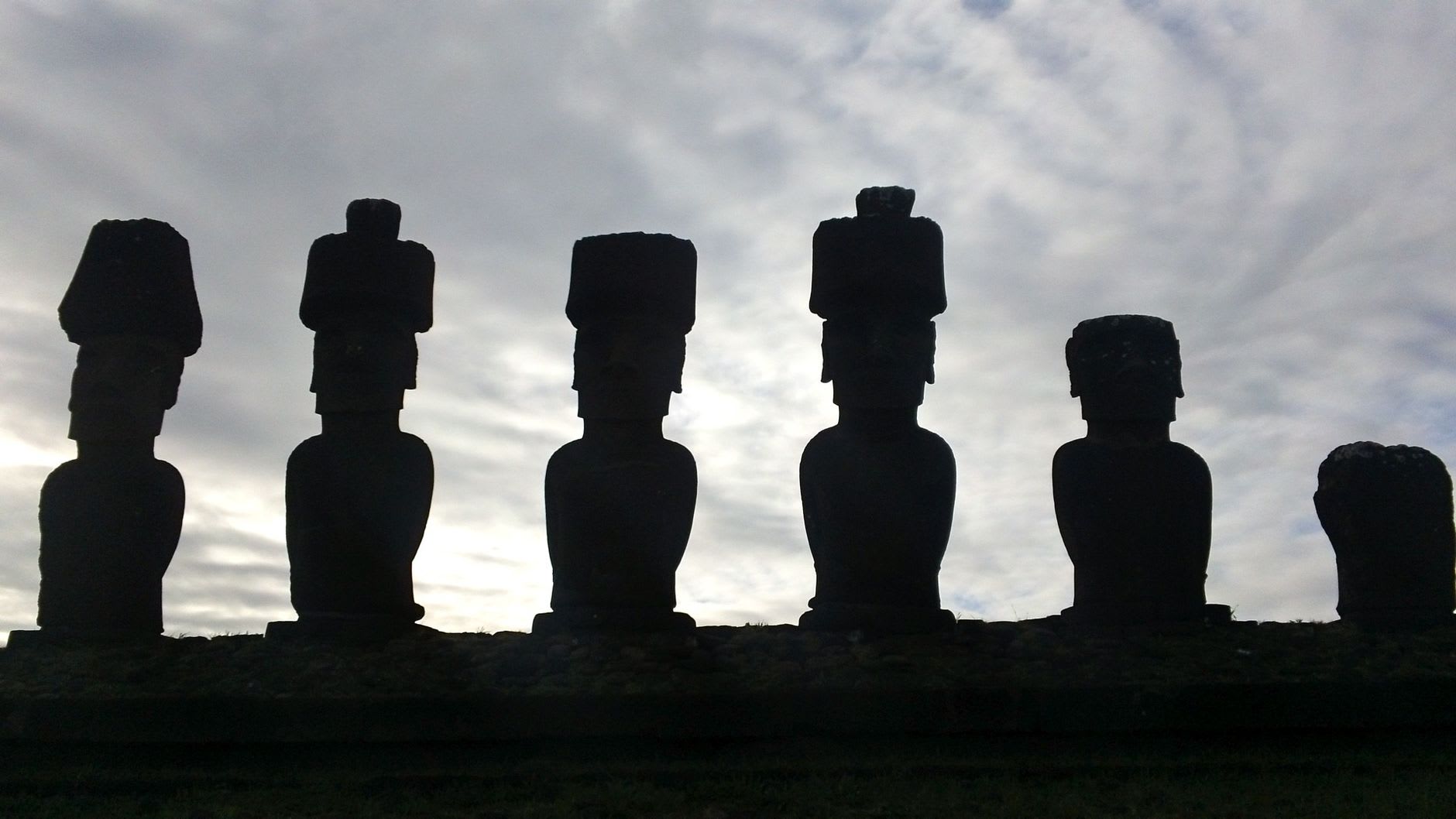
"Fifteen stone men facing inland at dusk — and somehow it feels like they're the ones doing the watching."
I went to Ahu Tongariki in the late afternoon on purpose. Every tour operator, every blog post, every traveler I’d met in Hanga Roa told me sunrise was the moment: the Pacific behind the statues, the light coming up, the silhouettes. And maybe that’s true. But I’d read enough about Easter Island to know that fifteen moai plus one hundred photographers at 6am wasn’t the experience I was after. So I went at five o’clock on a Tuesday, rented the cheapest bicycle Hanga Roa had, and rode the coast road east until the platform came into view.
They’re bigger than they look in photographs. That’s the first thing. The tallest stands nearly nine meters and the platform they stand on — the ahu — is itself massive, a raised stone terrace built from basalt blocks that had to be hauled to this site from elsewhere. Ahu Tongariki is the largest ceremonial platform in all of Polynesia. When I walked up to the edge of the ahu and looked along the row, I understood why. Fifteen figures, all slightly different in proportion, all with that characteristic elongated face and heavy brow, standing side by side with the inland slopes of the island behind them and the ocean behind me.
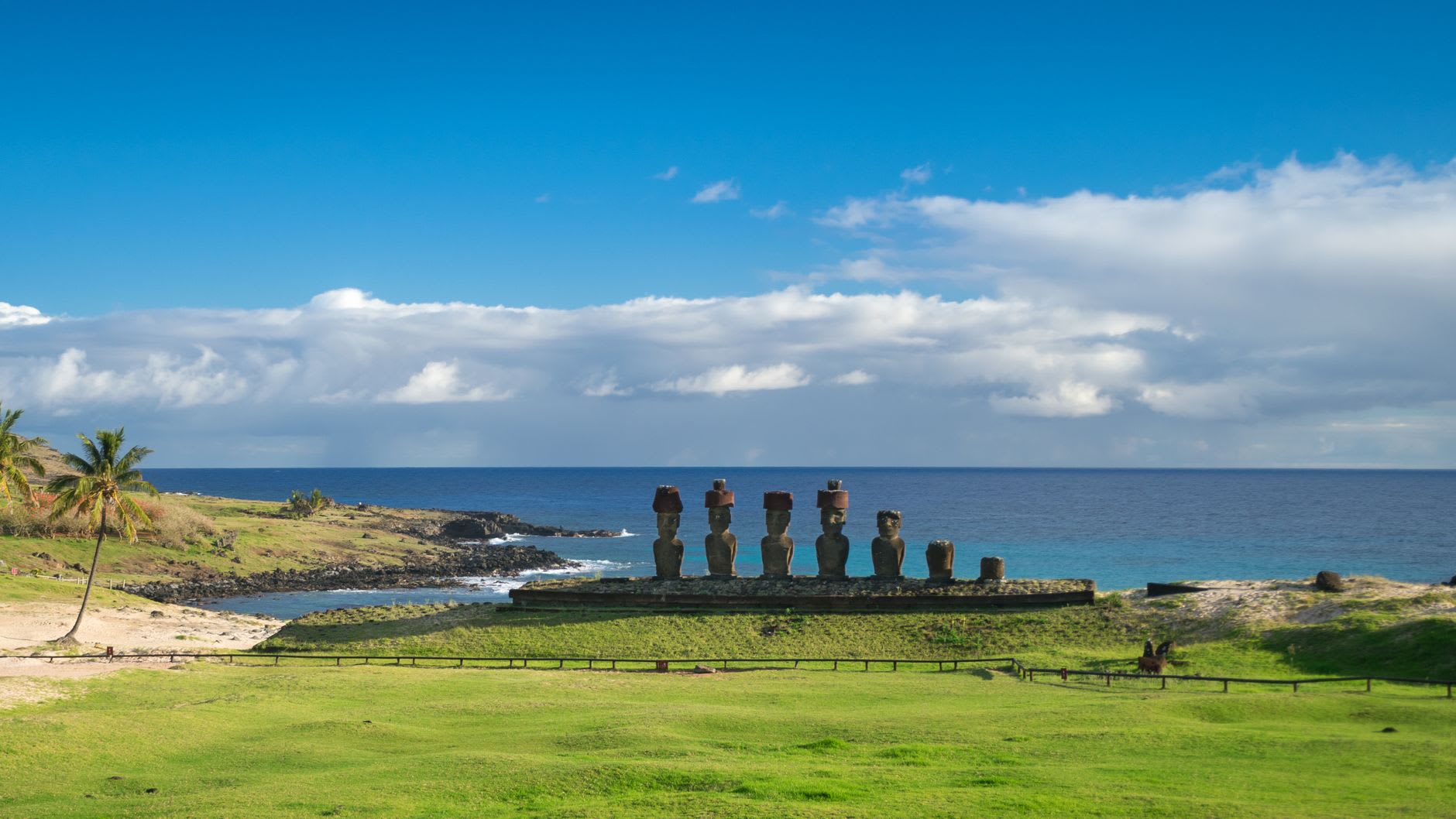
These statues were knocked face-down during the clan wars of the eighteenth century — every moai on every ahu on the island was toppled — and were then devastated again in 1960 when a tsunami triggered by the Chilean earthquake swept inland and scattered the platform’s blocks across hundreds of meters. It took a Japanese crane company nearly five years in the 1990s to restore them. Knowing that they were lying in pieces within living memory, and seeing them standing now, makes something complicated happen in your chest.
I walked the length of the platform twice. I watched the light do what it does on a clear Pacific afternoon, going from white to gold to orange, the shadows on the moai faces deepening until each one looked distinct, individual, less like a row and more like fifteen people who happened to be standing together.
The ride back to Hanga Roa was along the southern coast road, into the wind and the last of the light. I passed horses standing completely still on the roadside, watching me go by. The road curves around the base of Rano Raraku, and for a moment both the quarry hill and the sea were visible at once, and I understood — with the specific clarity you sometimes get from being tired and windswept — why people have been making extraordinary efforts to reach this island for decades.
When to go: The platform is accessible year-round. Late afternoon (4–6pm) gives warm directional light that brings out the texture and features of the moai faces. Sunrise visits are genuinely spectacular if crowds don’t bother you — arrive before 6am. The site is part of Rapa Nui National Park; the entrance pass (purchased in Hanga Roa) covers multiple sites and is valid for several days.