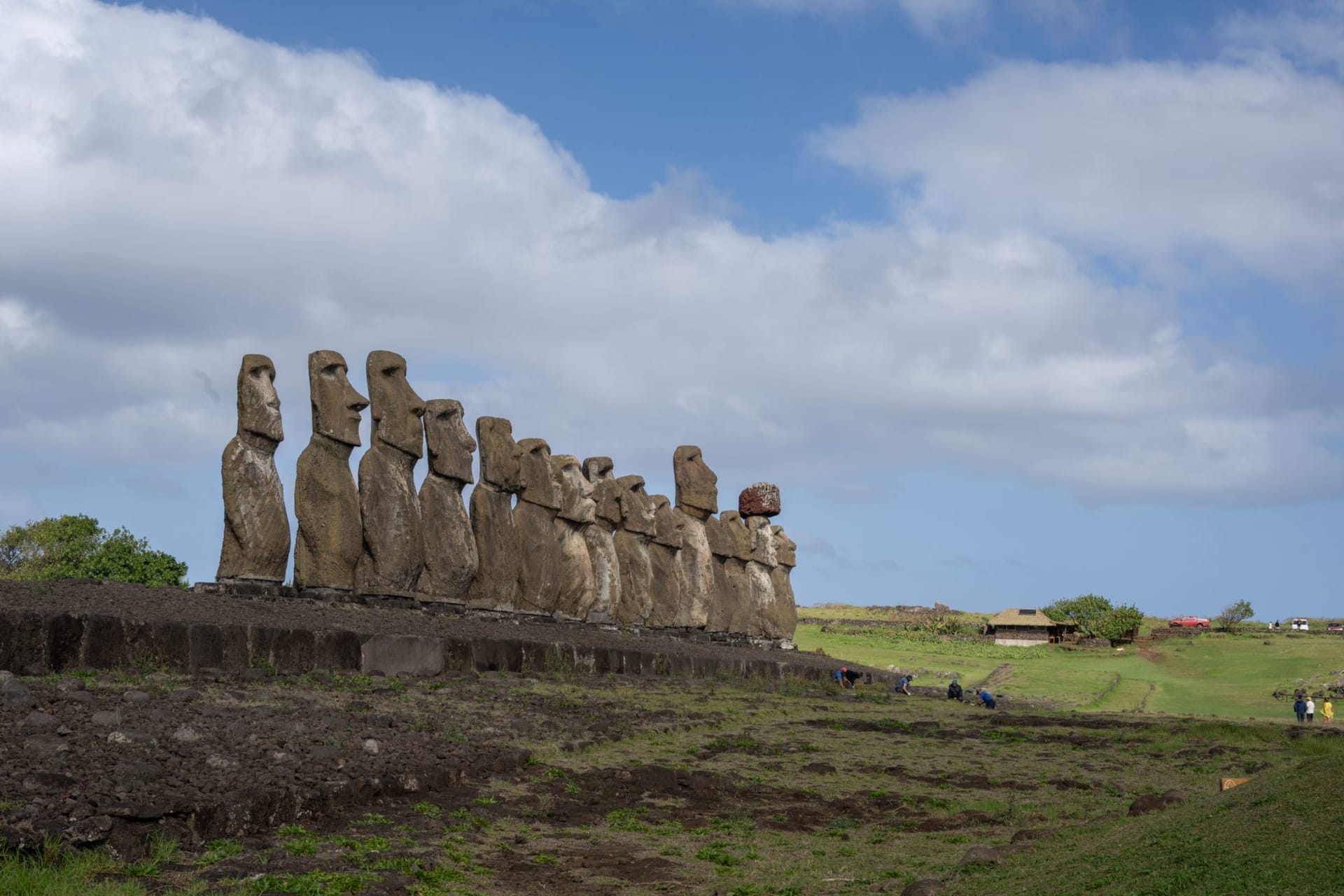
Ahu Tahai
"The one with eyes. It changes everything — suddenly it's not a statue, it's a face."
Most people walk past Ahu Tahai on their way somewhere else. It sits at the northern edge of Hanga Roa, five minutes from the town center, right on the waterfront, and because it’s so accessible and so close to where everyone is staying, it tends to get treated as a warm-up rather than a destination. I made that mistake on my first day. I glanced at it from the road, registered “moai, yes, nice,” and kept going. It took another traveler at my hostel, a Dutch archaeologist who’d been to Rapa Nui three times, to tell me I needed to go back. Go in the evening, she said. Go when the light is low. And for the love of all that is sacred, stop and look at the one with the eyes.
Ahu Tahai is actually three adjacent platforms in one complex. The southernmost has a single large moai — Ko Te Riku — that was restored in the 1970s by the American archaeologist William Mulloy and is the only moai on the island to have had its reconstructed coral and obsidian eyes re-installed. Most moai would have had eyes placed in during ceremonies, and this restoration gives you a way to understand that. It sounds like a small thing. It isn’t. A moai without eyes looks like a magnificent carved stone. A moai with eyes looks like it’s looking back.
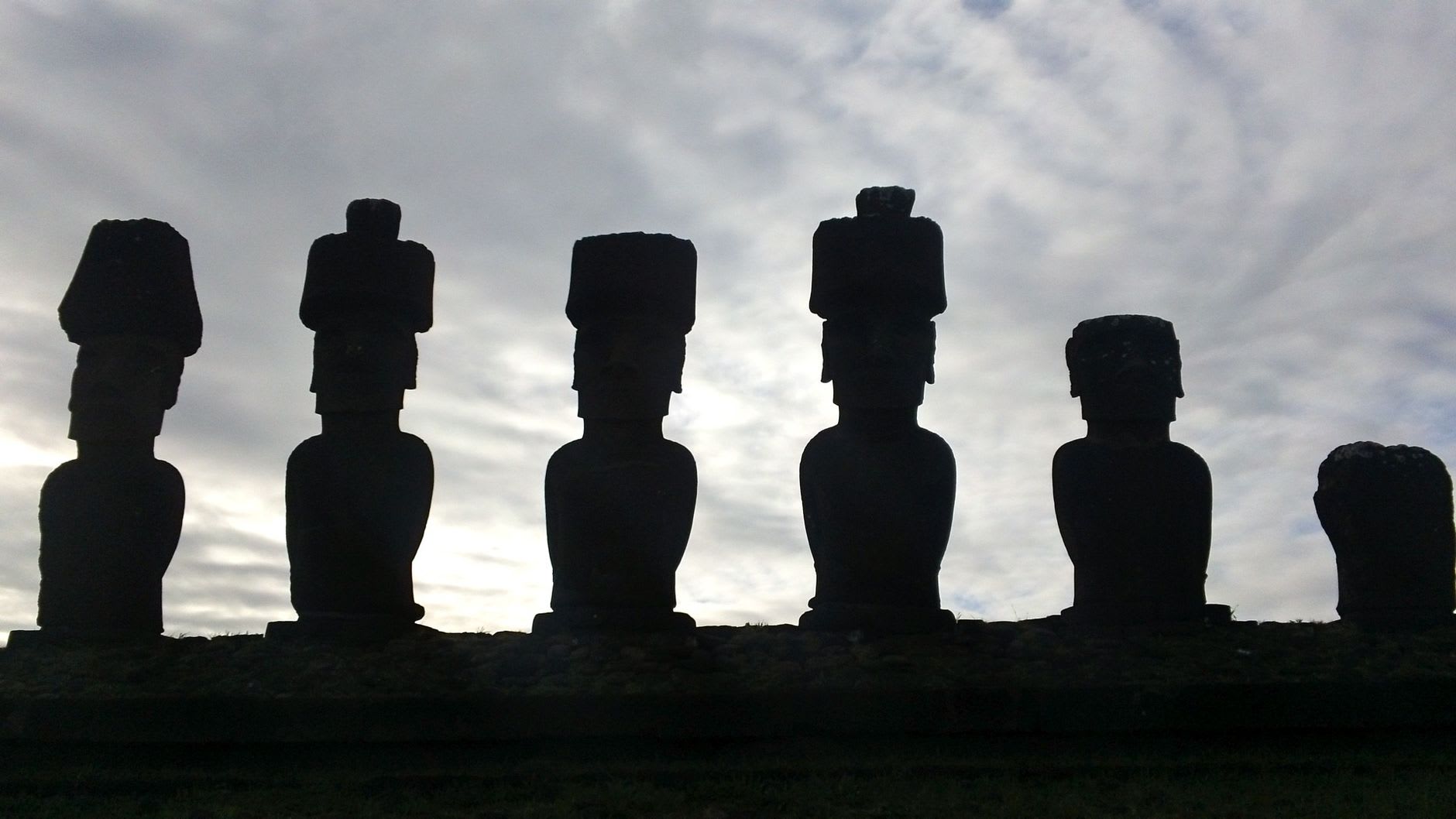
I went on a Tuesday evening. The Dutch archaeologist was right. There were maybe eight other people there when I arrived, and by the time the sun touched the water behind the statues, half of them had left. I had twenty minutes with Ko Te Riku essentially to myself. The light turned the stone that deep amber you only get at this latitude when the atmosphere is doing its work, and the reconstructed eyes — white coral with a small circle of red obsidian as the pupil — caught the last of it. I took zero photographs that I’m happy with. Some things don’t want to be captured; they want to be stood in front of.
The middle platform, Ahu Tahai proper, holds a cluster of five moai in varying states of restoration. Some lean slightly, some are cleaner-edged than others. The northernmost, Ahu Ko Te Riku’s neighbor at Ahu Vai Uri, has five statues on a single platform that give a clear sense of how these ahus functioned as community monuments — facing inland over their clan’s territory, backs to the sea.
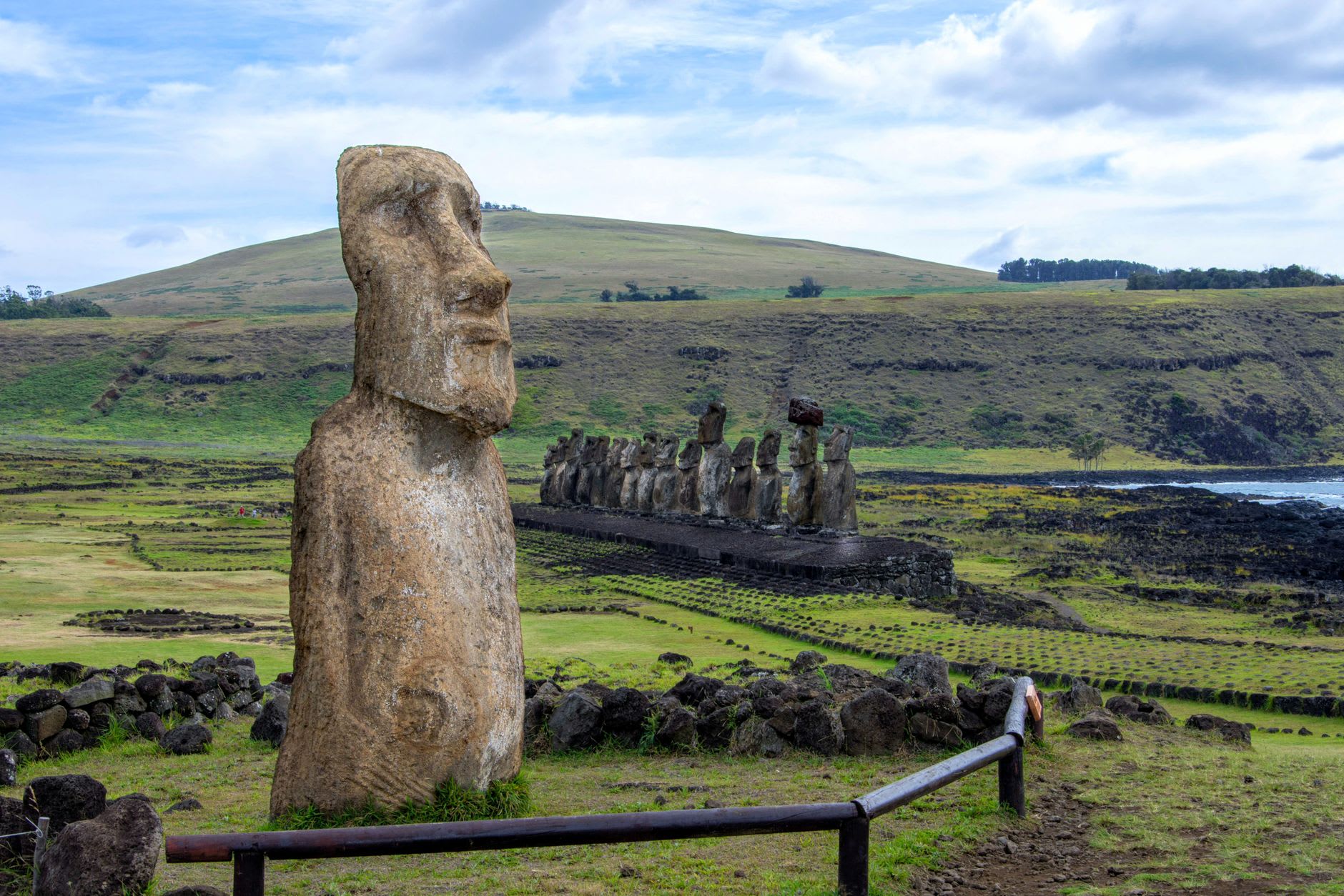
What I keep returning to, months later, is how a site this close to town — this unpretentious, this approachable — manages to deliver the thing that all the famous sites deliver but with a kind of intimacy that the famous sites can’t always manage. No parking lots. No visitor center. Just the platforms, the sea, and whatever light the afternoon decides to offer. William Mulloy is buried near the site, a fact I found out later, and I thought it was the right place to be.
When to go: Ahu Tahai is most beautiful in the hour before sunset — the platforms face almost due west, which means the light comes off the ocean directly behind the moai. It’s also within walking or cycling distance from Hanga Roa, which makes it a natural evening walk. Avoid peak tourist hours (10am–2pm) if you want some quiet; early morning and evening are both excellent.