Didima Gorge
"I stood under an overhang two thousand years old and the mountain still had something to say."
A gorge holding thousands of San rock paintings, where thunder still echoes off the sandstone the way it did for the artists who painted here.
Lia found the reference to Harald and Shirley-Ann Pager before I did — she’s the one who reads footnotes in guidebooks while I’m still looking at the cover photo. Nearly 4,000 individual paintings, spread across 17 rock shelters, all within a few kilometers of Cathedral Peak. I didn’t fully believe the number until we were actually inside Didima Gorge, necks craned, watching one panel of eland and human figures give way to another the moment we rounded a bend in the sandstone. We’d driven up from Durban the day before, and I remember thinking the whole way that “rock art site” undersold what we were about to walk into.
What got me wasn’t just the density of the paintings, it was the range of what the shelters had clearly been used for. Our guide pointed out one wide, open shelter that had obviously hosted whole families — soot stains on the ceiling, paintings layered over decades — and then, twenty minutes further up the trail, a shelter so small and tucked away that it could only have been for one person at a time. Private ritual space, she said, somewhere a San healer would have gone alone. Standing in that second one, barely big enough for Lia and me to sit side by side, I felt like an intruder on something that was never meant to be public.
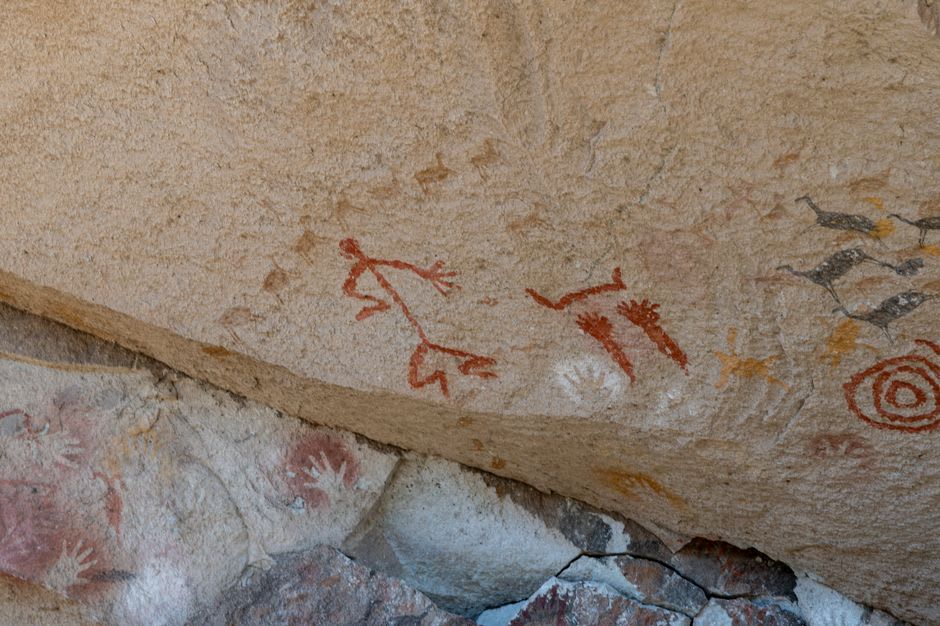
We got lucky with weather — a dry, cold morning in July, the kind the Drakensberg does well in winter — and about an hour in, a storm we couldn’t see yet started rumbling somewhere over the escarpment. The sound came rolling down through the gorge and just kept building, bouncing off shelter walls until it felt like it was coming from everywhere at once. Our guide told us researchers think that acoustic effect is part of why the San considered this place sacred, that the gorge itself amplifies thunder and lightning into something you feel in your chest. I’ve heard storms in a lot of places. I’ve never had one feel deliberate before.
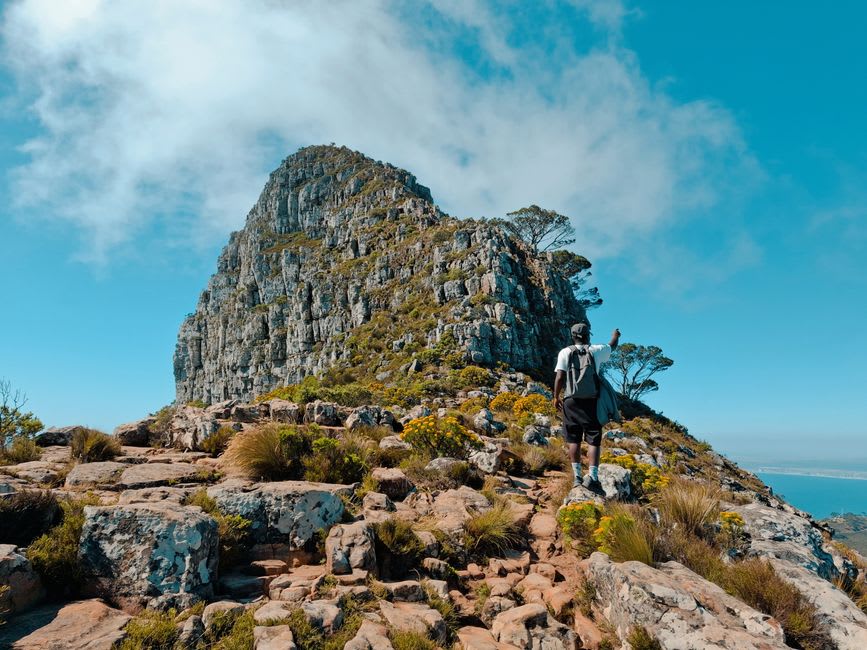
By the time we got back down to the Didima Rock Art Centre, tired and a little sunburned despite the season, I kept thinking about the 3,000 years of San presence in these mountains that this gorge represents — not as an abstract number but as generations of people who kept returning to the exact same shelters we’d just stood in. Most of what we saw was painted around 2,000 years ago, and it hasn’t stopped being visible, or heavy, in all that time.
When to go: Go in the dry Drakensberg winter, from May to August — we had clear skies and firm, easy footing on the trail, and honestly I’d hate to have done that hike in the mud with clouds hiding the peaks.
Keep exploring
More from Drakensberg
 drakensberg
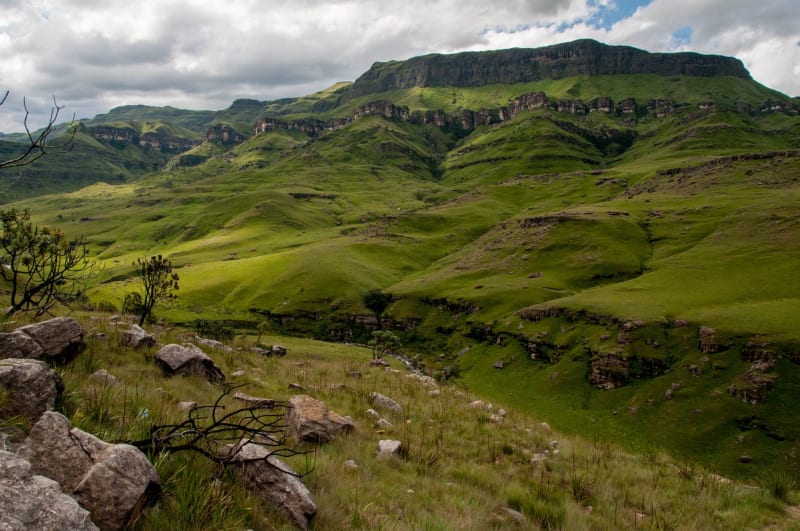
 Giant's Castle
Thirty-five centuries of San rock art and a lammergeier hide that feels like the most exclusive birdwatching seat on earth.
Explore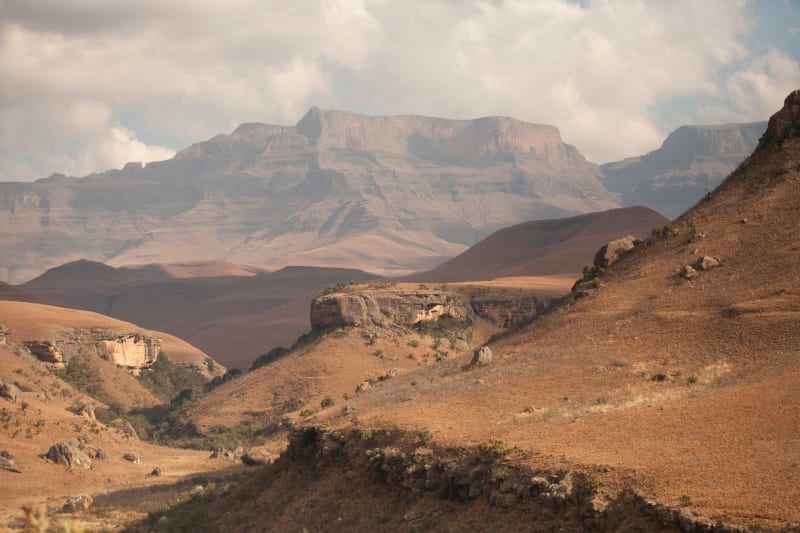 drakensberg
 Golden Gate Highlands
Where the Drakensberg's northern foothills burn gold and amber — sandstone eroded into shapes that belong in a fever dream.
Explore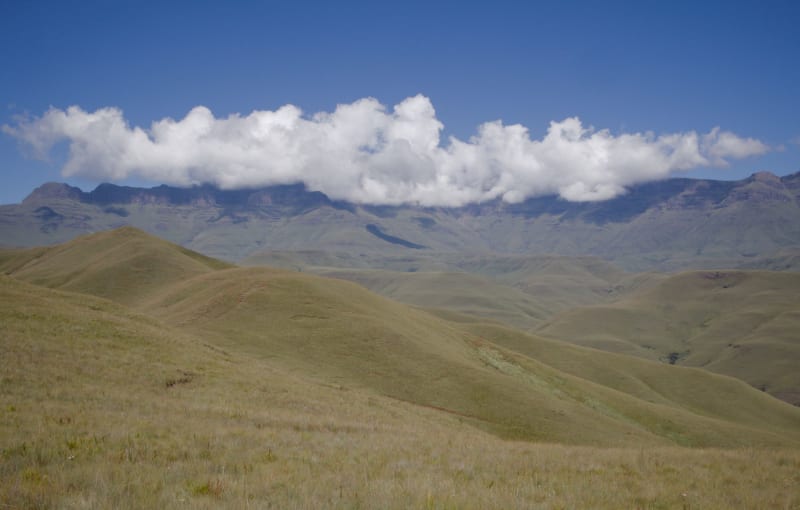 drakensberg
 Injisuthi
The most remote valley in the central Berg — a hidden pocket where the mountains rise on three sides and the world falls away on the fourth.
Explore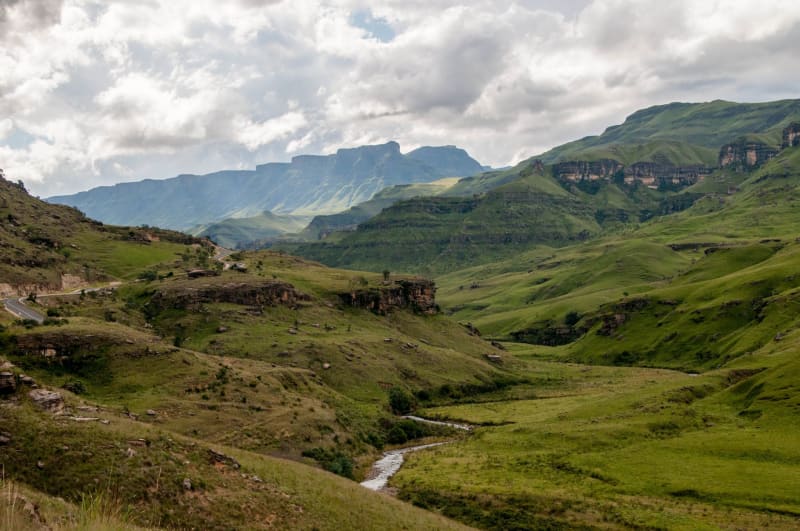 drakensberg
 Kamberg
A quiet valley in the southern Berg where San art hides in riverside shelters and trout fishermen stand like herons in the current.
Explore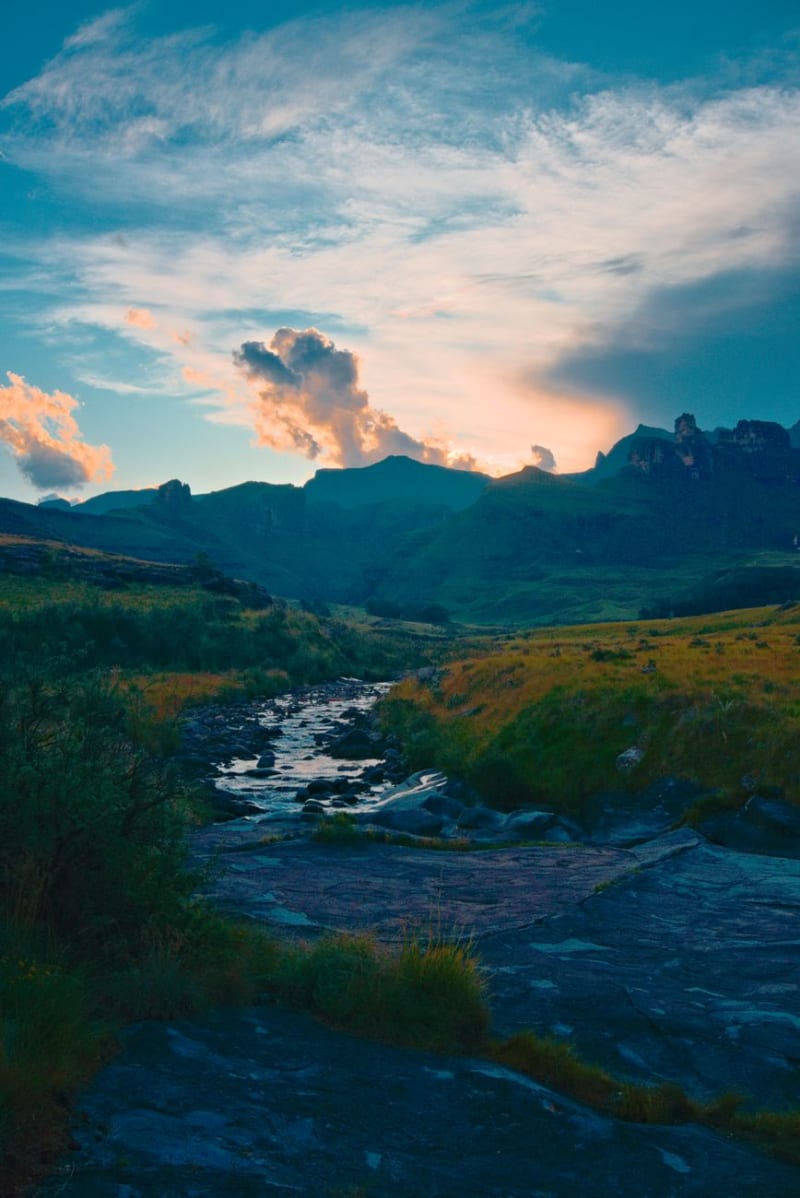 drakensberg
 Lotheni
A quiet trout-stream valley in the southern Drakensberg, all grassland and basalt cliffs, where the crowds thin out and the rock art and the silence take over.
Explore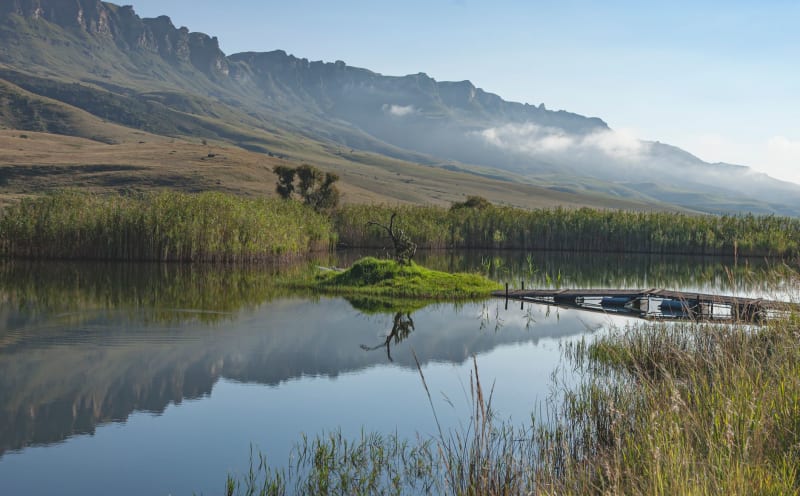 drakensberg
 Monk's Cowl
The Drakensberg at its most technically demanding — a reserve where the serious peaks begin and the easy trails end.
Explore