Foz Côa
"Someone stood where I was standing twenty thousand years ago and decided this rock needed a horse on it. I find that completely reasonable."
The Côa Museum sits on a promontory above the river, a building by Eduardo Souto de Moura — all rough concrete and dark stone, embedded into the schist hillside as if it grew there — that manages the extraordinary trick of being architecturally significant without upstaging what it contains. What it contains is the story of the Côa Valley rock art: one of the largest collections of open-air Palaeolithic engravings in the world, carved into the schist walls of a river gorge by people who were making art here twenty thousand years before the word Portugal meant anything. I spent an hour in the museum understanding the context, the methods of discovery, the political battle in the 1990s when the Portuguese government tried to flood the valley with a hydroelectric dam before researchers documented thousands of engraved animal figures on the rock faces. The dam was cancelled. The art survived.

The art itself requires a guided visit by jeep — the sites are remote, accessible only by four-wheel-drive along steep schist tracks — and the guides are genuinely expert, trained to read the engravings in the particular slant of light that reveals them. We went to the Canada do Inferno site in early morning, when the low sun raked across the rock face at the right angle. What appeared as blank grey schist under direct light resolved, at that oblique angle, into a procession of animals: horses with heads turned to look back at the viewer, a massive aurochs with spiralling horns, ibex with haunches depicted with a three-dimensional understanding of anatomy that shouldn’t exist at this date but does. The lines are not crude scratches — they are confident, economical, drawn by someone who had looked at animals their whole life and knew exactly where the essential line was.
The scale of the site keeps reasserting itself. The Côa Valley contains hundreds of individual engraved panels distributed across several kilometres of schist gorge. What we see on a single guided visit is a fraction of what exists. I kept trying to do the arithmetic — twenty thousand years, how many generations is that? — and giving up because the numbers dissolve into meaninglessness. Better to just look at the horse and accept that something continuous stretches back that far.

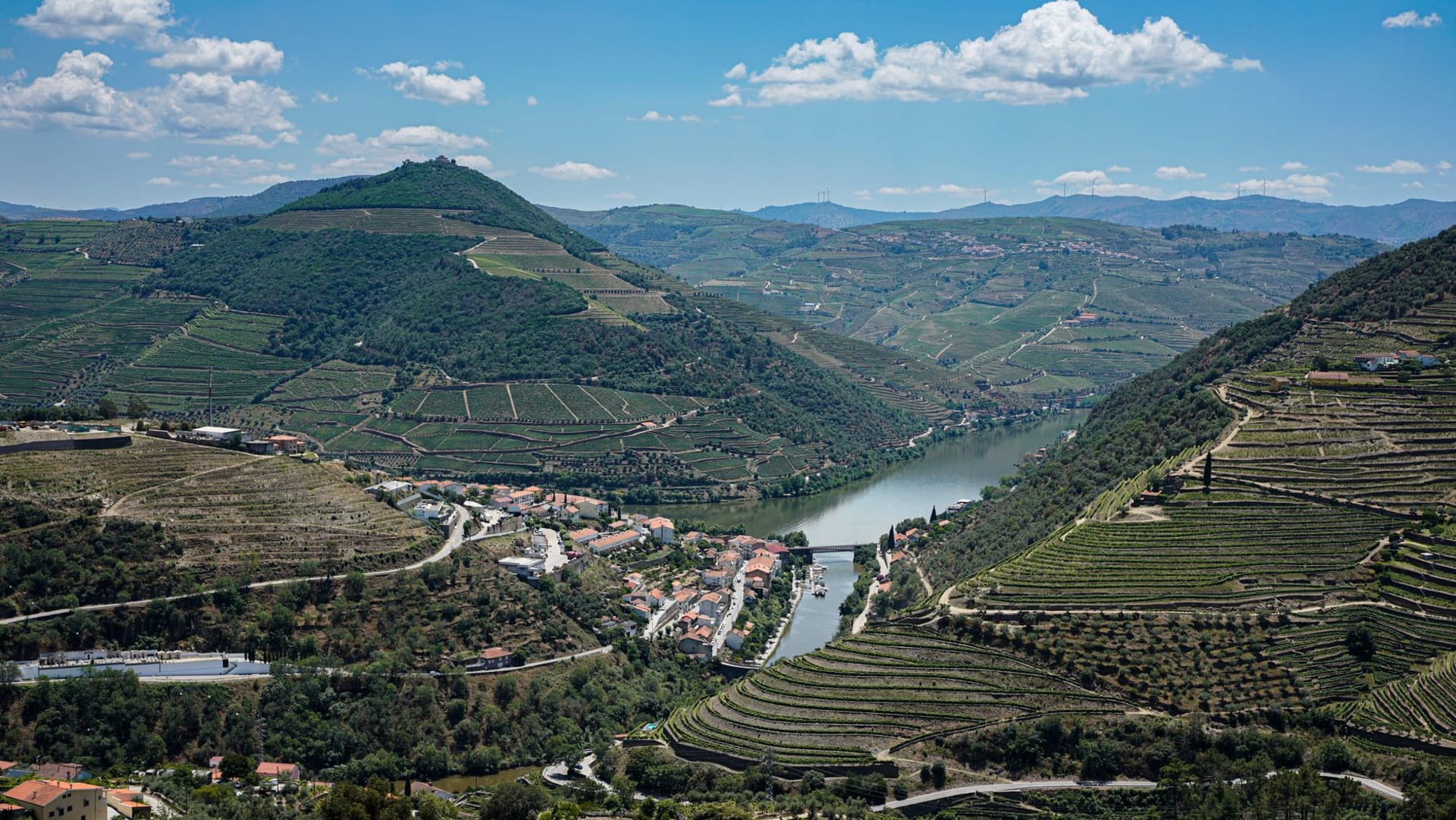
The town of Vila Nova de Foz Côa itself is a modest agricultural community, unremarkable except for its setting at the confluence of the Côa and Douro rivers. There is a wine cooperative selling Douro Superior wines at cooperative prices, a couple of cafés, and an extraordinary sense of being somewhere that exists at the absolute edge of the tourist circuit — which, given what the valley contains, is both baffling and quietly wonderful.
When to go: The guided tours run year-round, but spring and autumn offer the best combination of comfortable temperatures and good light for the engravings. Summer visits work if you go for the early morning tour, before the heat becomes punishing. Book tours in advance through the archaeological park’s website — the visitor numbers per tour are strictly limited to protect the sites.