
A medieval pilgrimage village stacked into a limestone cliff, its chapels and castle climbing toward the sky above the Alzou gorge.
We drove in from Sarlat on a whim, the kind of detour Lia and I have learned never to skip, and the first view of Rocamadour still stopped the car. You come around a bend in the road and the whole village just appears, glued sideways to a cliff above the Alzou gorge, houses and chapels and a castle stacked on top of each other like someone forgot to build outward and built upward instead. I remember sitting in the driver’s seat for a full minute, engine still running, just staring.
Technically we were in the Lot, not the Dordogne, but nobody visiting from Sarlat seems to care much about that line on the map. What you care about are the 216 steps, which pilgrims used to climb on their knees and which I climbed on my own two feet, slightly out of breath, past the little chapel doors that open one after another along the way. Inside the sanctuary sits the Black Madonna, dark wood worn smooth by centuries of hands, and I found myself lowering my voice without anyone telling me to.
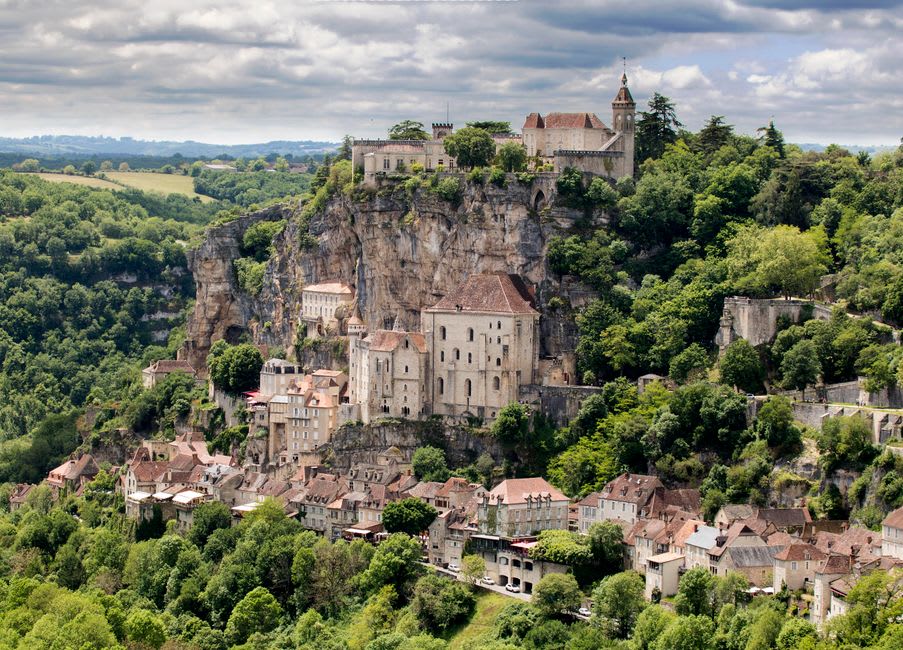
What got me most was the bell hanging above the shrine, the one they say used to ring on its own when a sailor’s prayer was answered somewhere out at sea, no hand touching the rope. I’m not a religious man, but standing under that bell after climbing all those stairs, gorge dropping away below and the castle looming above, I understood for a moment why this place pulled pilgrims across all of Europe after Saint Amadour’s tomb turned up here in 1166. Lia squeezed my hand and didn’t say anything either.
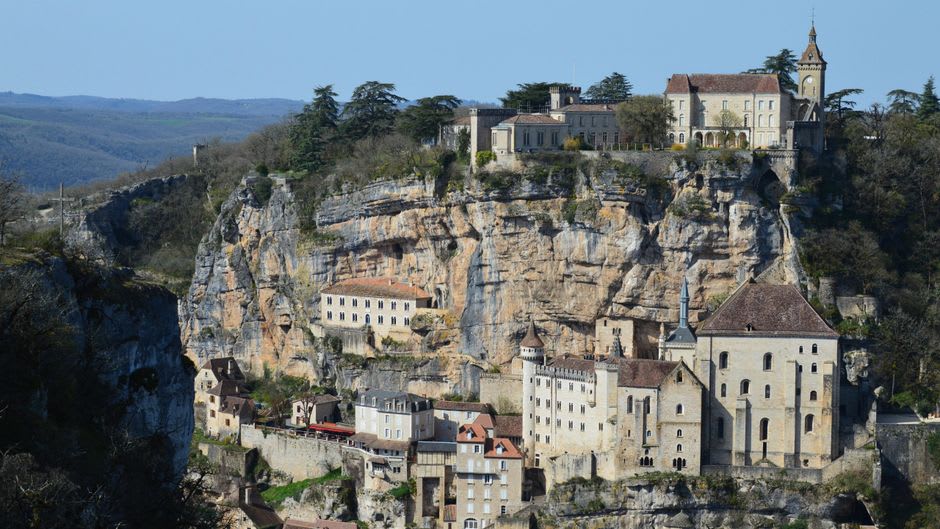
We ate lunch afterward on a terrace with a view straight down into the gorge, sharing a plate of duck and warm goat cheese salad, watching swifts loop around the cliff face below eye level, which is a strange and wonderful sensation. By the time we left, the tour buses were pulling in and the narrow street had filled with people three-deep.
When to go: Aim for a weekday morning in late spring or early autumn, when the light on the cliff is soft and the sanctuary is still quiet enough to hear your own footsteps on the stone.