
Lascaux Caves
"I stood in front of a bull painted before the wheel existed and forgot, for a second, how to be cynical."
Where four teenagers and a dog stumbled into 17,000 years of human memory, and where I spent an afternoon feeling very small.
Lia found the story before I did, reading it out loud from her phone in the car somewhere past Montignac: in September 1940, four teenagers went looking for their dog Robot, who’d apparently vanished into a hole in the ground after a fallen tree. What they found instead was a cave wall covered in animals nobody had seen in roughly 17,000 years. I’ve read a lot of “amazing discovery” stories that turn out to be more legend than fact, but this one keeps checking out, and there’s something about it — kids and a dog stumbling into the deep past — that made the whole visit feel personal before we’d even parked the car.
You can’t go into the real cave anymore, which stung a little when I first learned it, but the reason is its own kind of lesson. The cave was sealed in 1963 because our breath — literally the CO2 and heat and moisture of visitors — was growing algae and calcite deposits over paintings that had survived nearly seventeen millennia in total darkness and silence. It took decades of people loving the place too much to ruin it before they figured that out. So what you visit instead is a facsimile, and I went in expecting to feel like I was looking at a museum prop. I didn’t. Lascaux IV, which opened in 2016, reproduces the cave’s roughly 600 painted animals and nearly 1,500 engravings with a precision that got under my skin within minutes — the curve of a horse’s back painted around a bulge in the rock like the artist was using the stone itself as a body.
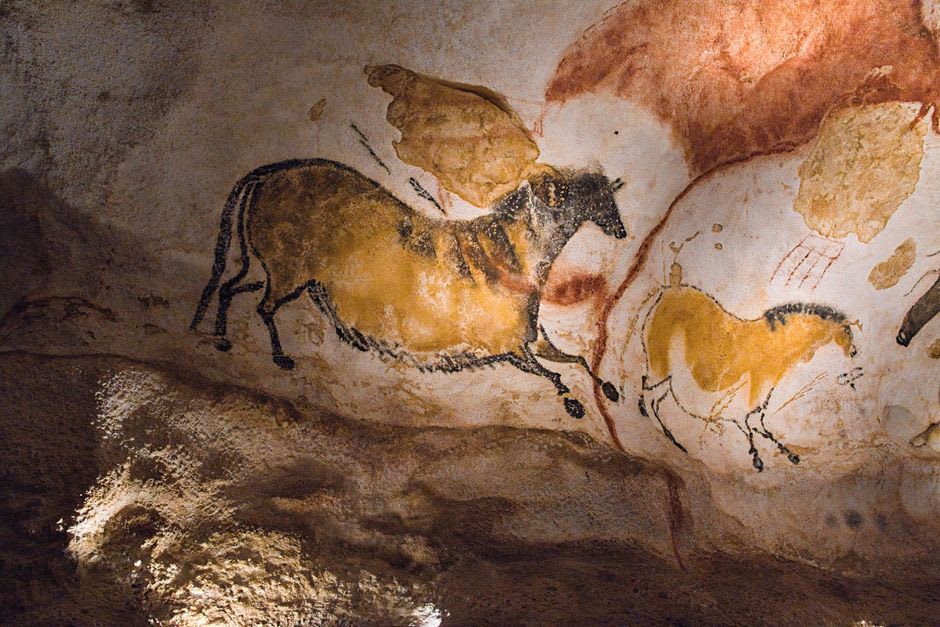
We did Lascaux II first, the older and smaller replica from 1983, before driving the short way to Lascaux IV, and I’m glad we did both — you can feel the thirty-plus years of difference in how the story gets told, how much more the newer center trusts you to just look. Our guide at Lascaux IV kept using the word “engineers” to describe the Paleolithic painters, and by the end I understood why: they scaffolded, they mixed pigments with binders that still hold color, they used the rock’s own contours as their sketch lines. Lia, who trained as an illustrator before she didn’t, went quiet in the Hall of the Bulls in a way I don’t often see from her. She said afterward it was the first time an art history site had actually made her cry.
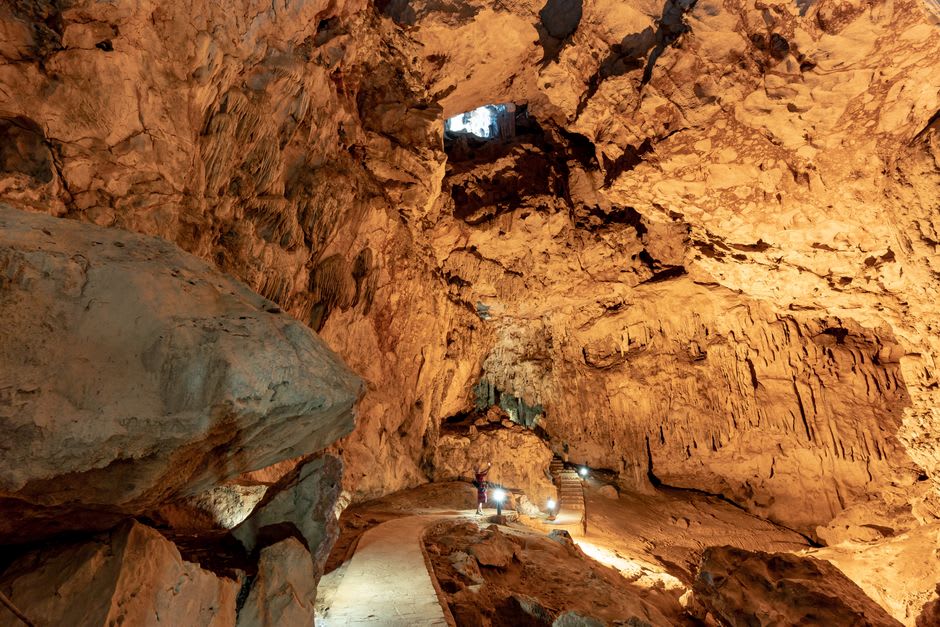
Lascaux sits inside the wider Vezere Valley, which UNESCO listed as a World Heritage site back in 1979 for exactly this reason — it’s not one cave but a whole cluster of them, a valley where humans kept coming back to paint for thousands of years. We only had the one afternoon, but I left with a list of the other sites scrawled on a napkin and a strong urge to come back for a proper week just for the caves alone.
When to go: We went in early June and still hit a real crowd by mid-morning, so if you can manage spring or fall — April through June or September into October — do it; the reconstructed caves get seriously packed in July and August, and this isn’t a place you want to rush.