
Beynac-et-Cazenac
"Looking up at Beynac from the river bank, I understood why the English and French fought over this valley for a hundred years."
I didn’t see the Château de Beynac until I was almost underneath it. The road from Sarlat descends through woods and then the river appears on your left, and then you look up and there it is — a twelfth-century fortress sitting on the top of a limestone cliff that drops almost vertically to the water. Not dramatically close to the edge, but on the edge, as if the builders wanted to leave no ambiguity. The castle is the cliff. The cliff is the castle.
The village of Beynac-et-Cazenac sits at the base of that cliff between the stone and the river, squeezed into a narrow band of flat ground that barely qualifies as space. A handful of streets, a church, a few riverside restaurants with tables under umbrellas where lunch is served to people arriving by gabare from Sarlat — flat-bottomed wooden boats that have operated on this river for centuries. I ate at one of those tables, a plate of cured duck and melon, and watched a gabare slide past with tourists crowded to the rail, all of them looking up at exactly what I was looking at. You can’t not look at the château. It has that particular gravity that very old fortifications develop — the feeling that it has been looked at for so long it has learned to expect it.
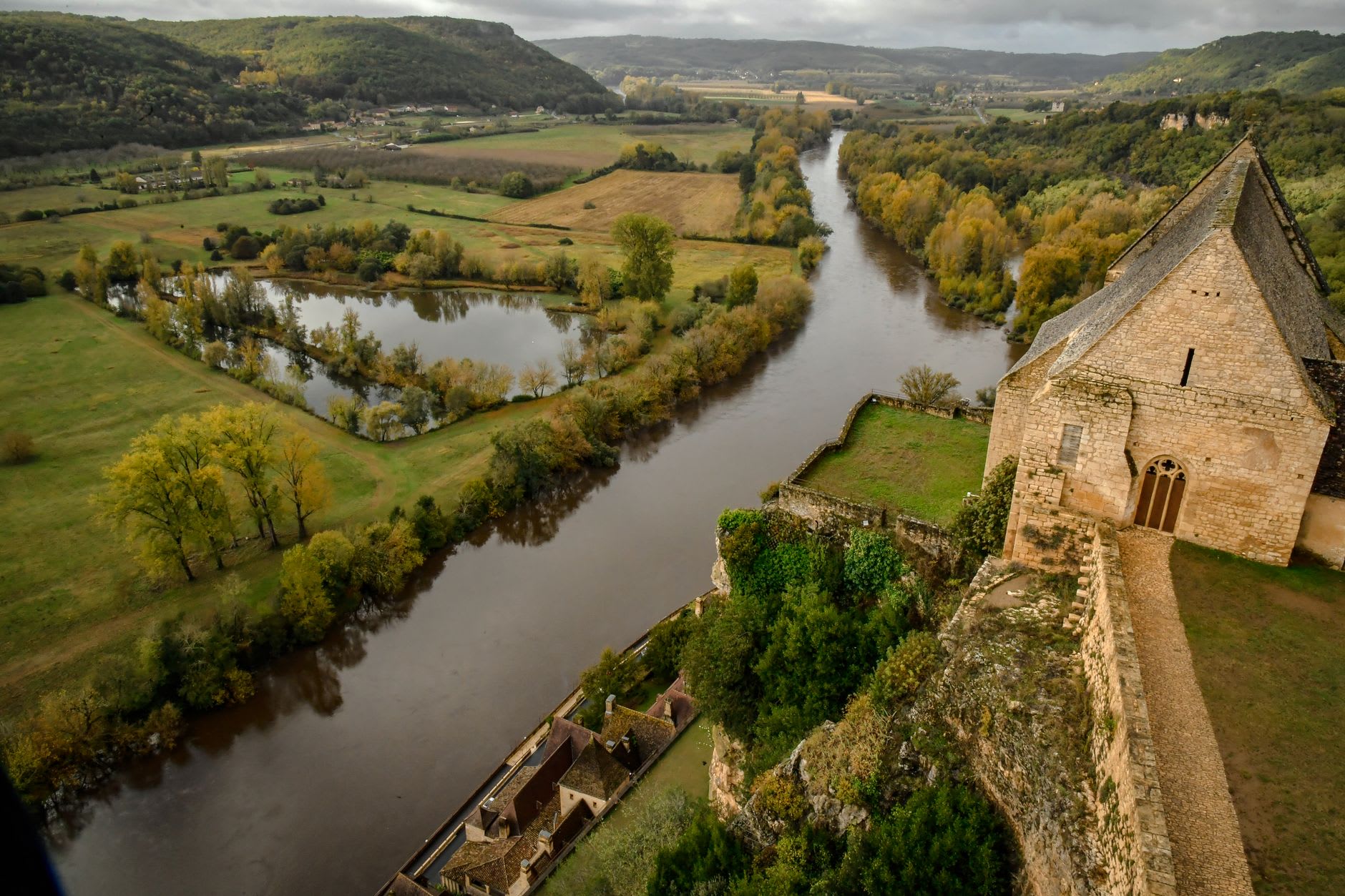
The climb up is steep and rewarding. Stone stairs and then a cobbled ramp and then you are at the gate, and then inside the ramparts looking down at the river from a height that makes the green water look almost still. On a clear October day the view extends down the valley in both directions — you can see the Château de Marqueyssac, its gardens terraced into the hillside, and across the water the village of La Roque-Gageac clinging to its own cliff. The Dordogne valley is full of dramatic elevated viewpoints, but Beynac has the best vantage: high enough to see the full sweep of the river’s curve, low enough that you can still make out the gabares below.
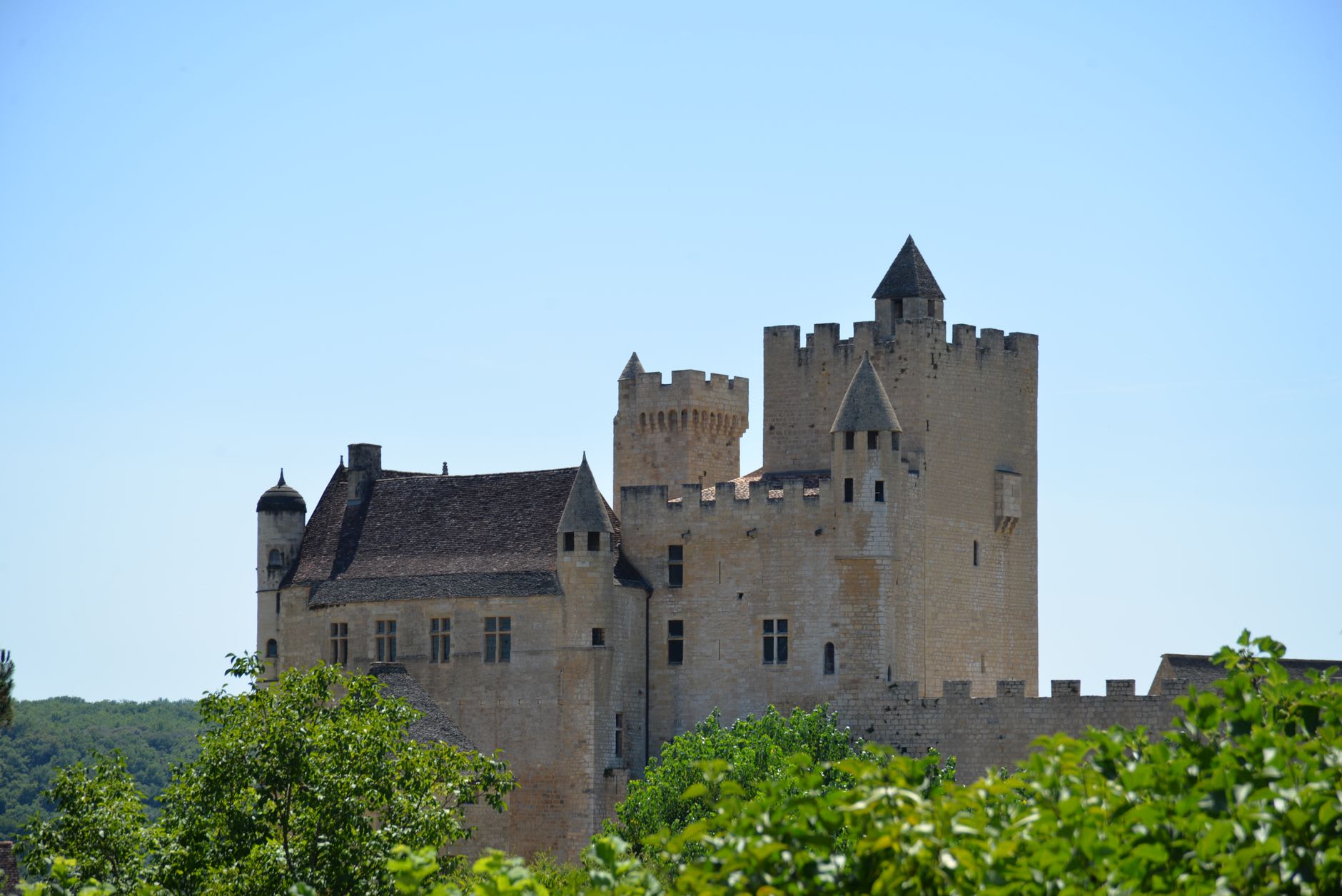
The interior of the château is largely empty — which is the right choice. Stone rooms, a great hall with a fireplace you could park a car in, some reproduction medieval furniture that doesn’t try too hard. The curators have left space for the architecture to work, and the architecture works. Stand in one of the upper rooms with a window over the valley and there’s a moment of genuine vertigo, the floor stone beneath you and the world dropping away outside.
When to go: Spring and autumn for uncrowded beauty. The château and village are at their best in October light. Summer brings crowds but also the gabare river trips that make the approach from water worth doing. Avoid the ascent in midday August heat — it’s punishing on that south-facing cliff.