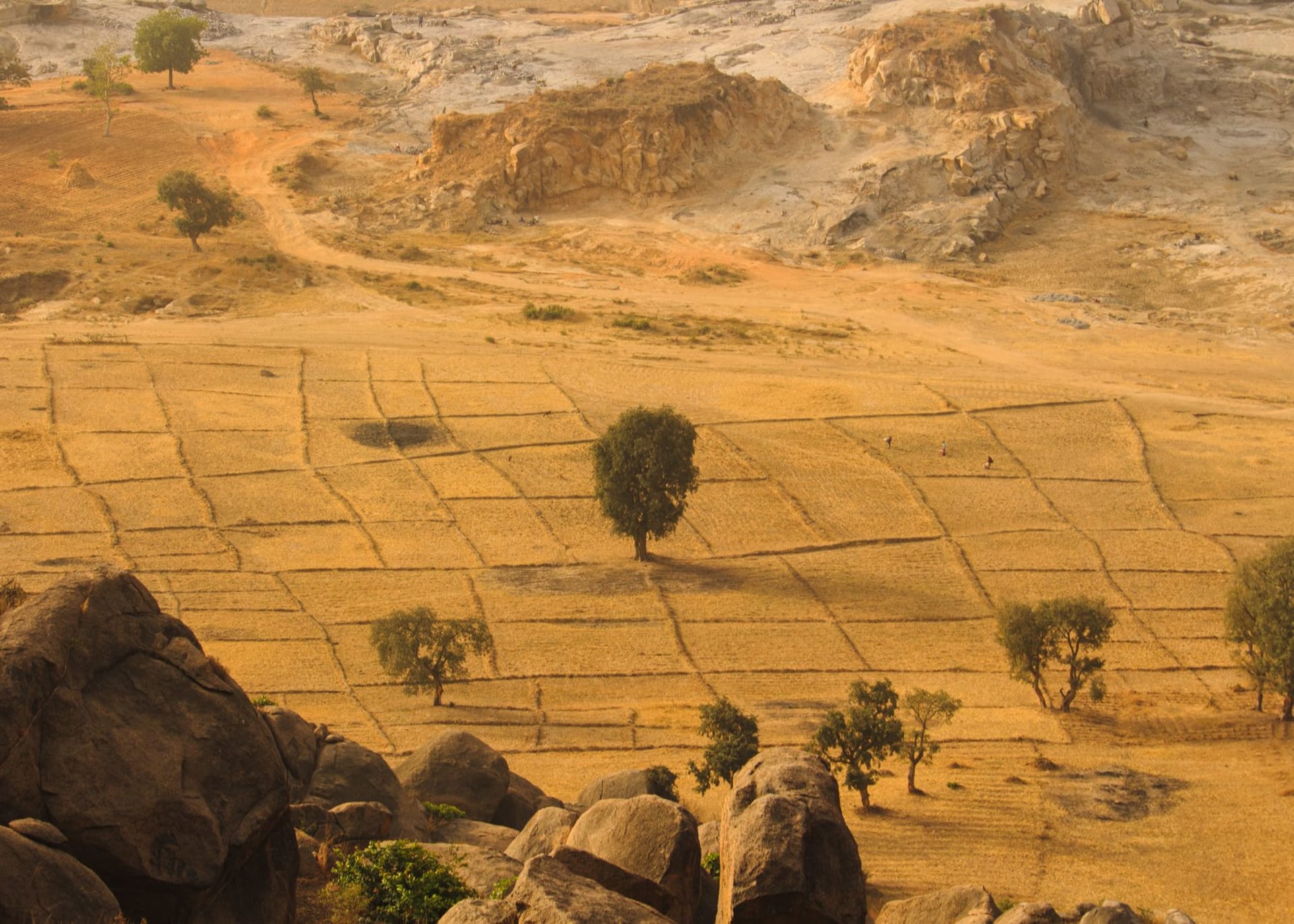
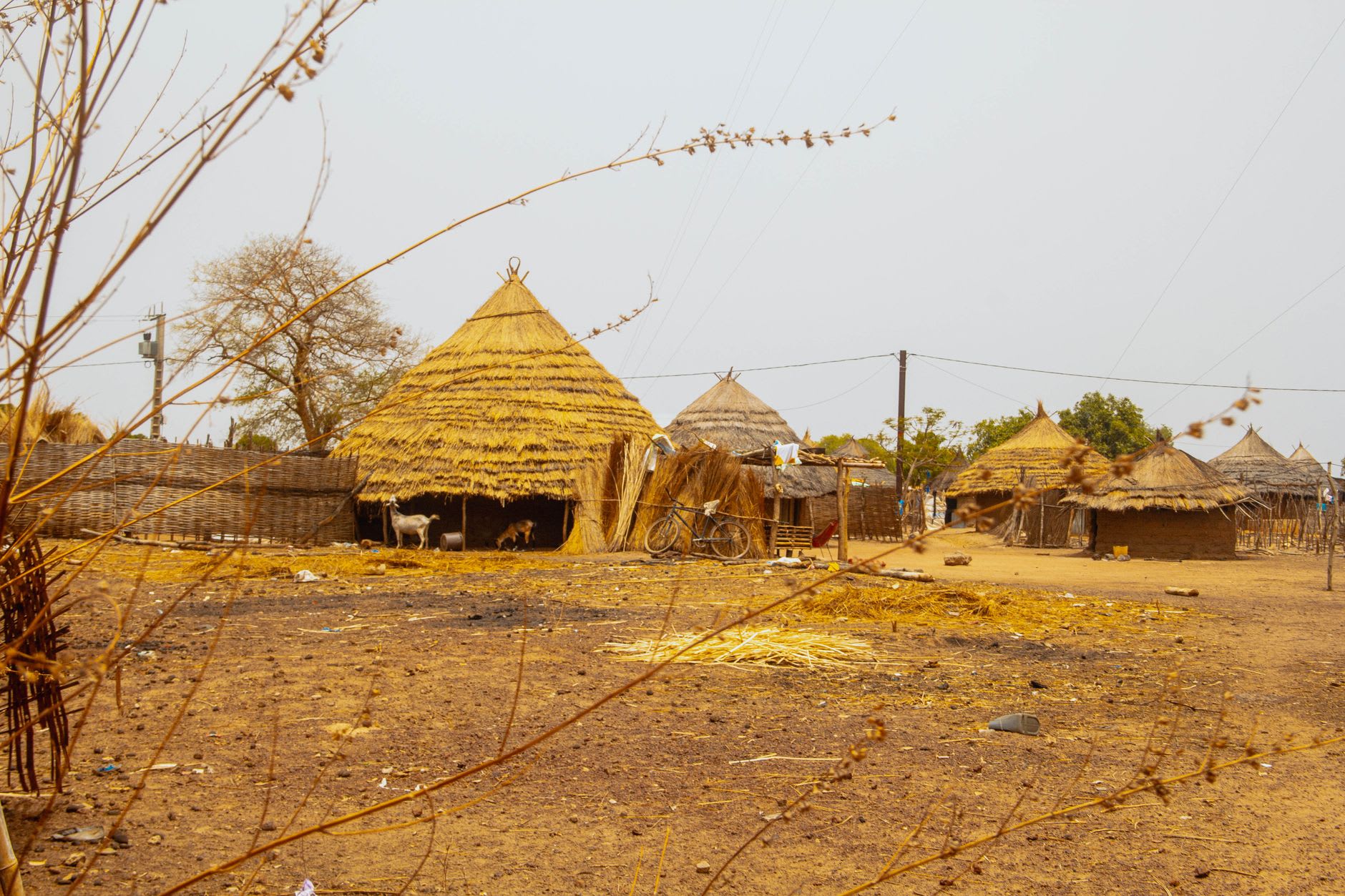
I arrived at Tireli on the second afternoon of the trek, coming down a path that switched back through boulders the color of old brick, and the village appeared below me in pieces — first the granary caps, those thatched cones rising above the cliff face, then the flat rooftops, then the toguna, then the women who were watching me descend with an expression I can only describe as patient skepticism. I had been walking six hours. My guide Sékou had not broken a sweat. The goats had preceded us down the path by about twenty minutes and were already resting in the shade, which told me something about my hiking pace.
Tireli is one of the classic cliff villages, which means it appears in every Dogon Country photograph and still somehow exceeds expectation. The escarpment rises directly behind the houses — 500 meters of sandstone pressing in, the upper face riddled with the small dark windows of Tellem granaries that no one visits anymore because the cliff there is sheer. The Dogon live at the base; the old pre-Dogon dead live above. The arrangement has a vertical logic that I kept turning over in my mind.
The toguna here had pillars carved with hermaphroditic ancestor figures — neither male nor female, or rather both, which the Dogon see not as ambiguity but as completeness. I sat beneath its low roof for an hour, drinking the sweet millet beer that a woman brought in a calabash without being asked, while Sékou translated fragments of conversation between two elders who were discussing water. The onion fields below Tireli had been drying up earlier each year, he said. The river that supplied the irrigation channel ran lower every dry season. This was not a theoretical problem; it was the kind of problem that was slowly moving young men to Bamako.
The food that evening was tô — a dense millet paste served with a sauce of dried fish and baobab leaves that had a deep, almost smoky umami I did not expect. You eat it with your right hand, tearing off pieces and dipping them in the sauce. The children at the table found it extremely funny that I got this wrong for the first three minutes.
At dusk, the cliff face turned red-gold and then briefly violet, and the fires in the granaries began to glow. I sat on a flat rock above the village and watched the plain below go dark while the upper escarpment still caught the last light. That gradient — the living village falling into shadow while the ancient cliff stayed bright above it — felt like a visual metaphor I had no right to be the one to notice. Sékou sat beside me and said nothing, which was exactly right.
When to go: November through February for manageable temperatures. Tireli is on the main trekking circuit and therefore sees the most foot traffic; arrive early morning or stay late afternoon when the day-trippers have moved on. A night here — in the village guesthouse run by a local family — is worth the additional planning required.