Wadi Mujib
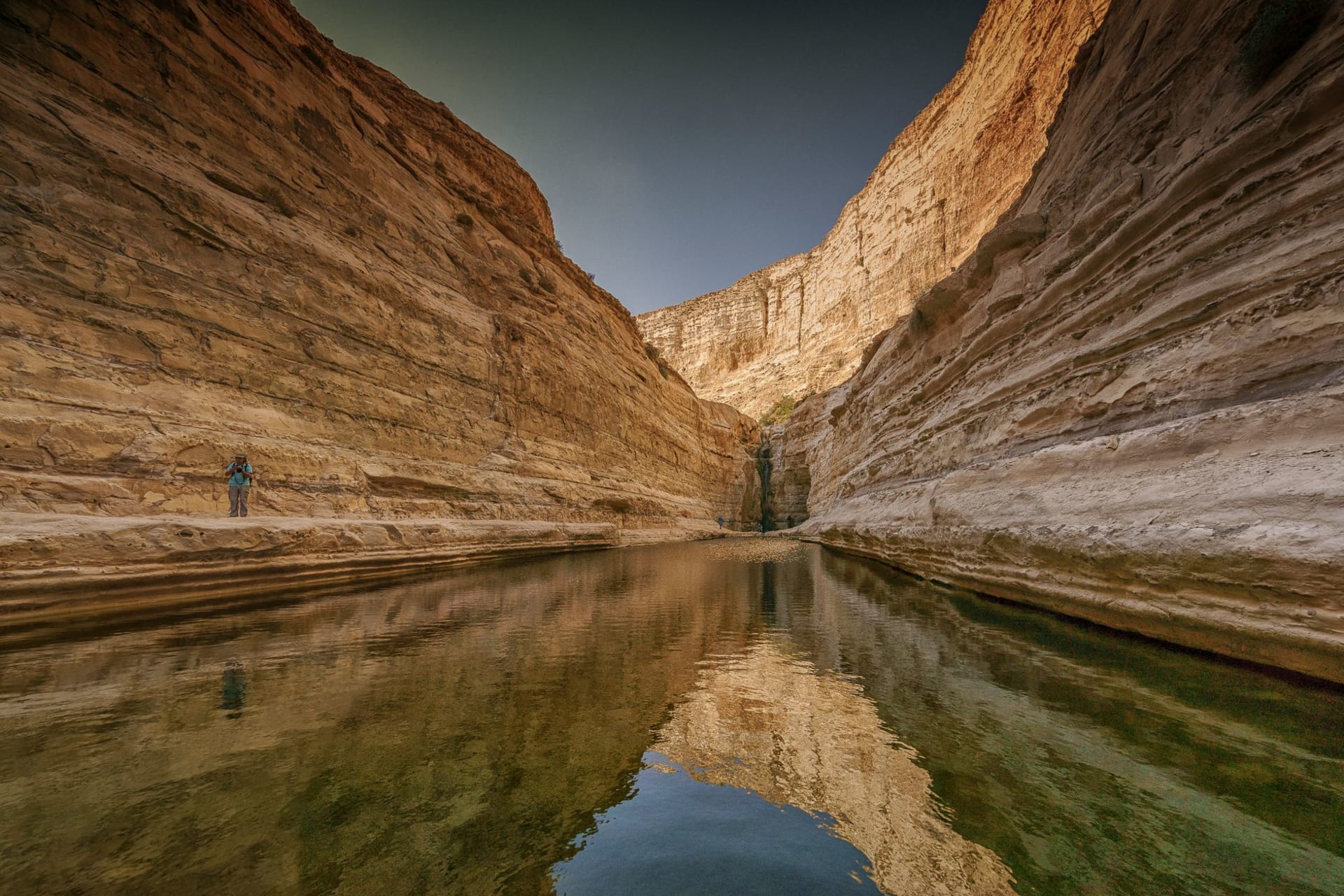
"The canyon walls were close enough to touch on both sides and the water was so cold it made me forget the Dead Sea entirely."
The gorge announces itself from the Dead Sea shore as a dark green gash in the cliffs — unexpected, almost rude, a vertical world of rushing water and hanging vegetation dropped into the middle of all that salt and mineral silence. You leave your bags at the visitor center, pull on a life jacket, and wade in. The river is cold even in summer. The first step hits you with the temperature difference and then you’re committed, moving upstream through a canyon that narrows in increments until the walls are close enough to touch on both sides and the only sky is a vertical strip of blue high above. Wadi Mujib is the Jordan River’s biblical name — the Arnon River — and it has been cutting through this limestone for longer than anyone has had words to describe it.
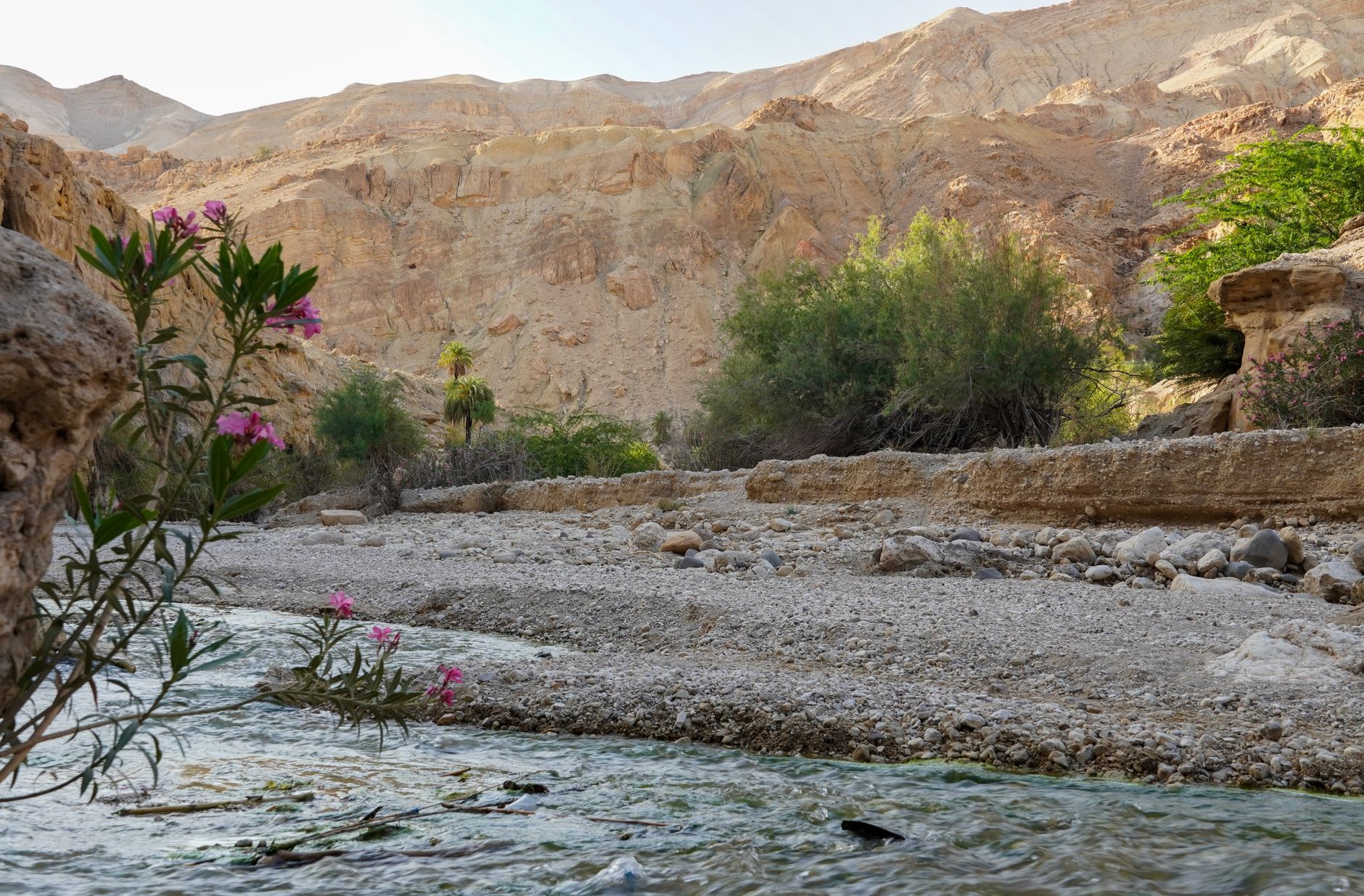
The Siq Trail is what most visitors do, and it is exactly as straightforward as it sounds: you wade, you swim where the water is too deep to walk, you grab metal handholds bolted into the rock at the trickier passages, and you keep moving upstream until you reach the waterfall at the end. That waterfall — maybe eight meters, sheeting into a deep pool framed by canyon walls — is where most people stop. I sat in the spray for twenty minutes, letting the cold knock the heat out of me, eating a soggy granola bar I’d kept above water in a dry bag. The canyon walls at that point are close to a hundred meters high. You can’t see much of the sky. The sound of moving water is total, surrounding, physical.
Coming back out the way you came is a different experience — you’re moving with the current, so the river shoves you and you half-swim, half-stumble, grinning in the way that only cold water and physical absurdity can produce. The canyon opens back onto the Dead Sea shore and the heat arrives in a physical wave. There’s a freshwater shower at the visitor center. That contrast — river cold versus Dead Sea shore heat versus fresh shower — completes what is, structurally, a fairly simple walk, and makes it feel like something much more elaborate. The surrounding Mujib Biosphere Reserve protects nearly seven hundred species of plants and significant populations of Nubian ibex and sand partridge, though you’re mostly looking at rock when you’re in the canyon itself.
When to go: April through October for the Siq water trail, which requires warm enough weather to wade comfortably. The reserve is closed from November through March for the water trail specifically. Arrive early — the visitor center opens at 8 a.m. and afternoon sun on the canyon entrance can make the wading return unpleasant.