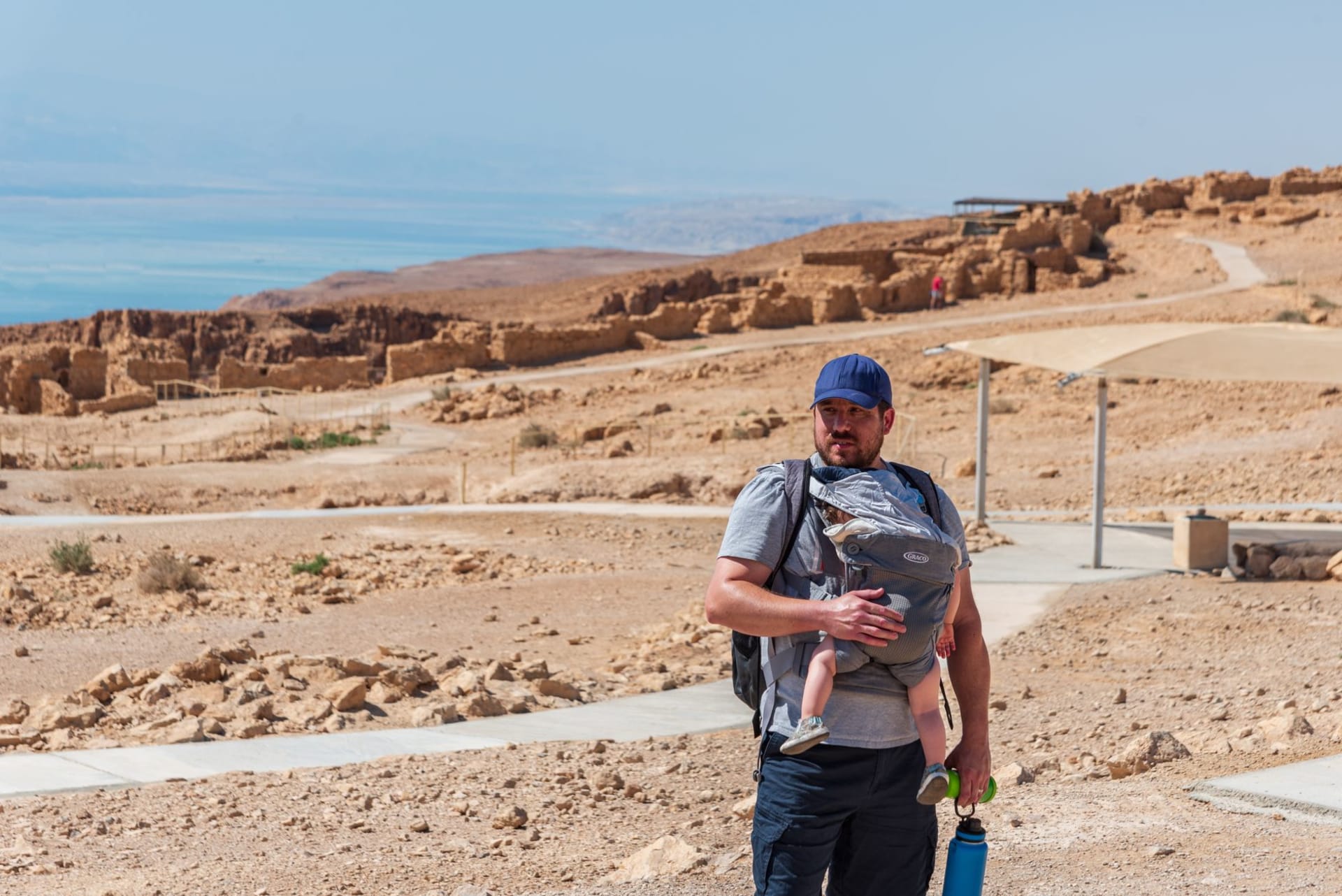
Masada
"I climbed it in the dark. By the time the sun hit the plateau, I understood why people die defending a place like this."
I set an alarm for four in the morning and still almost missed the point. The Snake Path starts at a trailhead in the dark desert, and you walk it by headlamp, the beam catching pale limestone and the occasional cairn, the Dead Sea a vague silver mirror a thousand feet below. By the time I crested the plateau, maybe forty-five minutes later, my legs were burning and sweat was already soaking through my shirt in the warm pre-dawn air. Then the sky to the east turned orange, and the full scale of what I was standing on became clear. Herod’s fortress. The last holdout of the Jewish revolt. A table of rock that drops sheer on every side.

The ruins themselves are better than you expect from a place that gets this many visitors. Herod built himself a palace here in the first century BC — three hanging terraces stepping down the northern face of the rock — and the remnants of it still communicate scale and ambition. I walked through the remains of his bathhouse, the columns still standing at chest height, the mosaic floors cracked but intact. The synagogue is the oldest known in Israel. The storerooms once held enough grain and oil to outlast a siege for years. Which is what eventually happened: in 73 CE, 960 Jewish rebels held out against the Roman Tenth Legion for three years before, according to Josephus, making a collective decision. The Roman siege ramp is still there, plain and massive, rising from the desert floor on the western side. The Romans piled that earth without machines. Knowing that, you look at the ramp differently.

The cable car runs from around 8 a.m. and by nine the tour groups arrive and the feeling changes. What was quiet and wind-swept becomes crowded and commentary-laden. I walked every inch of the plateau in those first two hours before the crowds, sat on the edge of the northern terrace drinking the coffee I’d brought in a thermos, and watched the Dead Sea go from silver to blue below me. The Jordanian cliffs across the water caught the same light I was sitting in. It was one of those mornings that makes you feel grateful for the inconvenience of a 4 a.m. alarm.
When to go: October through April. The Snake Path hike must begin before 5 a.m. in summer or the heat becomes dangerous by the time you reach the top. In winter the air on the plateau can be surprisingly cold and sharp. Spring and autumn are perfect — mild enough to linger for hours without either burning or freezing.