Jericho
"Ten thousand years of continuous habitation, and the best thing in the market is still the fresh-squeezed pomegranate juice."
You drop below sea level somewhere on the road from Jerusalem and the temperature rises immediately, the air thickening with warmth and the smell of irrigated fields — bananas, dates, citrus, the kind of agricultural abundance that seems like science fiction after the Judean Desert. Jericho appears in this warmth as a collection of low buildings surrounded by date palms, the whole thing sitting in a valley so deep it’s practically subterranean. At minus 258 meters below sea level it is the lowest city on Earth. People have been living in this spot for at least ten thousand years, drawn by the spring of Ein es-Sultan, which still flows today and still irrigates everything that grows in a ten-kilometer radius. Standing in the market with a cup of fresh pomegranate juice, watching Palestinian men playing cards under a shade awning, I felt the specific pleasure of a place that has been ignoring the drama of history happening around it and just getting on with things.

Tell es-Sultan is the actual mound of ancient Jericho — a low hill at the edge of the modern city that represents twelve thousand years of successive habitation stacked in layers. The excavations are ongoing and some sections are roped off, but you can walk the perimeter and look into the cuts where archaeologists have sliced through the stratigraphy: Bronze Age walls, Neolithic floors, the tower that is the oldest known stone construction in the world, built around 8000 BC by people whose names we will never know. The famous walls that fell to Joshua are debated — the archaeology doesn’t clearly support that particular story — but something was built here, and destroyed, and built again, over and over, which is perhaps a truer kind of history than the single dramatic event the Bible records. Nearby, Hisham’s Palace is an eighth-century Umayyad winter resort with one of the most spectacular mosaic floors in the region: the Tree of Life, a single composition covering dozens of square meters.

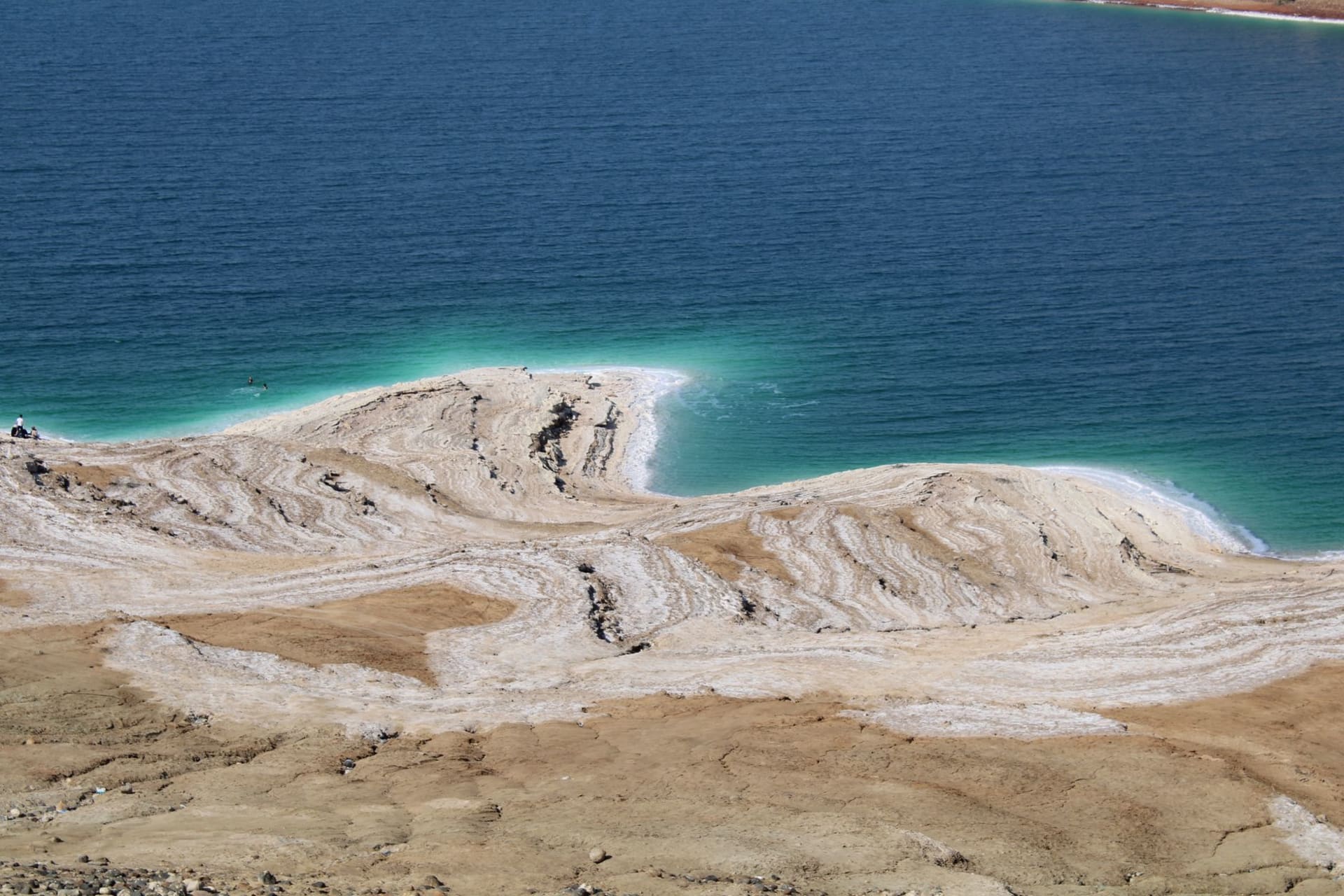
The Greek Orthodox Monastery of the Temptation is built into a cliff face above the city, accessible by cable car or a steep hike. It clings to the rock with the kind of architectural stubbornness that seems to characterize religious conviction in this region. The story attached to it is that this is the mountain where Jesus fasted forty days after his baptism. Whether or not you hold any of that to be literally true, the view from the monastery balcony — the whole Jericho oasis spread below you, the desert behind, the Jordan Valley stretching north and south, the Dead Sea faintly visible to the south — is worth every meter of the cable car ascent.
When to go: Year-round, though summer temperatures here can exceed 45°C and the valley heat is different from the dry desert heat — it’s thick, humid from the irrigation. Winter and spring are delightful, with the citrus groves in flower. Jericho is in Area A of the Palestinian Authority — Israeli-plated rental cars are not permitted to enter, but the cable car and Tell es-Sultan are easily reached by Palestinian taxi from the Israeli checkpoints on the outskirts.