Mirik
"The lake reflected everything with more precision than the originals. It seemed almost to be correcting them."
Mirik does not try to be Darjeeling. It sits about forty-nine kilometres to the south and west, at a lower elevation — around 1,400 metres — which means warmer air, different light, and the particular contentment of a hill town that does not think of itself as a destination. The shared jeep from Darjeeling took two hours on roads that switch-backed through terraced cardamom and tea, and I arrived in the early afternoon feeling as if I had been decanted into somewhere much quieter than where I started.
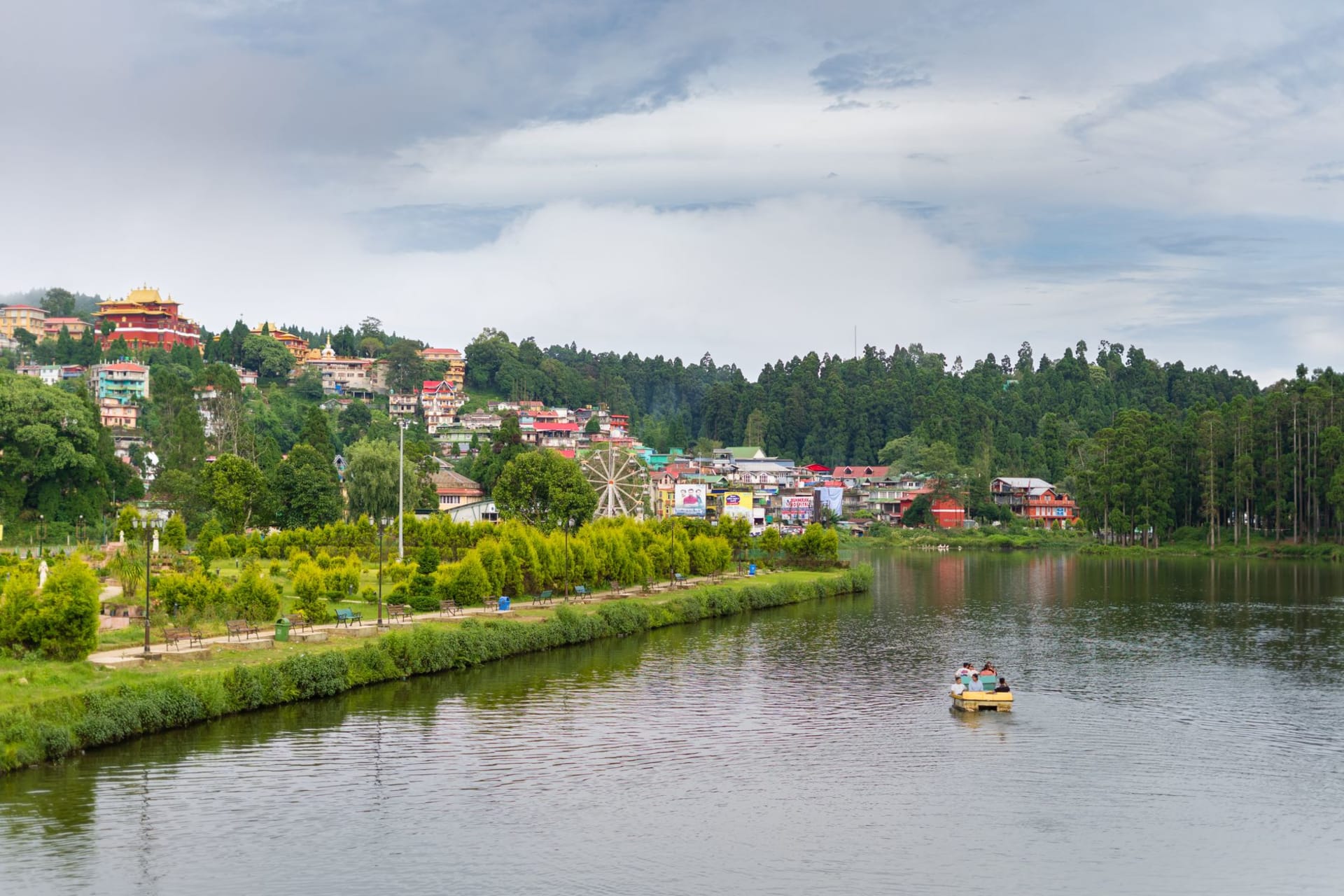
The lake at the centre of town is called Sumendu, and it is not enormous — you can walk the perimeter in about twenty minutes — but it holds a stillness I found disproportionately affecting. On the day I was there, three boys were fishing from a log that stuck out over the water at an optimistic angle. A boatman was waiting for customers with the patience of someone who had already accepted that today might be slow. The water reflected pine trees and the white spire of a small temple, and everything floated in that reflection with slightly more precision than the originals above it, as though the lake was quietly improving on what it found.

The orange orchards were what I had not expected. Mirik is apparently known for its oranges — and also for cardamom, which grows in the shade of larger trees along the valley slopes — and the roadside vendors selling Mirik oranges by the bag were not wrong about their quality: deeply sweet, thin-skinned, the kind of orange that makes you quietly sad about every supermarket orange you have ever eaten. I bought a bag and ate most of them sitting on a bench by the lake, which is not a sophisticated activity and was absolutely the right one.
I found a dhaba on the upper road run by a woman who made thukpa — the Tibetan noodle soup — from scratch on a gas ring behind a curtain. The broth was gingery and slightly smoky, the noodles hand-pulled and thick, the whole thing costing eighty rupees and taking twelve minutes to arrive and thirty seconds to finish. Mirik rewards this kind of accidental sitting-down. Without the pressure of a long sightseeing list, you end up eating better and noticing more. The evening, when the market winds down and the lake goes completely glassy, is the best part of the whole stay.

When to go: March and April for orange blossom season when the valley smells extraordinary. October and November for clear weather and ripe fruit on the trees. Mirik is best as a one-night stop rather than a day trip from Darjeeling — the evening quiet is worth staying for.