Kalimpong
"The Sunday market smelled of dried fish, fresh vegetables, incense, oranges, mud, and rain. I stood in it for twenty minutes doing nothing."
Kalimpong is fifty-five kilometres from Darjeeling by road but feels, once you are inside it, like a different country. It sits in a valley at the convergence of the Teesta and Relli rivers, at around 1,250 metres, in an area that was for centuries a crossing point between Tibet, Bhutan, Sikkim, and the plains of Bengal. The trade routes are gone but the mixture is not — Kalimpong’s Sunday market has Nepali sellers, Tibetan vendors, Bengali buyers, and a general atmosphere of unhurried negotiation entirely different from the more tourist-organized feel of Darjeeling above.
I arrived on a Saturday afternoon with the intention of staying one night for the market and ended up staying four, which was the right decision. The flower nurseries were the first surprise: Kalimpong produces a significant share of India’s cut flowers, especially gladioli and orchids, and the hills outside town are full of nurseries that supply florists in Kolkata. Walking into one of them — a long greenhouse of orchids at various stages of bloom, the owner labelling trays with a felt-tip pen, one radio playing film songs softly at the far end — was one of those encounters with completely specialized knowledge that makes you realize how much of the world runs on expertise you never think about.

The Sunday market happened on the lower square and was not photogenic in any planned way. The arrangement was improvised, goods stacked without aesthetic intention, and the whole thing smelled of everything simultaneously — dried fish, fresh vegetables, incense from a nearby shop, oranges, mud on boots, rain on canvas. I bought a small thangka from a Tibetan woman who drove a hard bargain with a warmth that made the final price irrelevant. I bought dried apricots from someone who appeared to be selling from a personal surplus. I ate shakpa — a Tibetan meat and radish stew — standing next to a brazier where the vendor kept it warm over charcoal. He was generous about sharing the dry spot beneath his awning since it was raining lightly and I had nowhere else to stand.
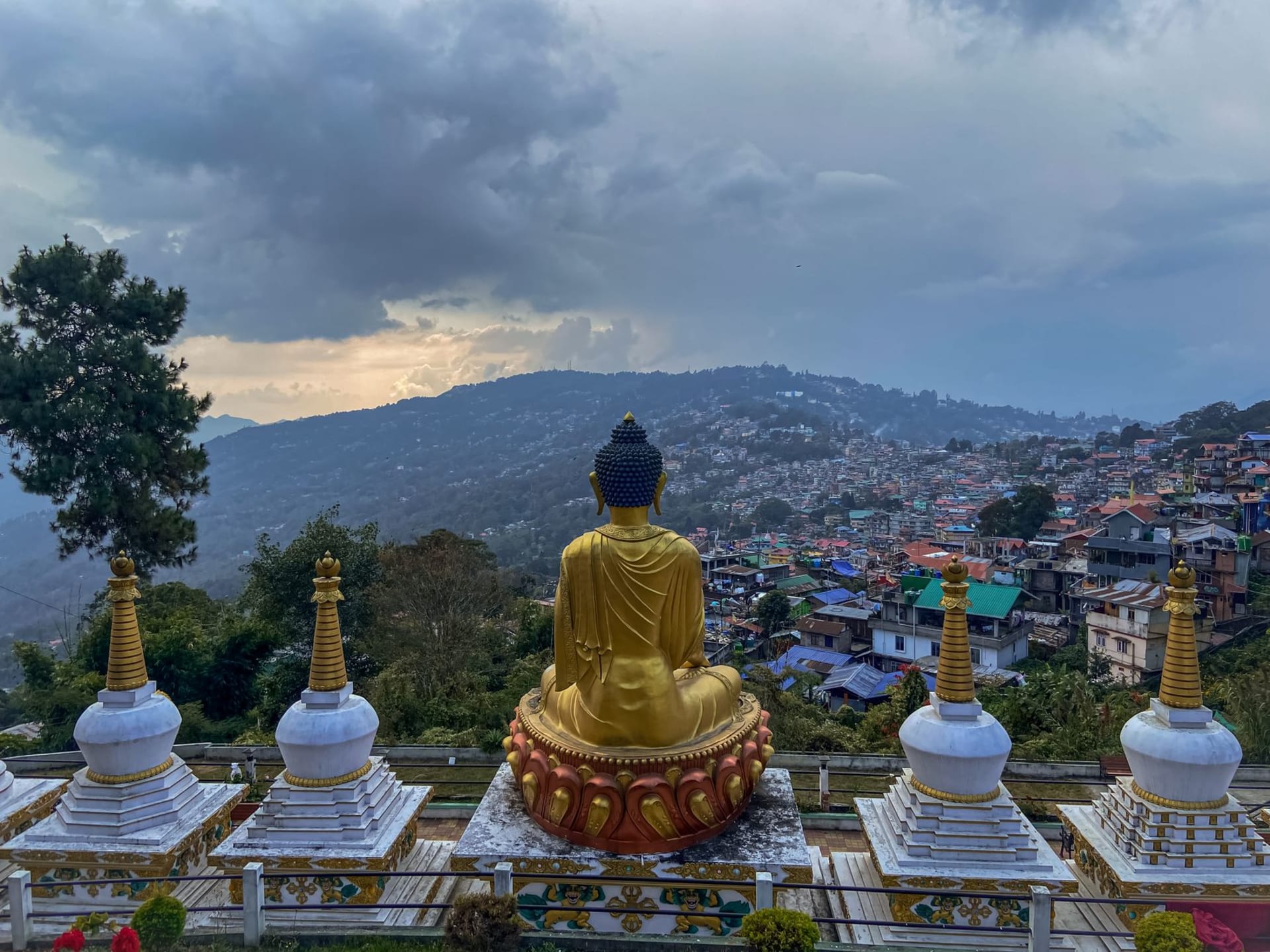
Zang Dog Palri Fo Brang monastery, on a hill above town, is the main religious site — a Nyingma monastery with elaborate paintings in its prayer hall and a courtyard view of the Teesta valley that makes the climb worthwhile. But the town’s real character is in the streets below, in the quiet lanes of the old market where buildings lean toward each other across the road and the light comes through at angles that explain exactly why this valley has been collecting people for centuries.

When to go: October through March is ideal — dry, clear, and cool. The Sunday market operates year-round. The flower nurseries peak in spring (March–April) when gladioli and orchids are in full production. Avoid July–August peak monsoon if possible; the Teesta can flood and roads to Darjeeling may close.